
If you live in Bognor Regis, Chichester, or Arundel, you know the unique charm of a West Sussex bungalow. Perhaps it’s the proximity to the coast, the generous garden plots, or the quiet, established neighbourhoods that keep you rooted here. But as families grow or lifestyle needs change, that single-storey layout can start to feel a little restrictive.
You love your location: who wouldn't? Between the historic cathedral views of Chichester and the refreshing sea air of Bognor, leaving isn't the goal. The solution is simple: don't move, move up.
At Swanbourne Construction Ltd, we’ve spent over 20 years helping homeowners across West Sussex unlock the hidden potential in their properties. Adding a second floor to a bungalow isn't just a renovation; it’s a total lifestyle upgrade that significantly boosts your property value without sacrificing your outdoor space.
But where do you start? From structural integrity to the nuances of local planning, here is our definitive 5-step guide to transforming your bungalow into a stunning two-storey home.
Step 1: Navigating the West Sussex Planning Landscape
Before a single brick is laid, you need to understand the "rules of the road." While many smaller extensions fall under Permitted Development, adding an entire second floor to a bungalow almost always requires a full Planning Application.
In West Sussex, local planning authorities: whether you are dealing with Chichester District Council or Arun District Council: often look for designs that are subservient to the original structure. What does this mean for you? It means the planners generally prefer the new roofline to respect the character of the street. If your road consists of a mix of houses and bungalows, you have a stronger case, but if you are on a street of uniform single-storey homes, the design must be particularly sensitive.
Pro-tip: Maintaining the gaps between houses at the first-floor level is often a requirement to avoid a "terracing effect," which is a common concern in more densely packed areas of Bognor Regis.
For a deeper dive into local requirements, check out the ultimate guide to planning permission in West Sussex.
Step 2: Assessing Your Foundations (The Groundwork)
Can your existing bungalow actually support the weight of a second floor? This is the most critical question we answer during our initial consultations.
Most bungalows were built with foundations intended only for a single storey. Adding a second floor: comprising new walls, a roof, furniture, and the people living in it: adds significant "dead" and "live" loads.
- The Trial Pit: We typically recommend a structural engineer visits to dig a small inspection hole (approx. 60cm deep) to see exactly what’s happening underground.
- The Structural Report: If your foundations are deep and solid, you're in the clear. If they are shallow, don't panic. There are solutions like underpinning or, more commonly, using lightweight construction methods for the upper floor to minimize the added weight.
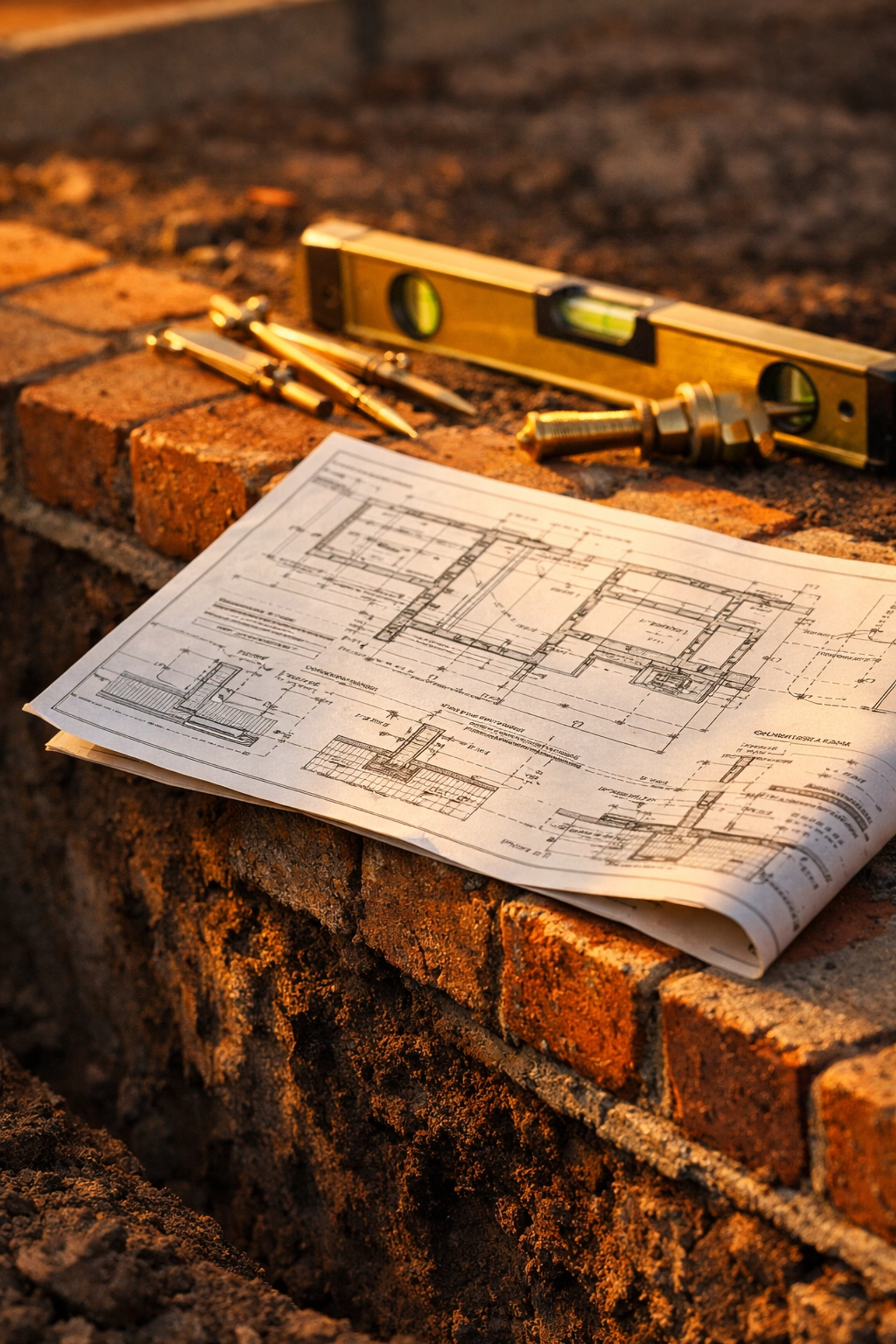
Why this matters: Discovering inadequate foundations halfway through a build is a budget-killer. Getting an expert assessment from a team that knows Sussex soil conditions is non-negotiable.
Step 3: Designing for Light, Space, and Views
Designing a second floor is about more than just adding bedrooms; it’s about rethinking the flow of your entire home. You aren't just adding a box on top; you are creating a cohesive architectural statement.
- The Staircase Dilemma: The most common challenge in bungalow transformations is where to put the stairs. You will likely lose a small room or a large portion of a hallway on the ground floor to accommodate them. Smart design ensures the staircase feels like a feature, not an intrusion.
- Maximizing Height: To make the new rooms feel like "real" rooms, you need a head height of at least 2.2 metres. We often achieve this by raising the existing walls by 0.9 to 1.2 metres before pitching the new roof.
- Dormers and Gables: In areas like Arundel, where views of the hills or the castle are a priority, we often use dormer windows to increase floor space and frame those specific local vistas.
If you’re wondering if your specific roof can be changed, take a look at our guide on what lofts cannot be converted to see the physical limitations we sometimes encounter.
Step 4: Choosing the Right Construction Method
In 2026, the "gold standard" for bungalow upward extensions is the lightweight timber frame system.
Traditional brick and block construction is heavy. By using a timber frame for the new second floor, we drastically reduce the stress on your existing foundations. But the benefits don't stop at weight:
- Speed: The frame can be manufactured off-site and erected in a matter of days, meaning your home is "watertight" much faster.
- Thermal Performance: Timber frames allow for high-performance insulation to be packed into the walls, keeping your new master suite warm in the winter and cool during those sunny Bognor summers.
- Sustainability: It is a much more eco-friendly way to build, which is increasingly important for West Sussex homeowners looking to future-proof their property’s energy rating.
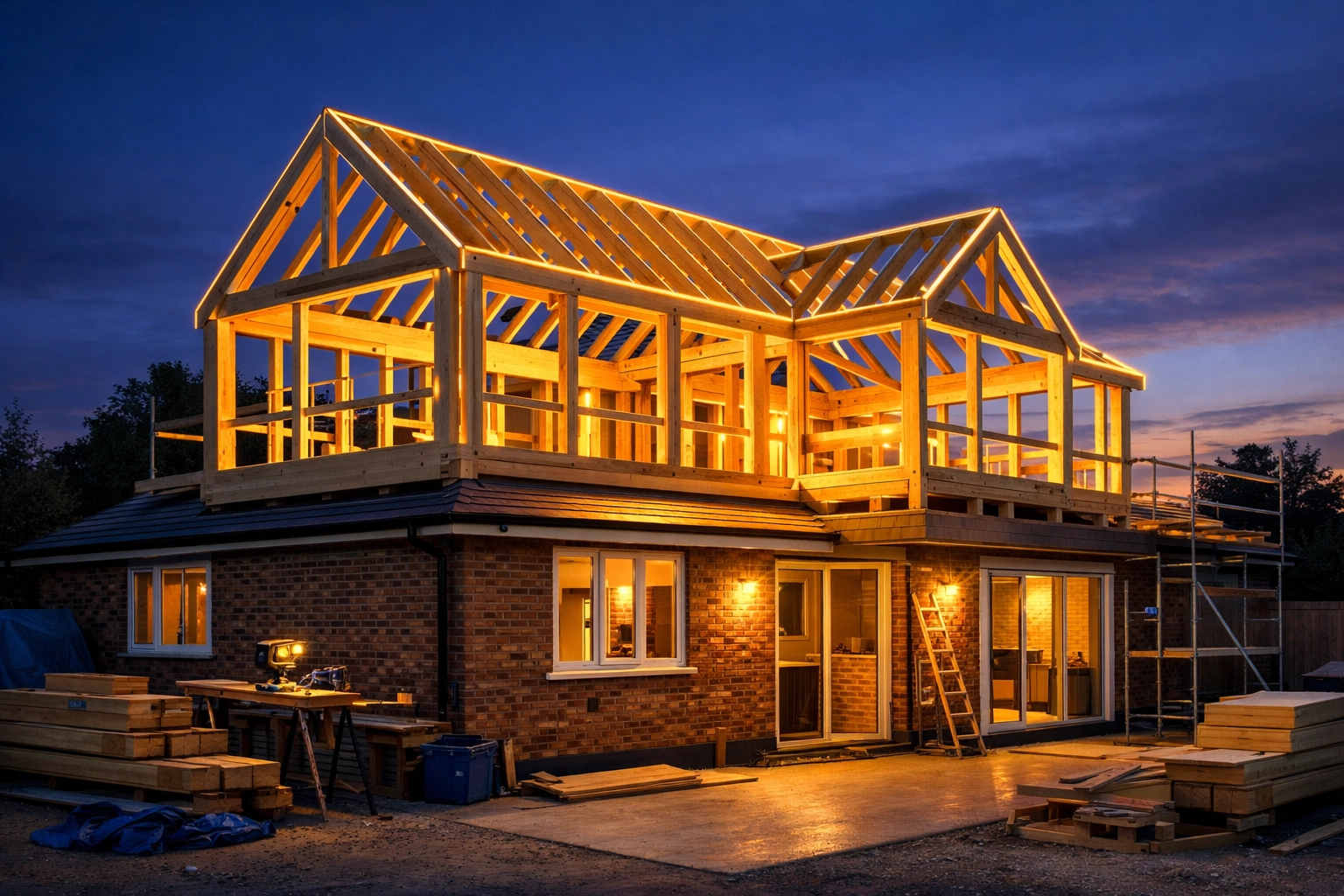
At Swanbourne Construction Ltd, we pride ourselves on being trusted builders in Bognor Regis and West Sussex, ensuring that the construction phase is as non-disruptive as possible. Many of our clients even choose to stay in the ground floor of their homes for part of the build!
Step 5: Building Regulations and Final Flourishes
The final hurdle is ensuring everything meets the UK Building Regulations. This isn't just a "box-ticking" exercise; it’s about the safety and longevity of your home.
- Fire Safety: When you turn a one-storey home into a two-storey home, the rules for fire escapes and smoke alarms change. You’ll likely need fire-rated doors and a protected escape route.
- Soundproofing: There’s nothing worse than hearing every footstep from the floor above. We use modern acoustic mineral wool and resilient bars to ensure your new "whisper-quiet" suite stays that way.
- Insulation & Ventilation: Proper airflow is vital to prevent condensation, especially in coastal climates where humidity can be higher.
For more on the technical side of things, read about what are the rules for loft conversions in the UK.
Why Choose a Second-Floor Extension Over Moving?
In the current 2026 market, the costs associated with moving: stamp duty, estate agent fees, and the sheer stress of a chain: often outweigh the investment of an extension. By adding a second floor, you are essentially buying a "new" house for a fraction of the price, all while staying in the neighbourhood you love.
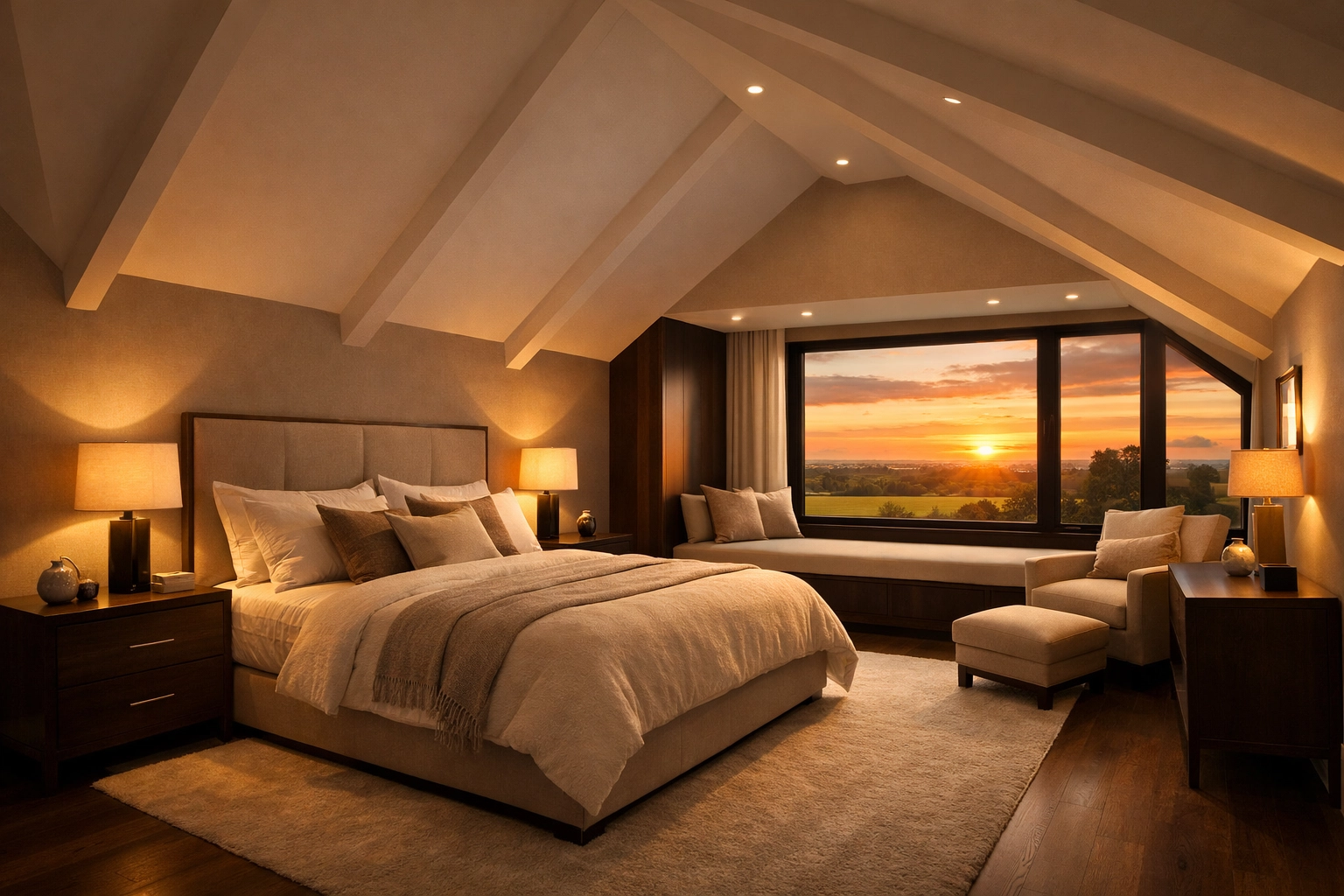
Imagine waking up in a new master bedroom with an en-suite, looking out over the West Sussex countryside or the English Channel. Imagine having a dedicated home office away from the noise of the kitchen. This isn't just "adding rooms"; it's reimagining how you live.
Ready to Start Your Transformation?
Adding a second floor is a major undertaking, but with 20+ years of local experience, Swanbourne Construction Ltd makes the process transparent and manageable. We understand the specific architectural styles of Chichester, the coastal requirements of Bognor Regis, and the historic sensitivities of Arundel.
If you’re ready to explore what’s possible for your bungalow, we’re here to help. From the first structural check to the final coat of paint, we provide the expertise you need to build with confidence.
Contact Swanbourne Construction Ltd today for a consultation and let's see how high your home can go.