
There is a unique excitement that comes with planning a loft conversion in West Sussex. Whether you are looking out over the rooftops of Bognor Regis toward the coast or catching a glimpse of the South Downs from a new dormer in Chichester, that extra space is a game-changer. But here is the reality: a loft is the most exposed part of your home. It’s the first to catch the summer sun and the first to feel the bite of a frosty winter breeze off the Channel.
When we talk to homeowners about loft conversions in Bognor Regis, the conversation often gravitates toward the layout or the view. However, the most critical decisions are often the ones you can’t see once the plasterboard is up. Smart heating isn’t just a luxury; it’s a logistical necessity for a comfortable, modern living space.
If you wait until the decorating stage to think about your thermostats and heating controls, you’ve already missed your window. To get the sleek, high-tech, and efficient finish you want, you need to plan your wiring now, before it’s too late.
Why Your Loft Needs a "Smart" Foundation
Why go smart? In a traditional setup, your loft is often just "tacked on" to your existing central heating system. This usually leads to two problems: the loft is either boiling because heat rises from the rest of the house, or it’s freezing because the boiler is struggling to pump water three stories up to a single radiator.
By installing a smart system, you create a dedicated heating zone. This means you can control the temperature of your new master suite or home office independently of your downstairs living room.
Plan for the future: Investing in the right wiring today ensures that your home remains energy-efficient and highly sellable in a West Sussex market that increasingly values sustainable, tech-ready properties.
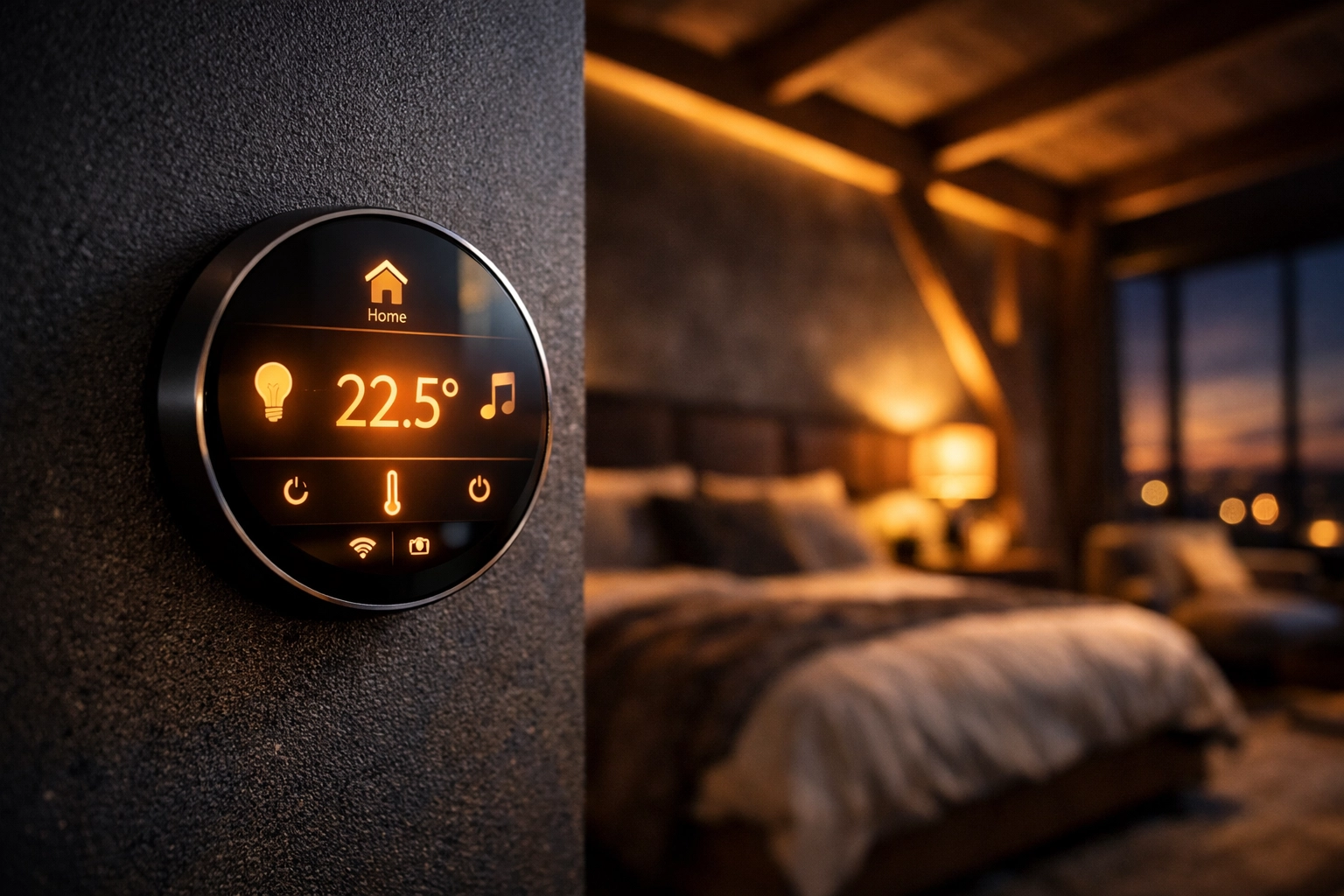
1. The Underfloor Heating (UFH) Dilemma: Electric vs. Water
Underfloor heating is the gold standard for loft conversions. It saves precious wall space, where a radiator might otherwise block a wardrobe or a desk, and provides a consistent, comfortable heat. But your wiring requirements will vary wildly depending on which system you choose.
Electric UFH (The Dry System)
This is the most common choice for loft conversions in West Sussex due to its low profile. Because it doesn’t require heavy pipes filled with water, it doesn't add significant weight to your floor joists.
- The Wiring Task: You need a dedicated electrical circuit. Electric UFH can pull a significant amount of power. You cannot simply "spur" it off a nearby socket circuit. Your electrician will need to run a high-load cable from your main consumer unit directly to the loft.
Water-Based UFH (The Wet System)
If you are already upgrading your boiler or installing a heat pump, a wet system might be preferred.
- The Wiring Task: While the heat comes from water, the control is electrical. You will need wiring for "actuators" and a wiring centre that tells the pump when to engage.
Regardless of the system, you must install the floor temperature sensors before the final flooring goes down. If a sensor fails and you haven't wired a backup (or placed it in a conduit for easy replacement), you may find yourself lifting expensive tiles or engineered wood.
2. Smart Thermostats and the "C-Wire"
Many homeowners assume they can just "pop on" a Nest or Tado thermostat at the end of the project. This is a mistake. While some smart thermostats are battery-powered, the most reliable ones require a constant power supply, often referred to as a "C-wire" (Common wire).
If you want a sleek, wall-mounted interface that never needs its batteries changed, you need to ensure your electrician runs a 3-wire or 5-wire cable to your desired thermostat location while the walls are still open.
Expert Tip: Think about placement. Don't put your smart thermostat in direct sunlight from a Velux window or right next to the ensuite door, or your temperature readings will be wildly inaccurate.
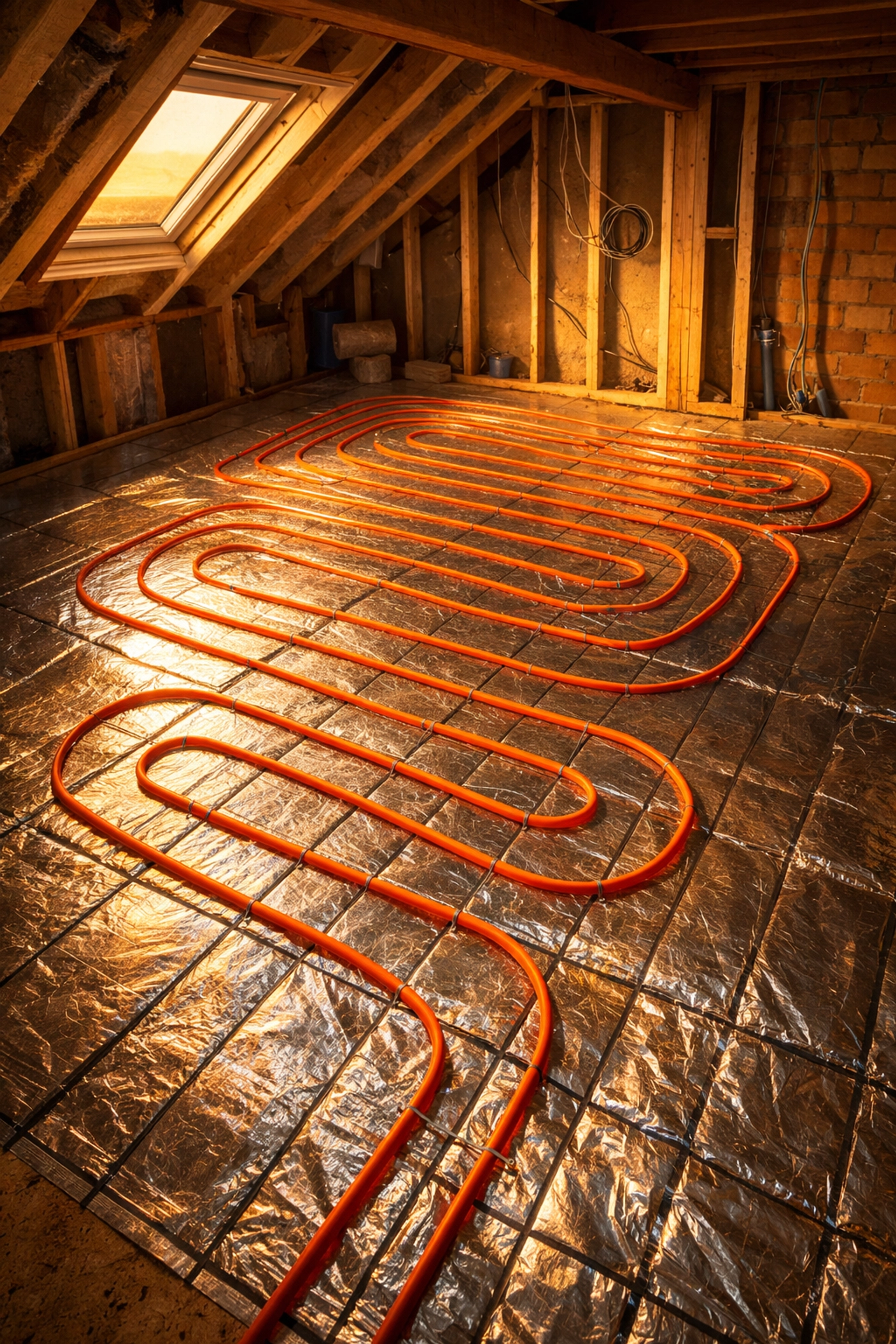
3. Bespoke Carpentry and Hidden Tech
A high-quality renovation is about the details. We often provide bespoke carpentry in West Sussex to help clients hide the "guts" of their smart systems.
When you are planning your cabinetry, perhaps a built-in window seat or custom wardrobes, consider where your heating manifolds or control hubs will live.
- The Wiring Task: Ensure power is routed into these custom cupboards. There is nothing worse than a beautiful bespoke wardrobe that has an ugly extension lead snaking into it to power a smart home bridge or a Wi-Fi booster.
By integrating your tech into your bespoke carpentry, you maintain the professional, clean aesthetic of your new room while keeping the hardware accessible for maintenance.
4. The Consumer Unit: Is Your Fuse Box Ready?
This is the "boring" part of the renovation that many people overlook, but it’s the most vital for safety. Adding a new floor to your home, especially one with electric heating, high-end lighting, and perhaps a power shower in the ensuite, puts a significant new load on your electrical system.
Under UK Building Regulations (Part P), your new electrical work must be certified. In many older properties in Bognor Regis and the surrounding Chichester area, the existing consumer unit (fuse box) simply doesn't have the capacity or the modern RCD (Residual Current Device) protection required for a new loft circuit.
What to check now:
- Does your consumer unit have spare "ways" (slots)?
- Is it up to modern fire safety standards?
- Will it support the added load of smart heating?
If the answer is no, you need to factor in a consumer unit upgrade early in your budget. It’s far cheaper to do this as part of the main renovation than as an emergency fix later.
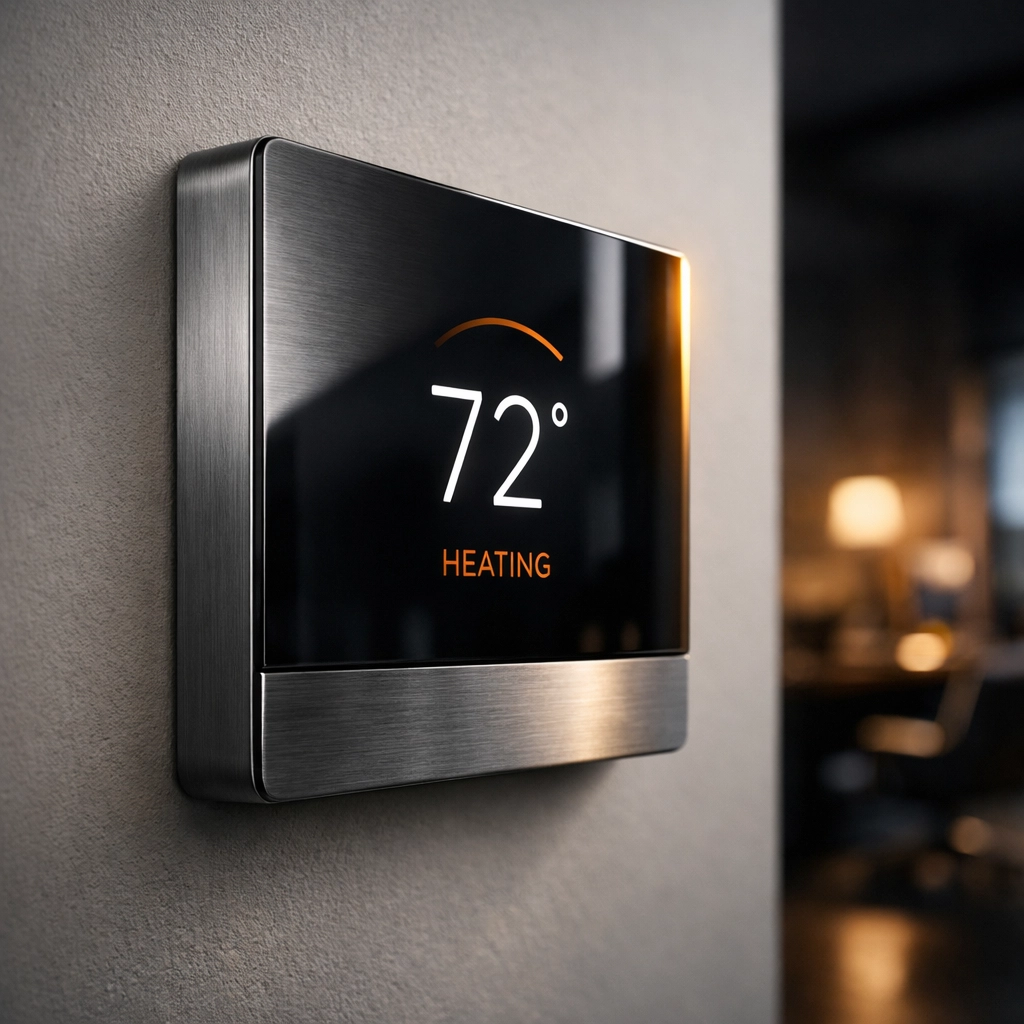
5. Don't Forget the "Hard-Wired" Internet Connection
"Wait, I thought we were talking about heating?" We are. Most smart heating systems rely on a stable internet connection. While Wi-Fi is great, the thick timbers and foil-backed insulation used in modern loft conversions can act like a "Faraday cage," blocking signals from the router downstairs.
The Pro Move: While your floorboards are up for the heating pipes or cables, run a couple of CAT6 data cables from your main router up to the loft.
- One for a Wi-Fi access point to ensure your phone can always talk to your thermostat.
- One for your smart TV or home office desk.
Reliable connectivity is the backbone of any smart home. If your thermostat loses its connection to the cloud, you lose the ability to control it remotely: which defeats the purpose of the investment.
6. Local Expertise: The West Sussex Advantage
Building in a coastal environment like Bognor Regis or the historic streets of Arundel requires local knowledge. For instance, the choice of insulation: which works hand-in-hand with your smart heating: must be precise to prevent interstitial condensation, a common issue in our humid West Sussex climate.
At Swanbourne Construction Ltd, we don't just build shells; we create integrated living spaces. We understand how to coordinate between our master carpenters and our Part P-registered electricians to ensure that every wire is in the right place before the first sheet of plasterboard is ever cut.
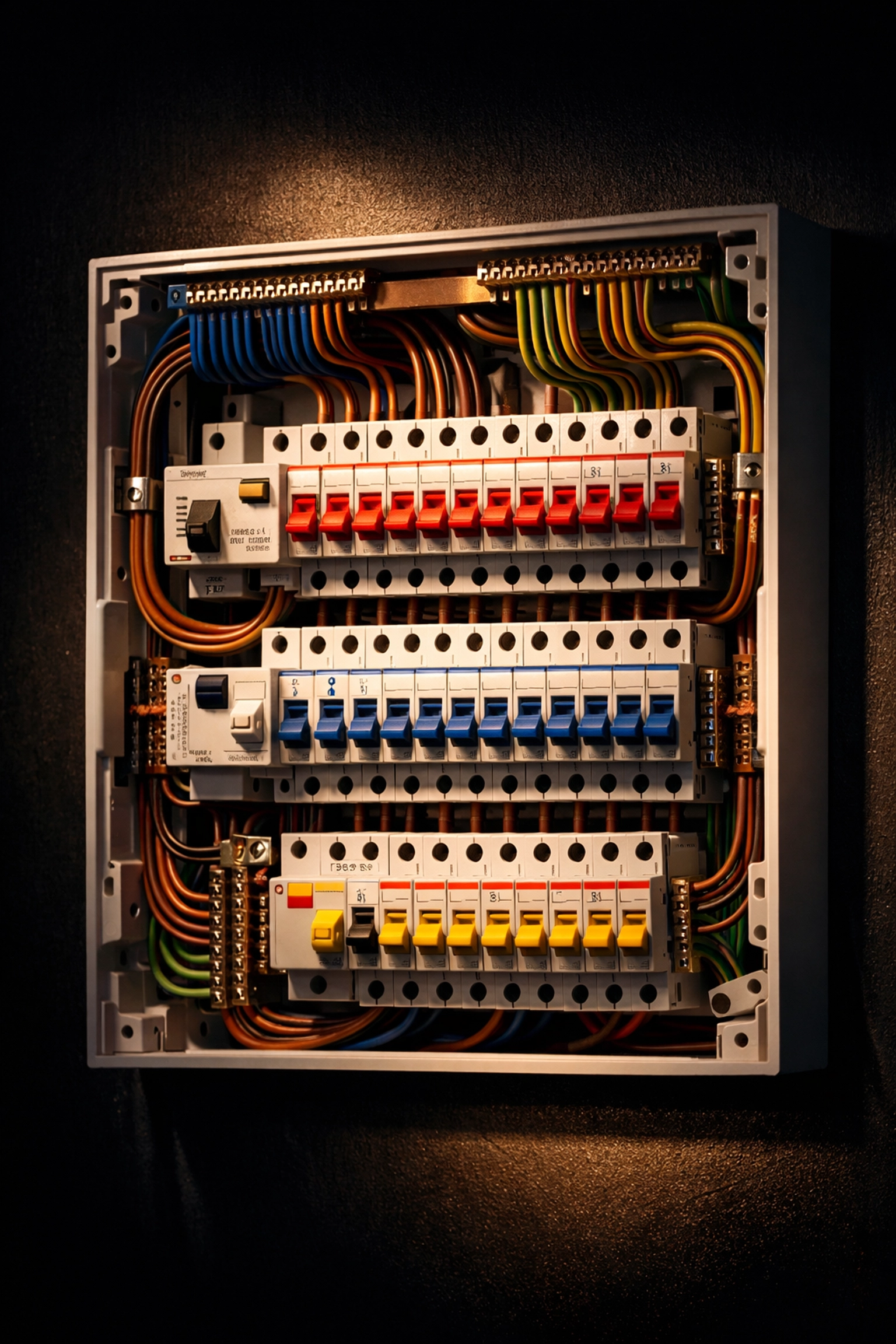
Checklist: Before the Walls Are Closed
Before you give your builder the green light to start plastering, walk through your loft with this checklist:
- Dedicated Circuit: Is there a separate feed for the electric underfloor heating?
- Thermostat Power: Do the thermostat locations have a "C-wire" or power feed?
- Sensor Placement: Are the UFH floor sensors installed (and is there a spare)?
- Data Ports: Have you run hard-wired internet to ensure the smart hub stays online?
- Manifold Access: Is there power and space in your bespoke cabinetry for the heating controls?
Taking the Next Step
A loft conversion is a significant investment in your property and your quality of life. By focusing on the "invisible" elements like smart heating wiring now, you avoid the heartbreak of having to chase out finished walls or live with trailing wires in the future.
Do you want to wake up in a perfectly pre-warmed master suite, or head up to a cozy, temperature-controlled office without having to fiddle with old-fashioned radiator valves? The choice is made during the "first fix" stage of your renovation.
If you are planning a loft conversion in West Sussex and want to ensure every detail: from the bespoke carpentry to the smart home integration: is handled with professional care, we are here to help.
Ready to discuss your project?
Whether you're in the early stages of dreaming or you're looking for a team that can execute a complex, high-tech build, let's talk. Contact Swanbourne Construction Ltd today for a consultation, and let’s make sure your new loft is as smart as it is beautiful.