
For many homeowners across West Sussex: from the Victorian terraces of Chichester to the detached family homes in Bognor Regis: the "temporary" kitchen table office has become a permanent, and frankly exhausting, reality. We’ve all been there: trying to lead a high-stakes Zoom call while the kettle boils in the background or the kids are hunting for snacks.
As the shift toward hybrid and remote work solidifies, the need for a dedicated, professional workspace has moved from a "nice-to-have" to an absolute essential. At Swanbourne Construction Ltd, we are seeing a massive surge in residents looking to reclaim their living rooms by expanding upwards or outwards. But the big question remains: Should you convert your loft or build an extension?
Both options offer a transformative solution to your spatial woes, but the "right" choice depends entirely on your property type, your budget, and how you actually like to work. Let’s dive into the pros and cons of each to help you decide which path leads to your perfect home office.
1. The Loft Conversion: The Quiet Professional’s Sanctuary
If your primary goal is peace and quiet, a loft conversion is almost always the gold medalist. By moving your workspace to the very top of the house, you are physically removing yourself from the "noise floor" of daily life.
The Benefits of Looking Up
- Natural Acoustic Separation: Being two floors away from the television and the front door provides a level of focus that is hard to replicate on the ground floor.
- Cost-Effectiveness: Generally speaking, a loft conversion is more budget-friendly than an extension. You already have the "envelope" (the roof and floor) in place. You are essentially refining an existing space rather than building one from scratch. Basic designs can start around £20,000–£45,000, which is a significant saving compared to a full-scale ground-floor build.
- Speed of Delivery: We can often complete a straightforward loft conversion in Bognor Regis or Aldwick in as little as four to six weeks. This means less time living on a construction site and more time hitting your deadlines.
- Permitted Development: Many loft projects fall under "Permitted Development" rights, meaning you might not need full planning permission, provided you stay within certain volume limits. This saves months of back-and-forth with local planning departments.
The Light Factor: Lofts offer the unique opportunity for Velux or dormer windows that flood the room with natural light from above. This isn't just aesthetic; it’s a proven booster for productivity and mental well-being.
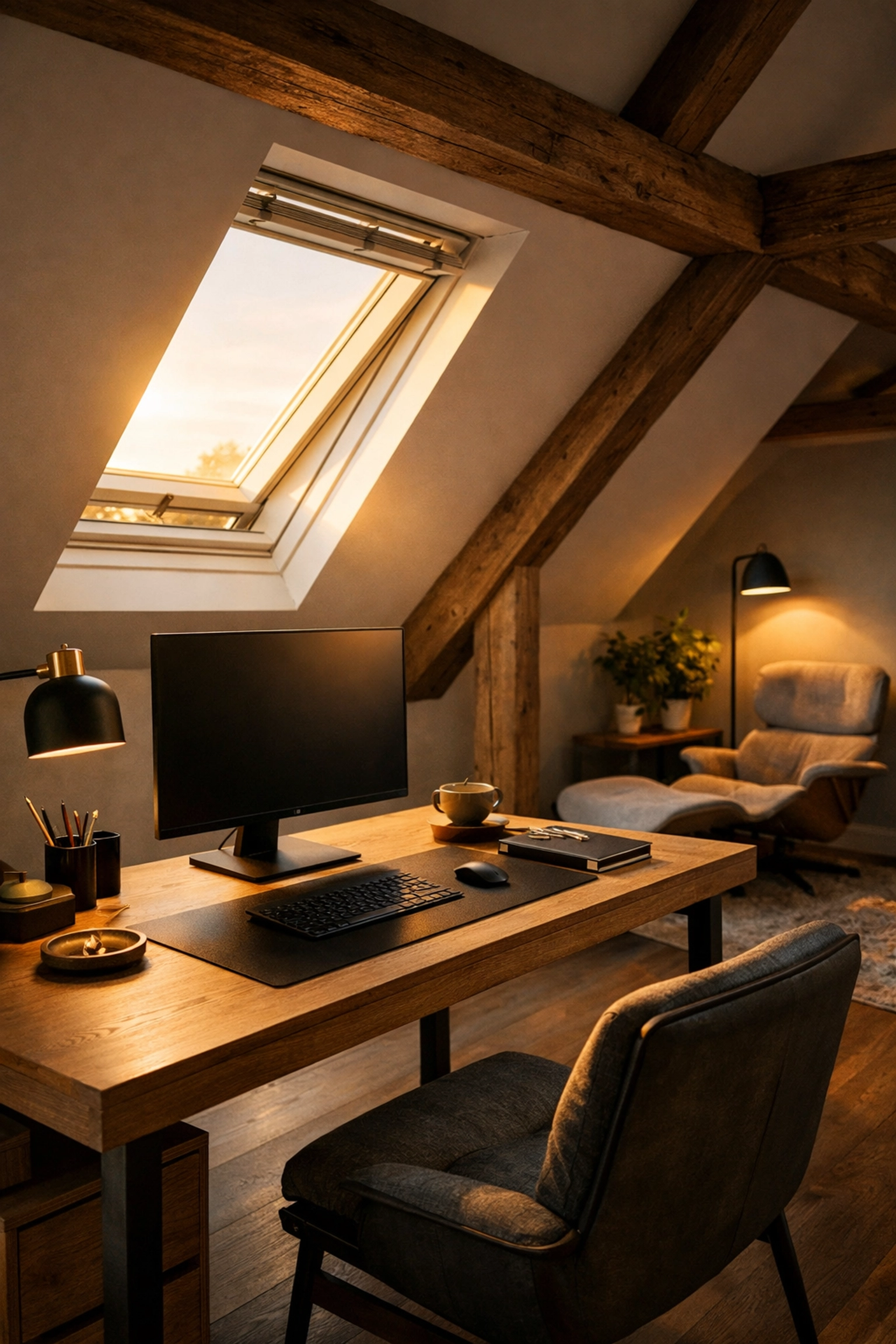
2. The Home Extension: The Versatile Powerhouse
While the loft offers seclusion, a ground-floor extension offers flexibility and connection. If you have the garden space to spare, extending can redefine the entire flow of your home.
Why Extend Outwards?
- Bespoke Layouts: Unlike a loft, where you are often dictated by the pitch of the roof and the position of the chimney stacks, an extension is a blank canvas. You can dictate the exact square footage and ceiling height.
- Multi-Purpose Use: Many of our clients in Aldwick choose a "wrap-around" or rear extension that creates a home office during the day but functions as a secondary snug or garden room in the evening.
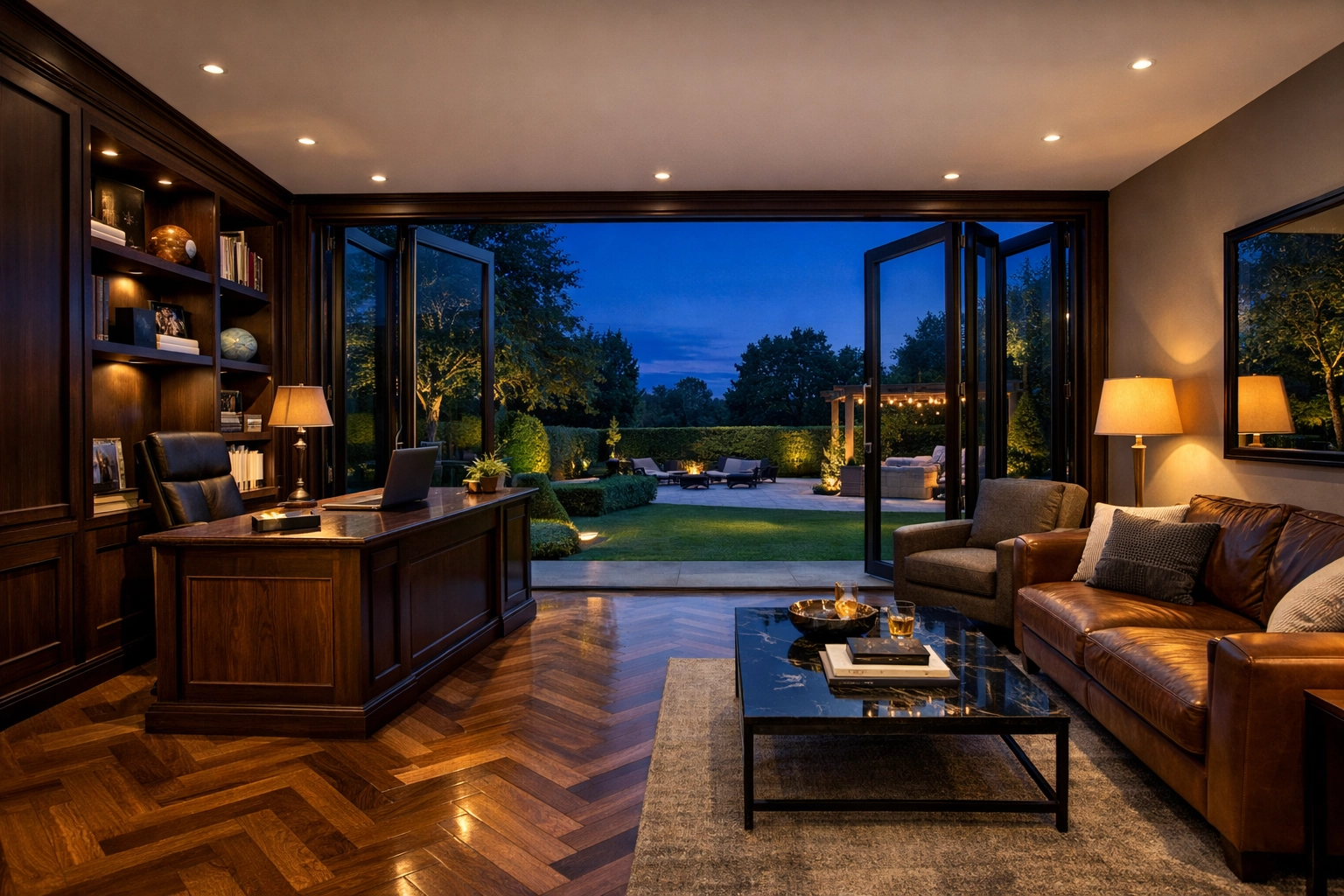
- Indoor-Outdoor Flow: There is something incredibly refreshing about being able to open bi-fold doors and step directly into the garden during your lunch break. For those who find upper-floor rooms a bit claustrophobic, the connection to greenery is a major plus.
- Accessibility: If your home office will double as a meeting space for clients, having it on the ground floor is often more professional and accessible than leading visitors through your bedrooms and up a narrow flight of stairs.
The Trade-Off: You will lose a portion of your garden, and the ground-level noise (street traffic, doorbell, pets) will be more present. Additionally, extensions generally require a larger investment, often costing between £140–£200 per square foot depending on the specification.
3. The Financial Reality: ROI and Value
Let’s talk numbers. As a West Sussex homeowner, you aren’t just building a room; you’re making an investment.
Statistically, loft conversions often deliver a stronger net gain per pound spent. Research suggests that a well-executed loft conversion can add roughly 20% to the value of a property. Because the initial outlay is lower than an extension, the "profit" margin on the build is usually higher.
However, it is important to remember that a "home office" on a floor plan typically adds less value than an "extra bedroom." This is why we always recommend designing the space with versatility in mind. Even if it's 100% an office for you right now, ensuring it has the proper insulation, light, and access to be marketed as a bedroom later is the smartest financial move.
4. The Swanbourne Secret: Bespoke Carpentry
Whether you choose the heights of the loft or the breadth of an extension, the "office" part of the project only works if the furniture works. Standard, flat-pack desks rarely fit the unique angles of a Sussex home: especially in a loft with sloping eaves.
This is where our team really shines. At Swanbourne Construction Ltd, we don’t just build the shell; we specialise in bespoke carpentry.
Imagine a desk that follows the exact contour of your new dormer window, or floor-to-ceiling shelving that turns an awkward corner into a library. Our carpentry services in Bognor Regis allow us to maximise every single square inch of your new space. A custom-built workstation doesn't just look better: it organises your professional life in a way that off-the-shelf furniture simply can't.
5. Planning Permission: The Local Landscape
Navigating the planning rules in the Chichester and Arun districts can be tricky.
- For Lofts: Most houses have a "permitted development" allowance (usually 40 or 50 cubic metres). If your design stays within this, you won't need full planning permission. However, if you live in a Conservation Area or a listed building, all bets are off: you will need professional guidance.
- For Extensions: While "Prior Approval" schemes exist for larger rear extensions, many ground-floor projects require a full planning application. This adds time to the pre-construction phase (usually 8–12 weeks for a decision).
We always recommend checking our FAQ page or speaking with us directly to see how local regulations might impact your specific street.

6. Comparison Summary: Which is for You?
Still undecided? Here is a quick breakdown to help you weigh your priorities:
| Feature | Loft Conversion | Home Extension |
|---|---|---|
| Privacy Level | High (Top floor) | Moderate (Ground floor) |
| Cost | Generally Lower (££) | Generally Higher (£££) |
| Build Time | Faster (4-8 weeks) | Longer (12-20 weeks) |
| Garden Impact | Zero | Reduced garden space |
| Design Freedom | Limited by roof shape | Unlimited (Blank canvas) |
| Best For… | Deep focus, quiet work | Client meetings, multi-use |
Taking the Next Step in Your WFH Journey
Adding a home office isn't just about adding square footage; it's about adding quality of life. It’s the difference between "getting through the day" and actually thriving in your career while staying close to family.
At Swanbourne Construction Ltd, we’ve helped countless neighbours across West Sussex stop "making do" and start working in spaces that inspire them. Whether you are leaning towards the quiet seclusion of a loft or the grand statement of a garden extension, the most important step is getting a realistic assessment of your property's potential.
Don't spend another winter shivering at the kitchen table. Let's look at your floor plans together and figure out where your new office is hiding.
Ready to see what's possible? Explore our blog for more loft conversion ideas or get in touch with us to discuss your vision. We’re here to help you build a workspace that works as hard as you do.