If you are planning a renovation or a new build in West Sussex: whether it’s a period property in Chichester, a seaside retreat in Aldwick, or a modern family home in Bognor Regis: you have likely considered "going smart." But for many homeowners, the term "smart home" still conjures up images of clunky gadgets, tangled wires, and a dozen different apps that don’t talk to each other.
In 2026, the landscape has changed. Smart technology is no longer an "add-on" you buy from a retail shop after the builders have left; it is a fundamental part of the building’s infrastructure. At Swanbourne Construction Ltd, we have seen a massive shift in how our clients approach their projects. They aren't looking for a home that feels like a science experiment; they want a home that works intuitively, saves energy, and looks beautiful.
In this guide, we’ll explore how we integrate smart technology into new installations and why the best "smart" features are the ones you barely notice.
1. The "Invisible" Infrastructure: Why Hardware Beats Software
When you are undertaking a major project, such as one of our loft conversions in Bognor Regis, the smartest thing you can do is look behind the plasterboard.
The most common mistake homeowners make is relying entirely on Wi-Fi. While wireless technology has improved, it is prone to interference, especially in larger homes or properties with thick stone walls common in the South Downs.
The Swanbourne Approach to Connectivity:
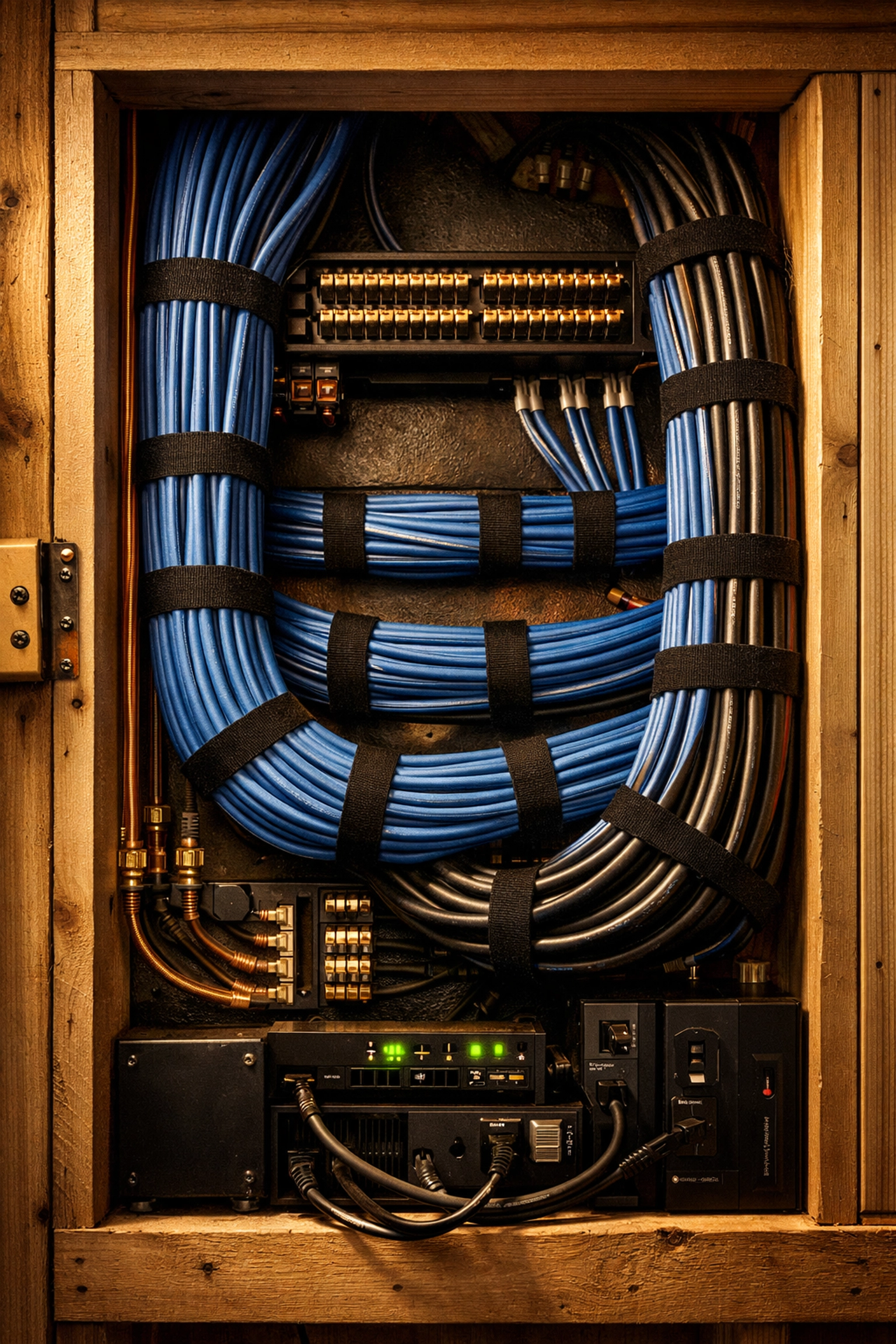
- Hardwiring is King: Whenever we strip a room back to the studs, we recommend running high-grade data cables (Cat6 or Cat7) to key points. This ensures your smart TVs, security cameras, and home office setups have a rock-solid connection that never drops.
- Centralised Hubs: Instead of having a router in the hallway and extenders everywhere, we plan for a centralised "brain" for your home. This keeps the tech out of sight and ensures total coverage from the basement to the loft.
- Future-Proofing: Technology evolves fast. By installing conduit: hollow tubes that wires run through: we make it easy to upgrade your cables in ten years without tearing your walls down again.
2. Integrated Lighting: Setting the Mood in Sussex
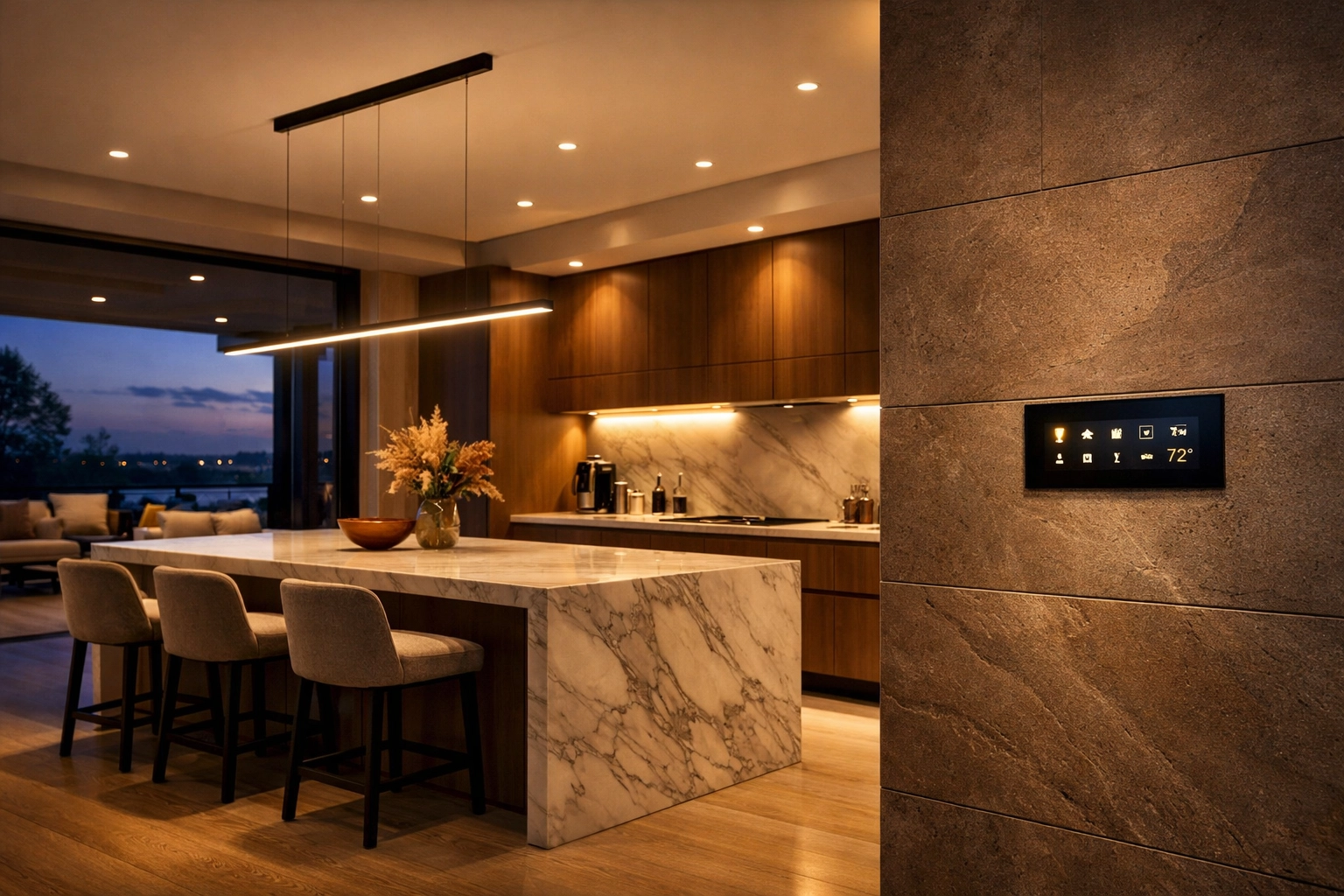
Lighting is arguably the most transformative element of any renovation. When we work on kitchens in Arundel, we don't just think about where the hobs go; we think about how the light changes from a bright breakfast morning to an intimate dinner party.
Smart lighting isn't just about changing colours on your phone. It’s about "Subtle Sophistication." Imagine walking into your kitchen at 2 AM for a glass of water, and the floor-level LEDs glow at just 10% brightness to guide your way, rather than blinding you with overhead spotlights.
Key Benefits of Integrated Lighting:
- Circadian Programming: Your home’s lights can mimic the natural progression of the sun: cool, bright light in the morning to wake you up, and warm, amber tones in the evening to help you wind down.
- One-Touch "Scenes": Replace a bank of six confusing switches with a single, elegant keypad. One button for "Cooking," one for "Movie Night," and one for "All Off."
- Security Integration: When you go on holiday, your lights can mimic your actual patterns from the previous week, making the house look occupied.
3. Intelligent Climate Control: Efficiency Meets Comfort
With energy prices remaining a top concern, smart heating is no longer a luxury: it’s a financial necessity. Modern installations allow for multi-zone control, meaning you aren't heating the guest bedroom in your loft when no one is staying there.
In our carpentry work in Bognor Regis, we often integrate discreet housing for smart thermostats and sensors so they don’t disrupt the aesthetic of your bespoke cabinetry or wall panelling.
The Impact of Smart Heating:
- Predictive Heating: Systems now learn how long it takes your specific home to warm up based on the outside temperature in West Sussex. It won't just turn the boiler on at 7 AM; it will calculate exactly when to start so the house is 20 degrees the moment you step out of bed.
- Geofencing: Your home knows when you’ve left for work and turns the heating down automatically. It also knows when you’re five miles away on your commute home and starts to warm things up for your arrival.
4. Security Without the "Big Brother" Feel
Security is a primary driver for smart home adoption, but nobody wants their home to look like a high-security prison. The trend for 2026 is discreet monitoring.
Instead of bulky cameras, we install ultra-wideband (UWB) sensors and smart locks that are completely invisible from the outside. If you are a homeowner in Aldwick, you might want the peace of mind that comes with knowing exactly when your children get home from school, without having a camera pointed at the front door 24/7.
Modern Security Features:
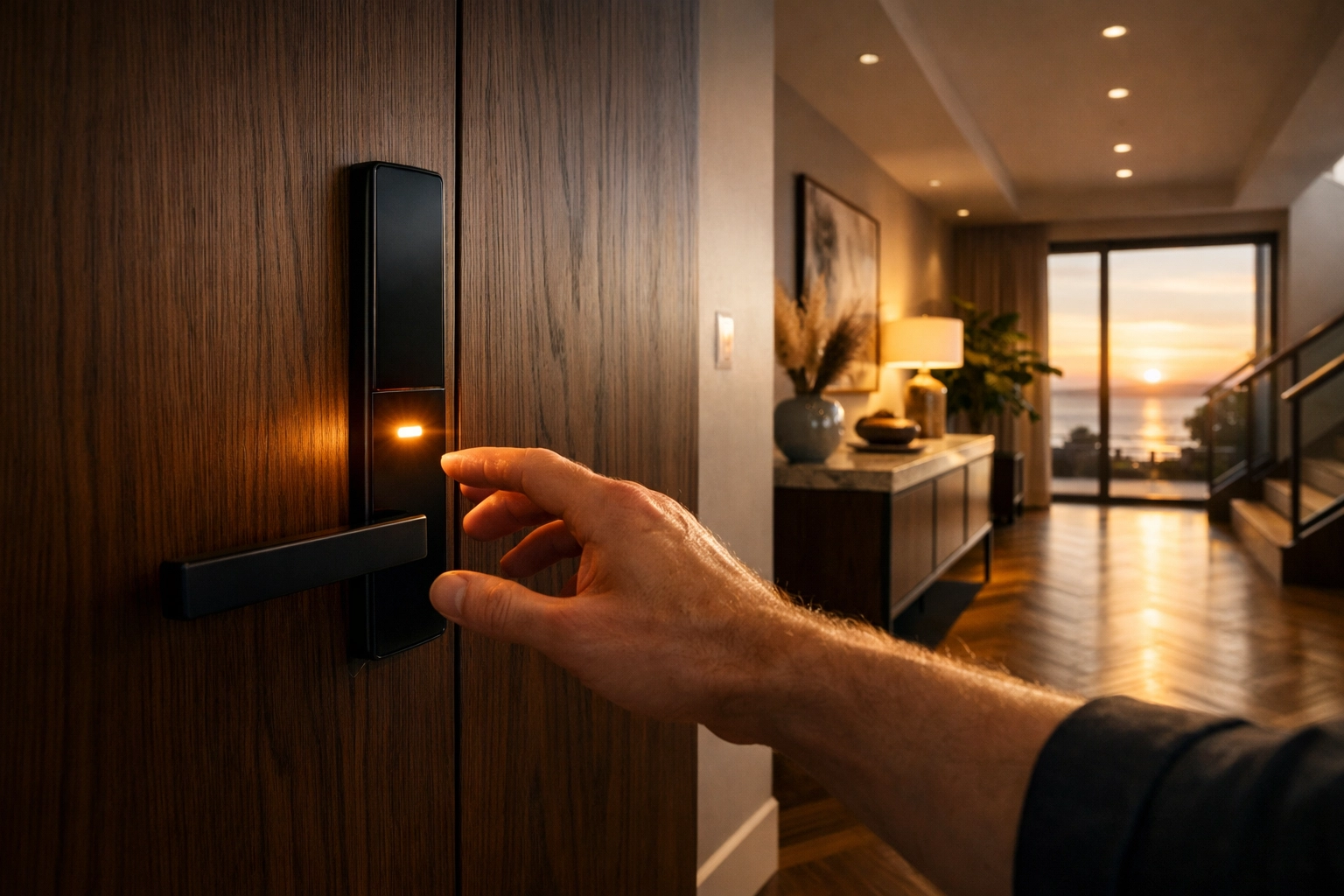
- Smart Locks: Use your phone or a biometric thumbprint. You can even send "digital keys" to guests or tradespeople that only work during specific hours.
- Radar Sensing: New sensor technology can detect a fall or unusual movement in a room without using cameras, maintaining your privacy while ensuring safety for elderly family members.
- Integrated Video Doorbells: These can now be flush-mounted into your masonry or woodwork for a much cleaner look than the "sticky-on" versions you see on every street.
5. The Kitchen of the Future (Is Already Here)
The kitchen is often the most tech-heavy room in a renovation. When we manage a kitchen renovation, we look at how technology can remove the "friction" of daily life.
Hidden Tech Integrated Design is the big trend this year. Think hidden charging stations built directly into your quartz worktops: you just place your phone on the stone, and it charges. No cables, no clutter. We are also seeing a rise in voice-controlled faucets (perfect when your hands are covered in flour) and smart refrigerators that can alert you if the door has been left open, potentially saving a week’s worth of shopping from spoiling.
6. Understanding "Matter" and "Thread"
You might have heard these buzzwords lately. In simple terms, Matter is a new universal standard that allows different brands (Apple, Google, Amazon, Samsung) to finally talk to each other.
At Swanbourne Construction Ltd, we prioritise installations that support these standards. Why? Because we want your home to be flexible. You shouldn't be locked into one brand forever. By choosing "Matter-enabled" devices during your build, you ensure that your home remains functional and compatible for years to come.
7. Why Plan Tech During the Build Phase?
Can you add smart tech later? Yes. Should you? Probably not.
Retrofitting smart technology into a finished home is often three to five times more expensive than installing it during a renovation. Once the walls are plastered and painted, running a single data cable can require cutting holes, re-plastering, and re-decorating.
By involving us early in the design phase, we can coordinate with electricians and specialists to ensure that every socket, sensor, and speaker is perfectly placed. It’s about doing it once and doing it right.
Is Your Home Ready for an Upgrade?
Building or renovating a home in West Sussex is a significant investment. Integrating the right technology isn't just about the "cool factor": it’s about increasing the resale value of your property and drastically improving your quality of life.
Whether you are looking for a builder in Aldwick to refresh your family home or you are planning a complex loft conversion, we are here to help you navigate the world of smart home technology.
Don’t leave your home’s IQ to chance. If you’re curious about how integrated lighting, heating, or security could work in your specific space, let’s have a conversation.
We don't do "hard sells" or complicated jargon: just honest advice on how to make your home work better for you.
Contact Swanbourne Construction Ltd today for a consultation and let’s start planning a home that’s as smart as it is beautiful.