If you live in a charming Georgian townhouse in Chichester, a mid-century semi-detached in Bognor Regis, or one of the many historic cottages nestled in Arundel, you likely appreciate the character and history that comes with an older property. However, behind those period features and freshly painted walls lies a complex network of cables that power your modern life.
The question is: how long has it been since those cables were checked?
At Swanbourne Construction Ltd, we often find that while homeowners are quick to update their kitchens or invest in a loft conversion, the electrical system is frequently overlooked. Yet, your electrical wiring is effectively the central nervous system of your home. If it’s outdated or failing, it doesn’t just cause inconvenience: it poses a significant safety risk.
In this guide, we’ll explore the critical signs that your home needs a rewire, the immense benefits of upgrading your system, and why an electrical overhaul is the smartest move you can make during a larger renovation project.
The Invisible Risk: Why You Can’t Ignore Your Wiring
Most homeowners only think about their electrics when a bulb flickers or a fuse blows. But electrical fires are one of the leading causes of domestic property damage in the UK. Unlike a leaky roof or a damp patch, electrical deterioration is often invisible, hidden behind plaster and floorboards until a critical failure occurs.
Are you pushing your 1970s wiring to its absolute limit with high-end induction hobs, electric vehicle chargers, and powerful power showers? Modern life demands significantly more from an electrical system than it did forty years ago. If your infrastructure hasn't evolved with your lifestyle, you are likely living with an overloaded system.

Identifying the Warning Signs: Is Your Home Telling You Something?
Your home often provides subtle (and sometimes not-so-subtle) hints that the electrical system is struggling. Ignoring these signs can lead to costly emergency repairs or, worse, a house fire.
1. Persistent Circuit Breaker Trips
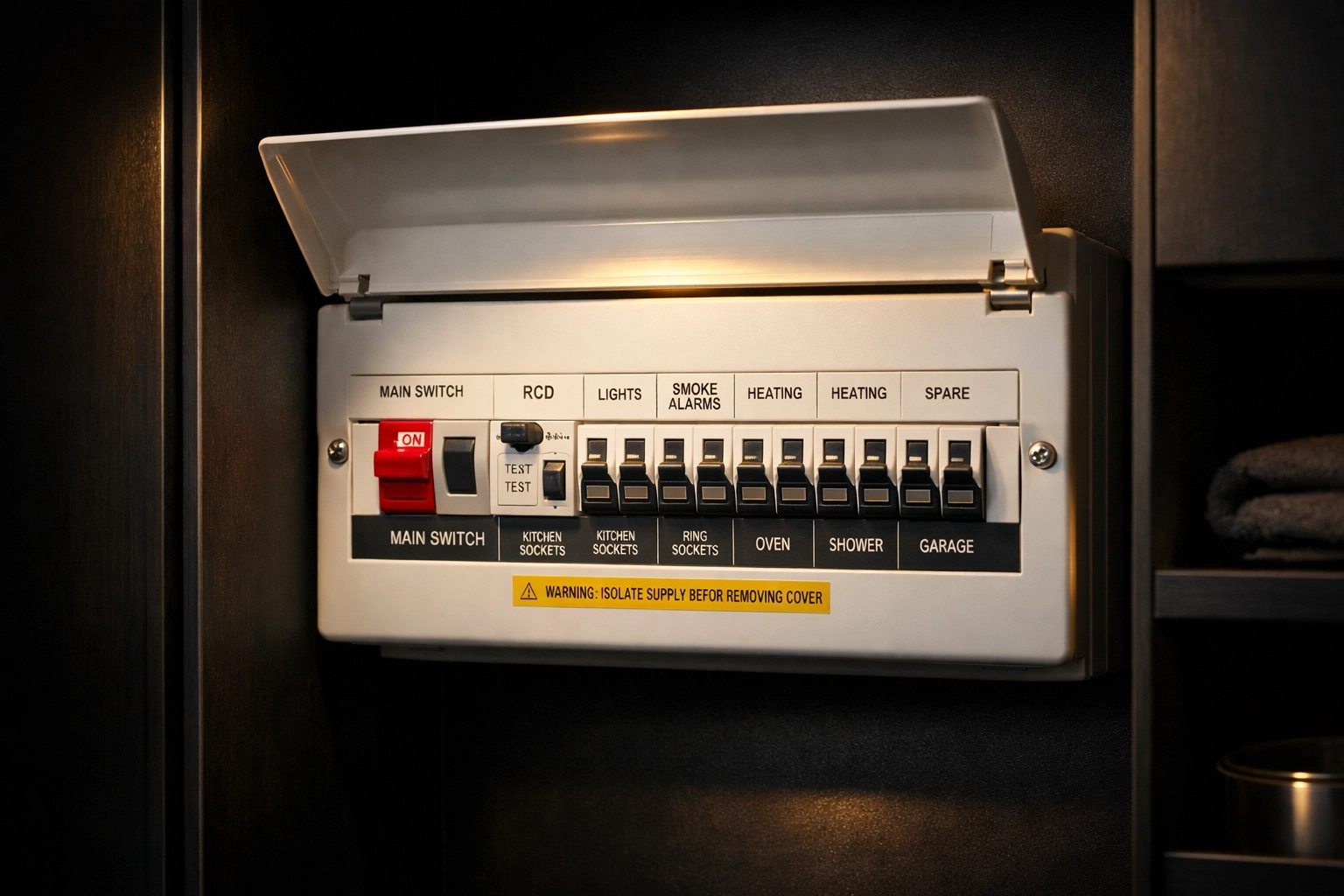
Do you find yourself heading to the consumer unit (fuse box) more often than you’d like? If your circuit breakers trip frequently, it’s a sign that your circuits are drawing more power than they can safely handle or that there is a short circuit somewhere in the system. While a one-off trip might be a faulty appliance, regular tripping is a major red flag.
2. Flickering or Dimming Lights
Have you noticed the kitchen lights dip when the microwave starts? Or perhaps a lamp flickers intermittently for no apparent reason? This often indicates a loose connection or an overloaded circuit. In older homes, it may also suggest that the gauge of the wire is too small for the load being placed upon it.
3. Discoloured Outlets or Burning Smells
This is perhaps the most urgent warning sign. If you notice brown or black scorch marks around your plug sockets, or if a switch feels warm to the touch, stop using it immediately. This indicates "arcing," where electricity jumps across a gap, creating intense heat. If you detect a faint smell of burning plastic or "fishy" odours (often associated with overheating bakelite and plastic), your wiring is likely melting.
4. Buzzing or Sizzling Sounds
Electricity should be silent. If you hear a faint buzzing, humming, or sizzling sound coming from an outlet or a light switch, it’s a clear indicator of a loose connection or faulty wiring. These loose connections are prime spots for electrical fires to start.
5. Tangible Electric Shocks
Have you ever felt a small "zap" when plugging in an appliance or touching a metal switch plate? While sometimes dismissed as static, a recurring shock suggests a grounding issue. This means the electricity is looking for the path of least resistance: which, in this case, is you.
The Age Factor: Is Your Property a Heritage Risk?
If your home is more than 40 years old, it is highly likely that the electrical system is reaching the end of its natural lifespan. Even if you haven't noticed the warning signs listed above, the materials used decades ago simply weren't designed for the longevity or the power demands of 2026.
- The Transition from Lead/Rubber to PVC: If your home still has lead-sheathed or rubber-insulated cabling (common in pre-1960s builds), the insulation is almost certainly brittle and disintegrating. Modern PVC-coated cabling is far safer and more durable.
- The Aluminum Issue: In some mid-century properties, aluminum wiring was used instead of copper. Aluminum expands and contracts more than copper, which leads to loose connections and a significantly higher risk of fire at junctions.
- Lack of Grounding: Many older systems lack proper grounding (earthing). Without a dedicated path for excess electricity to escape safely to the ground, the risk of electrocution during a fault is drastically increased.
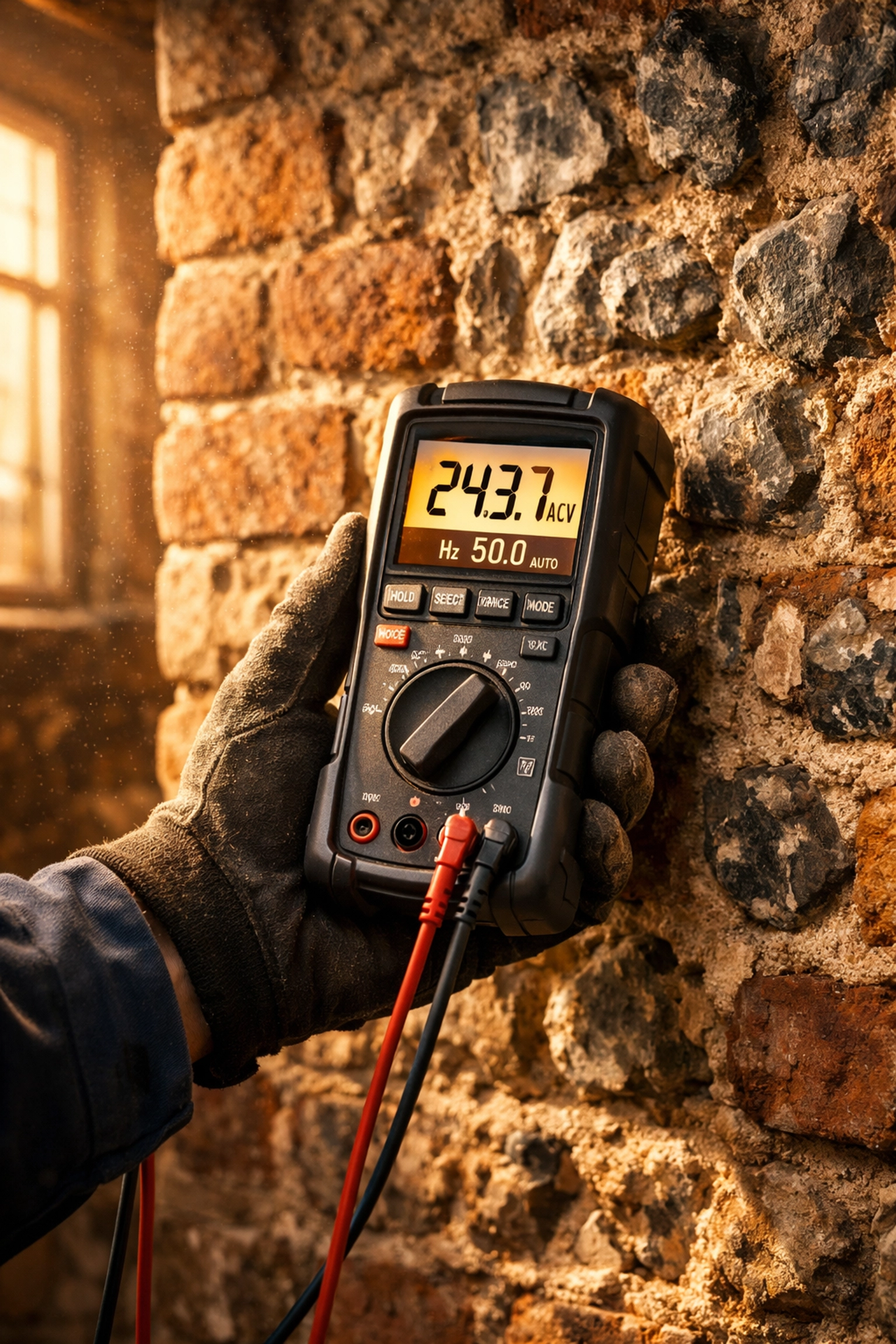
If you are unsure about the age or condition of your system, the best first step is an Electrical Installation Condition Report (EICR). Think of this as an "MOT for your house." At Swanbourne Construction Ltd, we always recommend a professional inspection before starting any significant aesthetic work.
Why Rewiring is the Secret to a Successful Renovation
If you are planning extensions in Chichester or a major reconfiguration of your home, the "first fix" stage is the perfect time to address a rewire.
Why? Because a full rewire is a disruptive process. It involves lifting floorboards and "chasing" cables into walls (cutting channels into the plaster). If you’ve just spent thousands on bespoke cabinetry and designer wallpaper, the last thing you want is an electrician telling you they need to cut holes in your new walls to fix a faulty circuit.
The Strategic Benefits of Rewiring During Construction:
- Future-Proofing: You can plan for where you will need power, not just where it currently exists. Think about integrated USB ports, outdoor lighting for your new patio, and dedicated circuits for home offices or media rooms.
- Increased Property Value: A home with a brand-new, certified electrical system is a massive selling point. It provides peace of mind to surveyors and buyers, potentially speeding up a future sale.
- Insurance Compliance: Many insurance providers now require proof that older homes have been inspected or rewired. A certified rewire can sometimes even lower your premiums.
- Smart Home Integration: Modern wiring makes it much easier to install smart lighting systems, integrated security cameras, and high-speed data cabling (Cat6) throughout the house.
What to Expect During a Full Rewire
A full rewire typically happens in two stages:
- First Fix: This is the "messy" part. Walls are chased, floorboards are lifted, and the new cables are installed. This usually happens when the house is a shell or during the early stages of a renovation project.
- Second Fix: Once the walls are plastered and painted, the "fittings" are installed. This includes the light switches, socket faces, and the final connection to a modern consumer unit equipped with RCDs (Residual Current Devices) that can shut off power in milliseconds if a fault is detected.
The duration depends on the size of the property, but for a standard three-bedroom home in West Sussex, you should expect the process to take between 5 to 10 days.

Can I Do It Myself?
In short: No.
Electrical work in the UK is governed by Part P of the Building Regulations. Most electrical work in "special locations" (like kitchens and bathrooms) or any work involving a new circuit or a consumer unit must be notified to Building Control.
Working with a professional firm like Swanbourne Construction Ltd ensures that all work is carried out by qualified electricians who will provide you with the necessary certification upon completion. This certificate is a legal document that you will need if you ever decide to sell or remortgage your property.
Take the Stress Out of Your Electrical Upgrade
We understand that the prospect of a rewire can feel daunting. It sounds like a lot of mess, a lot of disruption, and a significant expense. However, when compared to the cost: both financial and emotional: of a house fire or a complete system failure, it is an investment that pays for itself in safety and peace of mind.
If you’re noticing flickering lights, or if you’re planning a house extension and want to ensure your home is built on a solid, safe foundation, we are here to help.
Our team specializes in managing complex renovations where structural changes and system upgrades go hand-in-hand. We don't just see the wires; we see the family that relies on them every day.
Are you ready to make your home safer and smarter?
Don't wait for a flickering light to become a bigger problem. Contact us today for a professional consultation. Whether you are in Bognor, Chichester, or anywhere across West Sussex, let’s ensure your home is powered for the future.