
Living on the South Coast, we are all too familiar with the biting sea breeze that sweeps through Bognor Regis or the damp chill that settles over the West Sussex countryside in mid-winter. For many homeowners in our region, the battle against the elements isn't just fought with umbrellas and heavy coats: it is fought within the very fabric of their homes.
If you find yourself constantly nudging the thermostat higher or wearing three layers of wool indoors, the culprit likely isn't your boiler; it’s your insulation. At Swanbourne Construction Ltd, we see property owners facing the same recurring frustrations: escalating energy bills, persistent drafts, and a "cold" feeling that no amount of heating seems to fix.
Insulation is the silent engine of a comfortable home. It is a thermal barrier designed to keep heat exactly where you want it: inside during the winter and outside during the summer. Beyond the immediate comfort, the landscape of UK property is changing. With the 2026 EPC (Energy Performance Certificate) changes on the horizon, upgrading your home’s efficiency is no longer just a "nice-to-have" improvement; it is becoming a regulatory and financial necessity.
1. The Financial Logic: Why Insulation is Your Best Investment
Before we dive into the technicalities of glass wool and PIR boards, let’s look at the numbers. According to the EPA, homeowners can save an average of 15% on heating and cooling costs by properly sealing and insulating their homes. In the UK, where energy prices remain volatile, these savings can be even more dramatic.
Maximising your ROI
Think of insulation as a one-time cost that pays a dividend every single month. Unlike a new kitchen or a bathroom renovation: which are fantastic for lifestyle: insulation is a "hidden" upgrade that actively puts money back in your pocket. Without adequate protection, your home can lose up to 60% of its energy through the walls and roof. Essentially, you are paying to heat the West Sussex sky.
Are you curious about how these improvements might fit into a larger project? You can explore our FAQ for more insights on how we integrate efficiency into every build.
2. Loft Insulation: The Low-Hanging Fruit
If you are looking for the most effective way to stop heat loss immediately, look up. Heat rises, and in an uninsulated home, a staggering 25% of your heat escapes through the roof.
The "Blanket" Effect
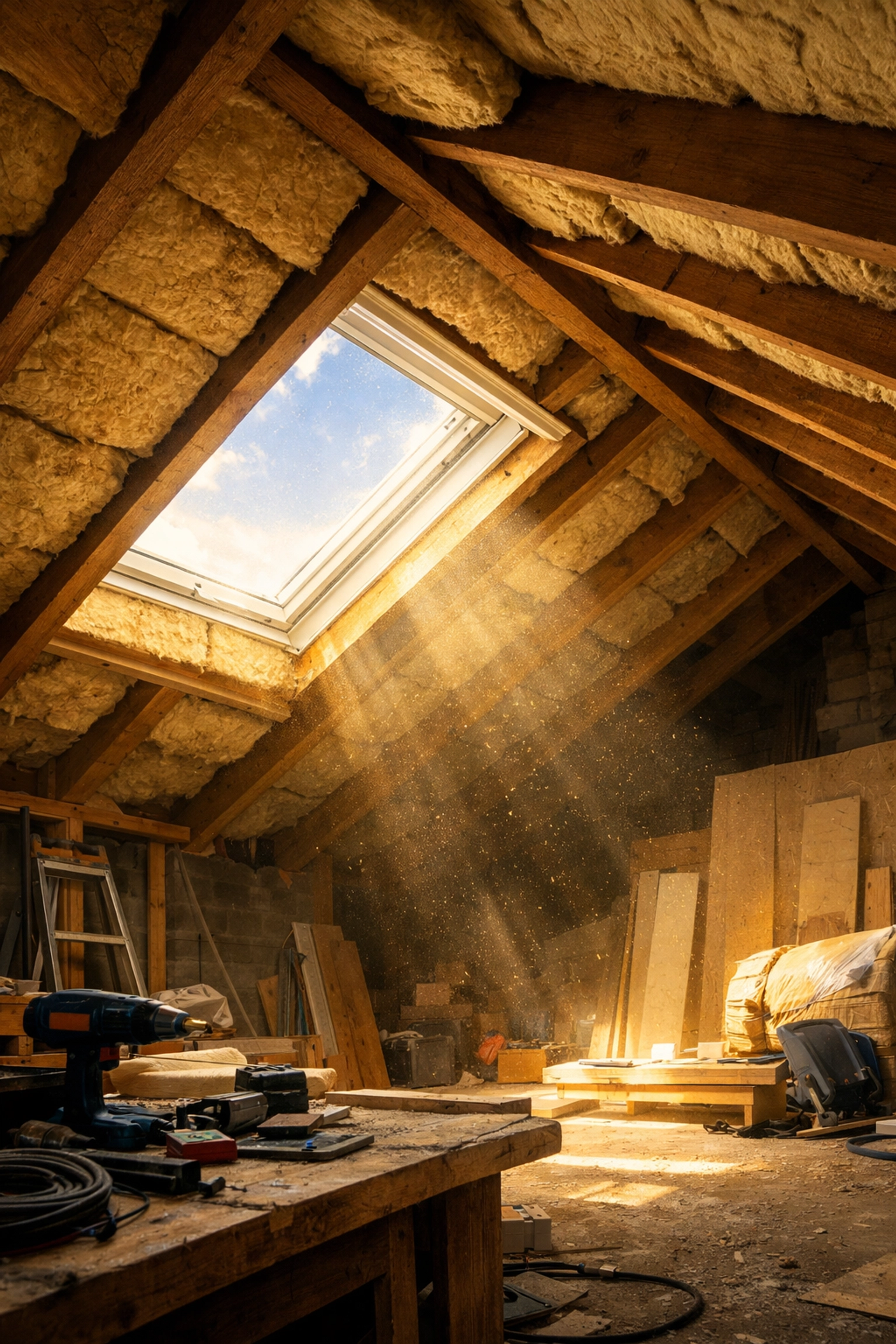
Loft insulation acts like a giant woolly hat for your house. For many older properties in Bognor Regis, the existing insulation is often degraded, compressed, or simply not thick enough to meet modern standards. The current recommendation is a depth of 270mm for mineral wool.
At Swanbourne Construction Ltd, we often handle insulation upgrades during loft conversions. If you are turning that dusty attic into a master suite, we don't just focus on the aesthetics; we ensure the space is wrapped in high-performance materials that keep the room habitable year-round.
3. Wall Insulation: Protecting the Largest Surface Area
Your walls account for about 35% of heat loss. Depending on when your home was built, you likely have one of two types of walls: cavity or solid.
Cavity Walls
Most homes built after the 1920s have a gap between two layers of brick. Filling this gap with insulation is one of the most cost-effective ways to improve your home’s thermal envelope. It is a relatively non-invasive process that can transform the "feel" of a room in a single day.
Solid Walls
If you live in one of the many beautiful Victorian or Edwardian properties scattered across West Sussex, you likely have solid walls. These have no gap to fill, meaning you need to choose between Internal Wall Insulation (IWI) or External Wall Insulation (EWI).
- Internal insulation involves adding insulated PIR boards to the inside of your walls, which are then plastered over.
- External insulation involves fixing a layer of insulation material to the outside of the house and covering it with a high-quality render.
While solid wall insulation is a larger undertaking, the results are transformative. It’s about more than just heat; it protects the structure of your home from the damp, salty air typical of our coastal location.
4. Floor Insulation: Banishing the Cold Feet
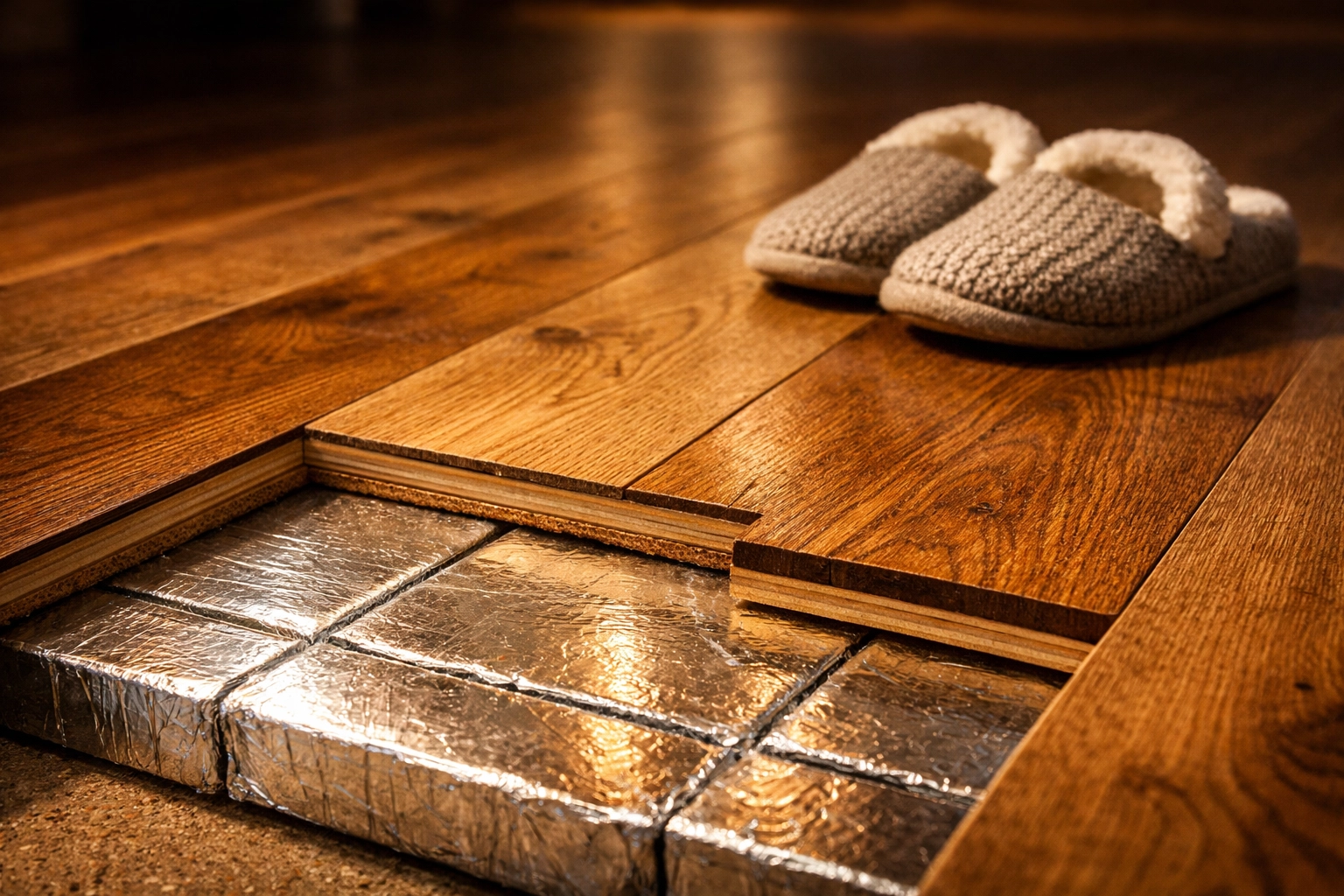
Often overlooked, floors account for about 10% of heat loss. If you have a suspended timber floor (common in older homes), you might literally be able to feel the cold air rising through the gaps in the floorboards.
Sealing the Ground
Insulating under the floorboards on the ground floor can save around £75–£110 a year in a typical detached home. If you have concrete floors, we can lay high-density insulation boards over the top before installing your new flooring. This is a particularly popular choice during rear extensions, where we can ensure the new living space is seamless and warm from the ground up.
5. The 2026 EPC Changes: A Ticking Clock for Homeowners
The UK government has set ambitious targets for carbon reduction, and residential housing is a major focus. By 2026, new regulations are expected to tighten around Energy Performance Certificates (EPCs).
What does this mean for you?
For landlords, there have been ongoing discussions regarding a requirement for all rental properties to achieve a minimum Rating of C. For homeowners, a lower EPC rating can negatively impact your property's value and even the types of mortgage rates available to you ("Green Mortgages" often offer better rates for energy-efficient homes).
Upgrading your loft, wall, and floor insulation is the fastest way to jump from a 'D' or 'E' rating to a 'C' or above. By acting now, you aren't just saving on bills; you are "future-proofing" your investment against upcoming legislation. Whether you are building in Bognor Regis or renovating a cottage in the Downs, the EPC rating will soon be as important as the number of bedrooms.
6. Beyond the Heat: Noise and Moisture
While warmth is the primary driver, professional insulation offers two secondary benefits that significantly improve your quality of life:
A Quieter Home
Insulation materials like rock wool are excellent at sound dampening. If you live near a busy road or simply want to reduce the sound of footsteps between floors, high-quality insulation creates a much-needed acoustic barrier.
Moisture and Pest Control
Properly installed insulation, combined with correct ventilation, helps manage the dew point within your walls. This prevents interstitial condensation: the kind that happens inside the wall where you can’t see it: reducing the risk of damp and mould. Furthermore, modern insulation materials are designed to be unattractive to pests, helping keep your home's "skeleton" clean and secure.

7. Why Professional Installation Matters: The "R-Value"
You might see the term R-value mentioned in hardware stores. Simply put, this is a measure of a material's resistance to heat flow. The higher the R-value, the better the insulation.
However, the best material in the world will fail if it is installed incorrectly. Gaps as small as 1% in your insulation coverage can lead to a 10% loss in thermal efficiency. This is why choosing a local builder in Bognor Regis with a reputation for precision is vital.
At Swanbourne Construction Ltd, we take a holistic view of your property. We don't just "stuff some glass wool in the rafters." We look at the air-tightness, the ventilation, and the specific structural needs of your home to ensure that the insulation performs exactly as it should for decades to come.

Taking the Next Step for a Warmer Future
Are you tired of the "winter chill" invading your living room? Does the thought of the 2026 EPC changes have you worried about your property's value?
Upgrading your insulation is one of the most practical, rewarding, and sustainable steps you can take as a homeowner. It is an investment in your comfort, your bank account, and the planet.
If you are planning a renovation, an extension, or simply want to improve your current home’s efficiency, let’s have a conversation. At Swanbourne Construction Ltd, we pride ourselves on being trusted builders in West Sussex, providing expert guidance and high-quality craftsmanship to every project.
Ready to make your home more efficient? Explore our blog for more tips, or contact us today to discuss how we can help you create a warmer, more sustainable space for the years ahead. Your future, warmer self will thank you.