
It is the question every homeowner in Bognor Regis asks the moment they start looking at floor plans or scrolling through Pinterest for kitchen inspiration: "Do we really have to move out?"
At Swanbourne Construction Ltd, we see this dilemma weekly. You love your home, you’ve finally saved up for that dream house extension, but the thought of paying for a rental property or squeezing the family into a Premier Inn for three months makes your eyes water.
The short answer is: Yes, you usually can. But the long answer? That depends entirely on your project’s scope, your personal "chaos threshold," and how much you value your morning shower. Living through a renovation is a test of character, but with the right planning, it’s a challenge you can absolutely win.
The "Can I?" vs. The "Should I?"
There is a big difference between being physically able to sleep in a house and it being a good idea for your mental health. Before you pack your sleeping bag, you need to evaluate the scale of the work.
If you are adding a loft conversion in Chichester, the disruption is mostly vertical. Most of the heavy lifting happens above your head, and for a large chunk of the project, the builders will access the site via external scaffolding. In this scenario, staying put is a no-brainer.
However, if you are doing a full "back-to-brick" renovation where the floorboards are coming up, the wiring is being ripped out, and the roof is being replaced, staying in the property isn't just uncomfortable, it can be a safety hazard.
Factors that determine your stay:
- Percentage of the home affected: If more than 50% of your living space is a construction zone, move out.
- Access to "The Big Three": You need water, electricity, and a toilet. If the project cuts these off for more than 48 hours, you need a backup plan.
- Vulnerable residents: Do you have toddlers, pets, or family members with respiratory issues? Dust and power tools don't mix well with little ones.
The Advantages of Staying Put
Let’s look at the bright side. There are some very real benefits to remaining on-site while we work our magic.
1. Significant Cost Savings
The most obvious benefit is your bank balance. Renting a short-term let in West Sussex isn't cheap. By staying in your home, you can redirect those thousands of pounds back into your project, perhaps upgrading those kitchen worktops to quartz or opting for that premium flooring you liked.
2. Real-Time Oversight
When you live in the house, you see the progress every single evening. If a question arises about the exact placement of a light switch or the direction of a door swing, you are right there to answer it. This "on-the-spot" decision-making can actually speed up a project.
3. Security and Continuity
A vacant house is a vulnerable house. Having you on-site provides natural security for the building materials and tools. Plus, there is a psychological comfort in sleeping in your own bed (even if that bed is currently in the dining room).
The Reality Check: The Cons of Living On-Site
We wouldn't be a trusted, professional builder if we didn't give it to you straight. Living in a construction zone is tough.
- The Dust Factor: You will find "construction dust" in places you didn't know existed. It defies physics. It gets inside closed cupboards and somehow into your socks.
- The Noise: Builders start early. If you aren't a morning person, the 8:00 AM sound of an SDS drill acting as your alarm clock will get old very quickly.
- Loss of Privacy: You’ll be sharing your home with a team of tradespeople. Your hallway becomes a thoroughfare, and your driveway becomes a loading bay.
- Mental Fatigue: Living in a state of "unfinishedness" is draining. Looking at exposed wires and bare plaster every night can make the project feel like it's taking longer than it actually is.
Creating a "Dust-Free Zone"
If you decide to stay, your number one priority is creating a sanctuary. You need at least one room, ideally a bedroom or a snug, that is strictly off-limits to tools, boots, and dust.
- The Plastic Barrier: We recommend using heavy-duty plastic sheeting and zip-doors to seal off the work area.
- Air Purifiers: Invest in a good HEPA-filtered air purifier for your "safe room." It helps catch the microscopic particles that escape the plastic sheets.
- No-Go Zones: Clearly communicate with your lead builder about which areas are private. At Swanbourne Construction, we always respect these boundaries to ensure you have a space to retreat to at the end of the day.
Managing the "No Kitchen" Crisis
A kitchen renovation or a large rear extension usually means you lose your cooking facilities for weeks. How do you survive without a hob?
- The Temporary Kitchen: Move your fridge, microwave, and kettle into the living room or a spare bedroom.
- The Power Trio: Buy an air fryer, a slow cooker, and a single-ring induction hob. You’d be surprised how many gourmet meals you can make with just those three items.
- The Washing Up Station: Washing dishes in the bathtub is a rite of passage for renovators. It’s annoying, but it’s temporary!

When is it Better to Move Out?
There are moments when we will look a client in the eye and say, "For your own sanity, please book an Airbnb."
Major Roof Work: If the roof is coming off, your home is essentially a giant tent. If the West Sussex weather decides to turn (as it often does!), the stress of potential leaks and the drop in temperature is not worth it.
Asbestos or Hazardous Materials: If your older Bognor property requires asbestos removal, the site must be cleared of all residents for safety. We handle this with extreme care, but "living around it" is not an option.
Floor Sanding and Refinishing: If you are having all your downstairs floors sanded and varnished, you literally cannot walk on them for days. Unless you plan on levitating, you’ll need to be elsewhere.
Total Utility Shutdown: If the main water stack or the entire consumer unit (fuse box) is being replaced, you might be without essentials for several days. No toilet and no Wi-Fi? That’s usually the breaking point for most families.
How to Prepare Your Home (and Mind) Before We Arrive
Preparation is the difference between a "successful adventure" and a "total nightmare."
- Declutter Ruthlessly: Anything you don't need during the build should be boxed up and put in off-site storage or a garage. The less "stuff" in the house, the less "stuff" there is to get dusty.
- Protect Your Valuables: Don't just move them; hide them. Fragile items should be packed away to prevent accidental bumps.
- Set a Routine: Talk to us about our schedule. Knowing that the team arrives at 8:00 AM and leaves at 4:30 PM allows you to plan your showers and your quiet time.
- Plan an "Escape": Schedule a few weekends away during the messiest phases of the build. A few nights at a relative's house or a quick trip to the coast can recharge your batteries.
Why Communication is Everything
The success of staying in your home depends entirely on the relationship you have with your builder. You need a team that understands they aren't just working on a "site": they are working in your home.
At Swanbourne Construction Ltd, we pride ourselves on being "polite builders." We tidy up at the end of every day, we use dust extraction tools whenever possible, and we keep you updated on exactly when the "noisy bits" are going to happen.
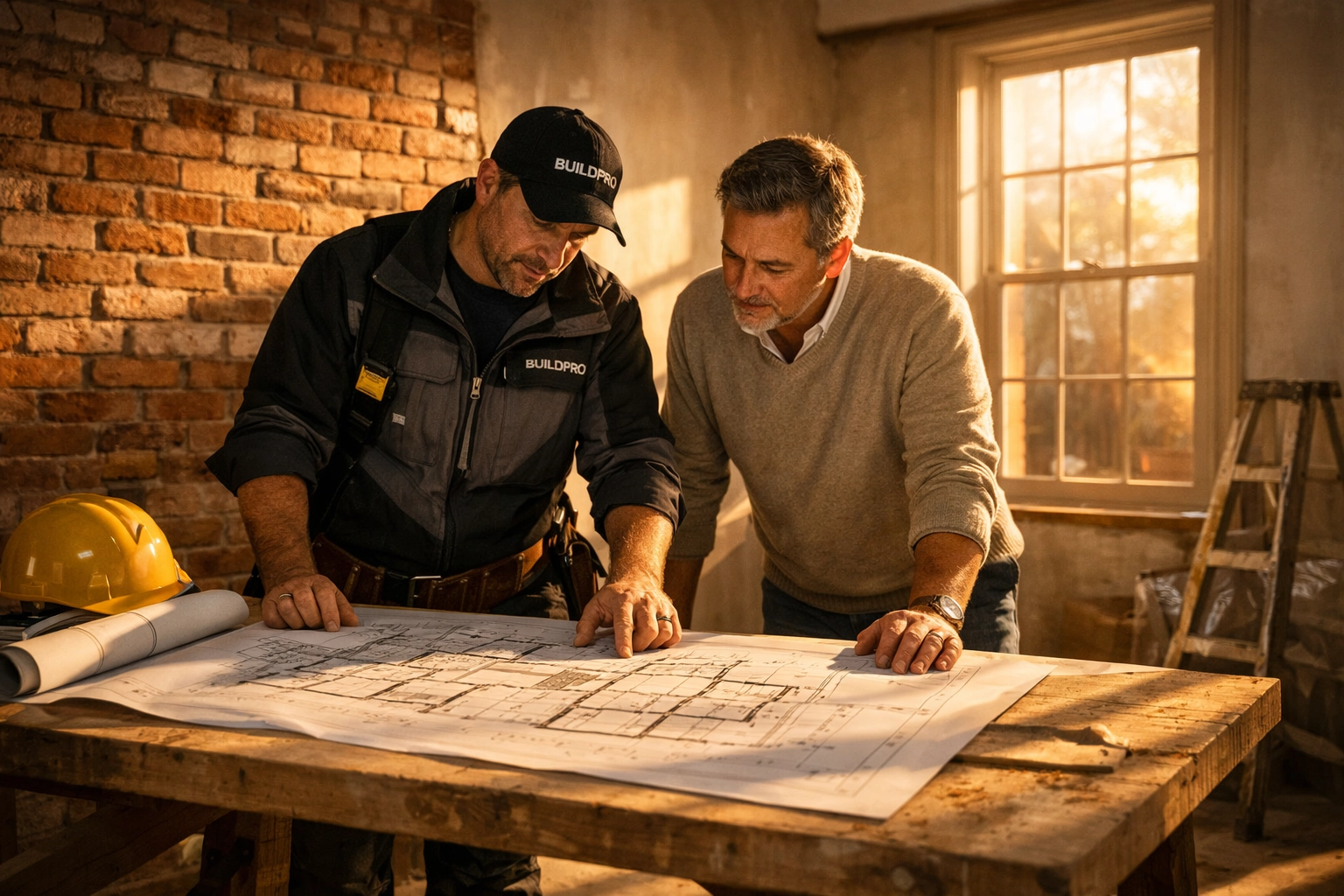
Are you worried about how a project might affect your daily life? We’ve helped dozens of families in Bognor Regis and across West Sussex navigate this exact situation. We can look at your specific plans and give you an honest, professional opinion on whether staying put is feasible.
Ready to start your transformation?
Whether you’re planning a kitchen overhaul or a sprawling extension, let’s talk about how to make it happen with as little stress as possible. Contact us today for a consultation, and let's turn that vision into a reality( while keeping your sanity intact!)