
If you are planning a home improvement project in Bognor Regis, one of the first hurdles you will encounter isn't the design or the budget, it’s the boundary. It is a question we hear constantly at Swanbourne Construction Ltd: "How close can I actually get to my neighbour's fence?"
Whether you are looking to add a sun-drenched kitchen diner or a much-needed home office, understanding the "invisible lines" of your property is vital. Get it right, and you maximise your living space while maintaining harmony with your neighbours. Get it wrong, and you could face expensive legal disputes, Party Wall issues, or even a knock on the door from a local planning enforcement officer.
In this guide, we will break down the complex rules regarding boundaries, the 45-degree rule, and how a professional builder in Bognor Regis can help you navigate these regulations safely.
The Short Answer: Can You Build Right Up to the Line?
Technically, yes: but it comes with significant caveats. In the world of UK construction, there is a distinction between what is physically possible and what is legally and practically advisable.
Under Permitted Development (PD) rights, you can often build an extension that sits entirely within your property boundary. However, most experts suggest leaving a minimum gap of 50mm (approximately 2 inches) from the physical boundary line. This ensures that no part of your new structure: including the foundations, the gutters, or the roof overhang: encroaches onto your neighbour’s land.
Why the 50mm gap matters:
If your guttering hangs over the boundary line, it is technically a trespass. If your foundations extend into your neighbour's soil without prior agreement, you are in breach of property rights. By leaving a small "buffer" zone, you ensure that the entirety of your new asset remains legally and physically on your side of the line.
Understanding Permitted Development vs. Planning Permission
When you decide to extend your home in West Sussex, your project will fall into one of two categories. The rules for how close you can build to the boundary vary slightly between them.
1. Permitted Development Rights
Many homeowners in Bognor Regis can extend their homes without needing a full planning application, provided they stay within specific limits.
- Side Extensions: Under PD, a side extension can be no wider than half the width of the original house.
- Height Restrictions: If your extension is within 2 metres of a boundary, the maximum height of the eaves (where the wall meets the roof) must not exceed 3 metres. This is designed to prevent "overshadowing" and ensure your neighbour doesn't feel "boxed in."
- Single-Storey Limits: Generally, a single-storey rear extension can extend 3 or 4 metres (depending on property type) without full permission, but it must still respect the boundary line.
2. Full Planning Permission
If your design is more ambitious: perhaps a two-storey extension or a structure that takes up a significant portion of your garden: you will likely need full planning permission. In these cases, the local planning authority (such as Arun District Council) will look at how your build affects the "amenity" of the neighbouring properties.
The "45-Degree Rule": Protecting Your Neighbour’s Light
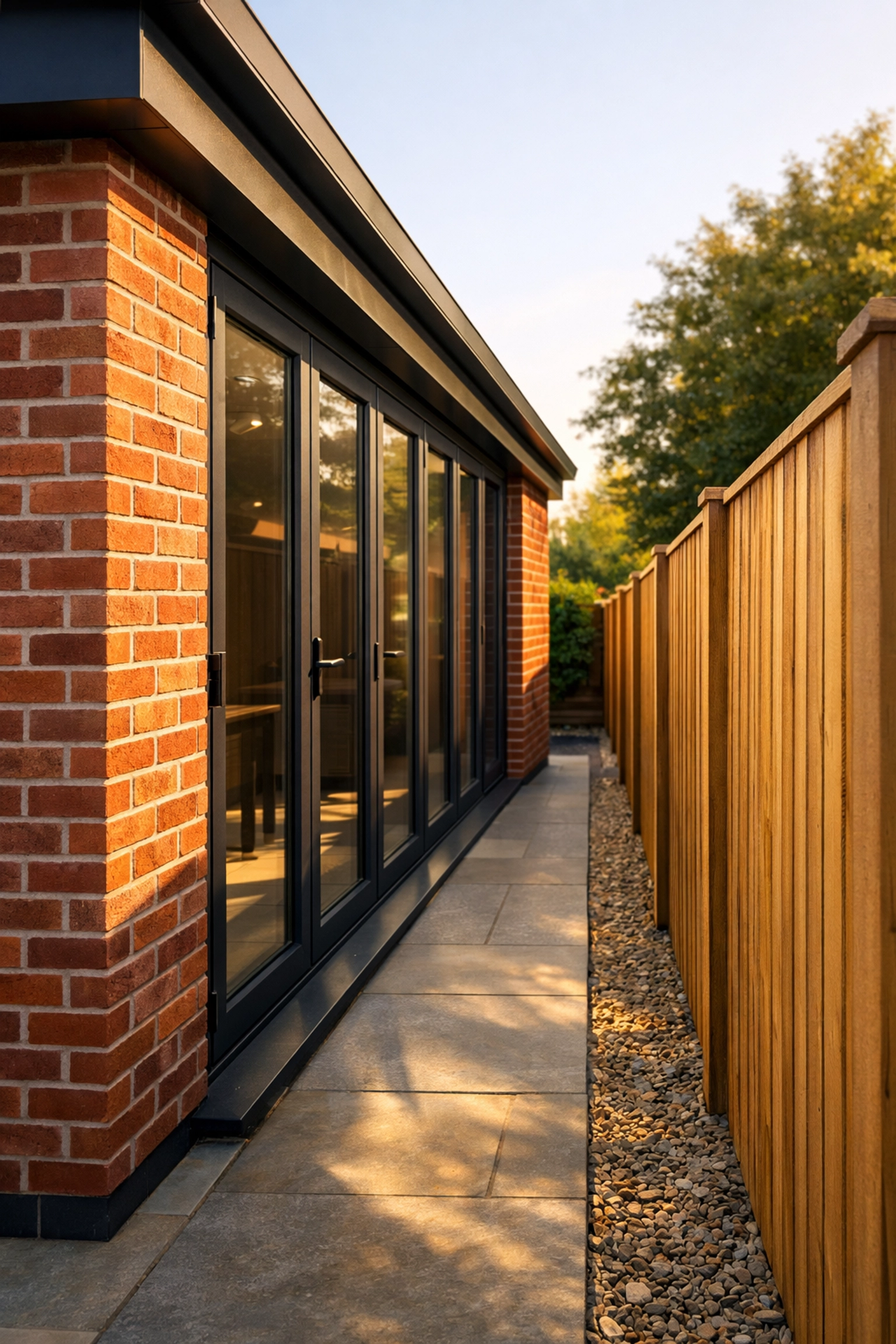
Local planning departments often apply the 45-degree rule to assess how an extension will impact a neighbour’s natural light and outlook. This is particularly relevant when you are building close to a boundary where the neighbouring property has windows.
How it works:
An imaginary line is drawn at a 45-degree angle from the centre of the nearest window on your neighbour's property. If your proposed extension crosses this line in both plan (from above) and elevation (from the side), it is likely to be rejected because it would significantly reduce their daylight.
As an experienced builder in Bognor Regis, we always recommend a pre-design consultation to ensure your plans don't inadvertently fall foul of this rule, saving you the time and cost of a rejected planning application.
The Party Wall Act 1996: A Legal Necessity
If you intend to build directly on the boundary line (the "Line of Junction") or excavate for foundations within 3 or 6 metres of a neighbouring structure, the Party Wall Act 1996 comes into play.
This is a federal piece of legislation designed to prevent and resolve disputes. It doesn't stop you from building, but it does require you to follow a specific procedure:
- Notice: You must serve a formal notice to your neighbours at least two months before work starts.
- Agreement: If your neighbour agrees in writing, you can proceed.
- Dissent: If they do not agree (or don't respond), you are "in dispute" and must appoint surveyors to create a Party Wall Award.
Pro Tip: Maintaining a good relationship with your neighbours is the most effective way to keep costs down. A friendly chat over a cup of coffee before the formal notice arrives can prevent thousands of pounds in surveyor fees.
Building Regulations and Fire Safety
While Planning Permission focuses on how the extension looks and its impact on the neighbourhood, Building Regulations focus on how the extension is built and its safety.
When building close to a boundary, fire safety becomes a primary concern. The closer you build to a boundary, the more "fire-resistant" that wall must be.
- Unprotected Areas: Regulations limit the amount of "unprotected area" (windows and doors) you can have on a wall that sits close to a boundary. This is to prevent fire from spreading from one house to another.
- Material Choice: You may be required to use specific non-combustible materials for the external face of the wall if it is within 1 metre of the boundary.
At Swanbourne Construction Ltd, we manage the Building Control approval process for our clients, ensuring that every centimetre of your build is compliant with the latest safety standards.
Potential Neighbour Issues and How to Avoid Them
Building an extension is an exciting chapter for you, but it can be a source of anxiety for those living next door. Common concerns include:
- Loss of Light: Even if you pass the 45-degree rule, neighbours may worry about "overshadowing" their garden.
- Privacy: Will your new side-extension windows look directly into their bedroom? (Note: Side-facing windows at the first-floor level must usually be obscured glass and non-opening).
- Maintenance Access: If you build right up to the boundary, how will you maintain the wall or clear the gutters in five years? You have no legal right to enter your neighbour’s land to maintain your property unless specifically granted in a deed or via the Access to Neighbouring Land Act 1992 (which can be a slow legal process).
Our Approach: We encourage "future-proof" building. Sometimes, setting the wall back by 150mm–300mm provides enough space for you to maintain your property without ever needing to step foot on your neighbour's lawn.
Local Context: Building in Bognor Regis and Chichester
The architectural landscape of West Sussex is diverse. From the compact Victorian terraces in the heart of Bognor Regis to the more spacious 1930s detached homes in Aldwick or Felpham, the "right" distance from a boundary varies.
In more rural or conservation-heavy areas like Chichester or Arundel, the rules can be even more stringent. Local character often dictates that side-returns should be set back to maintain the "rhythm" of the street scene.
Why Choosing the Right Builder Matters
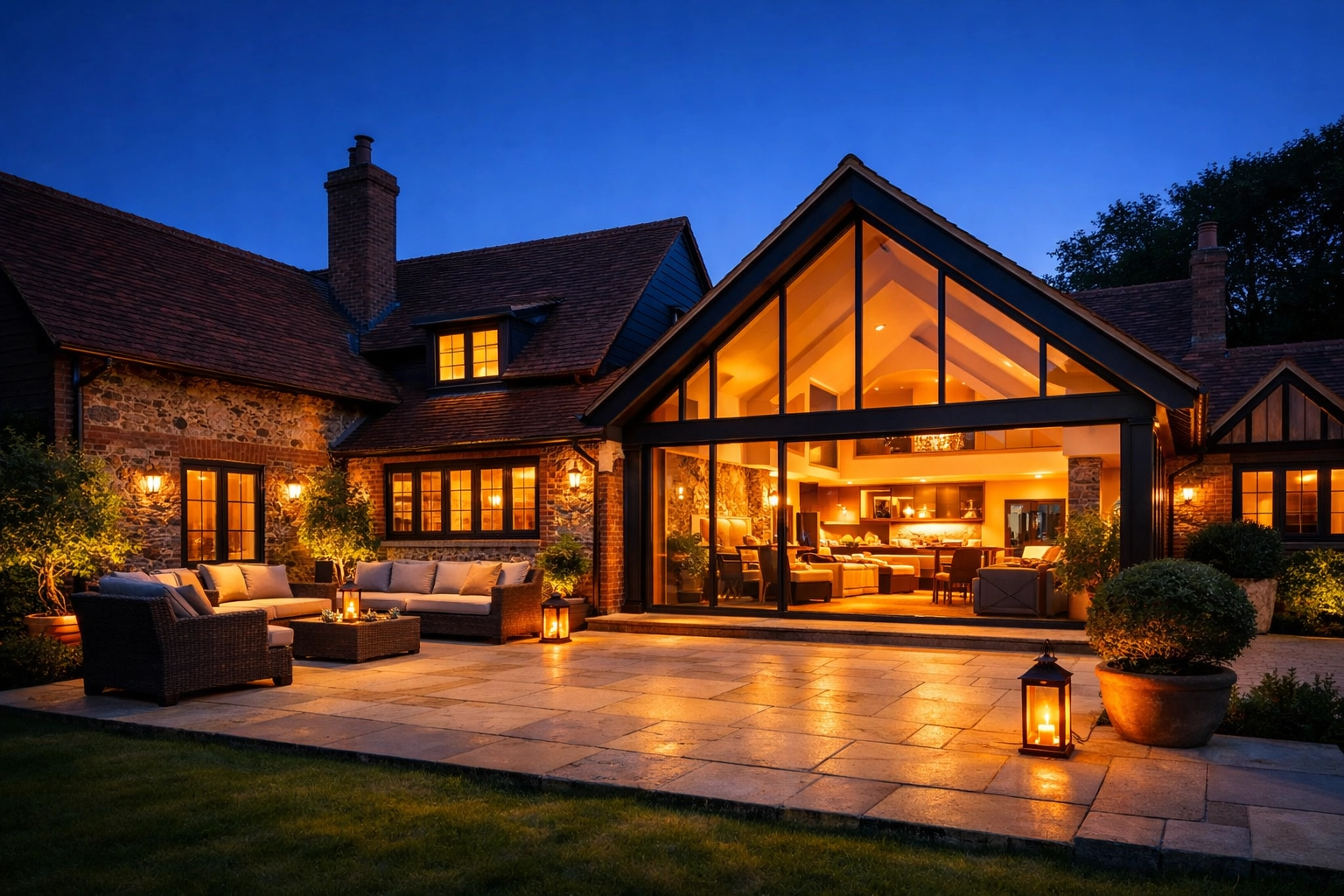
Navigating boundary rules requires a blend of legal knowledge, structural expertise, and diplomatic communication. Choosing a local expert like Swanbourne Construction Ltd means you aren't just hiring someone to lay bricks; you are hiring a partner who understands the local planning nuances of the Arun and Chichester districts.
We help you:
- Identify potential boundary "red flags" during the initial consultation.
- Work alongside architects to ensure designs maximise space without triggering planning refusals.
- Ensure all foundations are correctly offset to avoid encroachment.
- Manage the project timeline so your neighbours aren't inconvenienced for longer than necessary.
Conclusion: Start Your Journey with Confidence
Building an extension is a significant investment that should add value to your life and your property. While boundary rules can seem daunting, they are ultimately there to protect everyone's rights and safety. By understanding the 50mm buffer, the 45-degree rule, and the requirements of the Party Wall Act, you can plan your project with total peace of mind.
Are you ready to transform your home? Whether you are in the early stages of dreaming or have plans ready to go, we are here to help.
Contact Swanbourne Construction Ltd today for an expert consultation. Let's discuss how we can bring your vision to life while keeping your boundaries: and your neighbours: perfectly in check.