
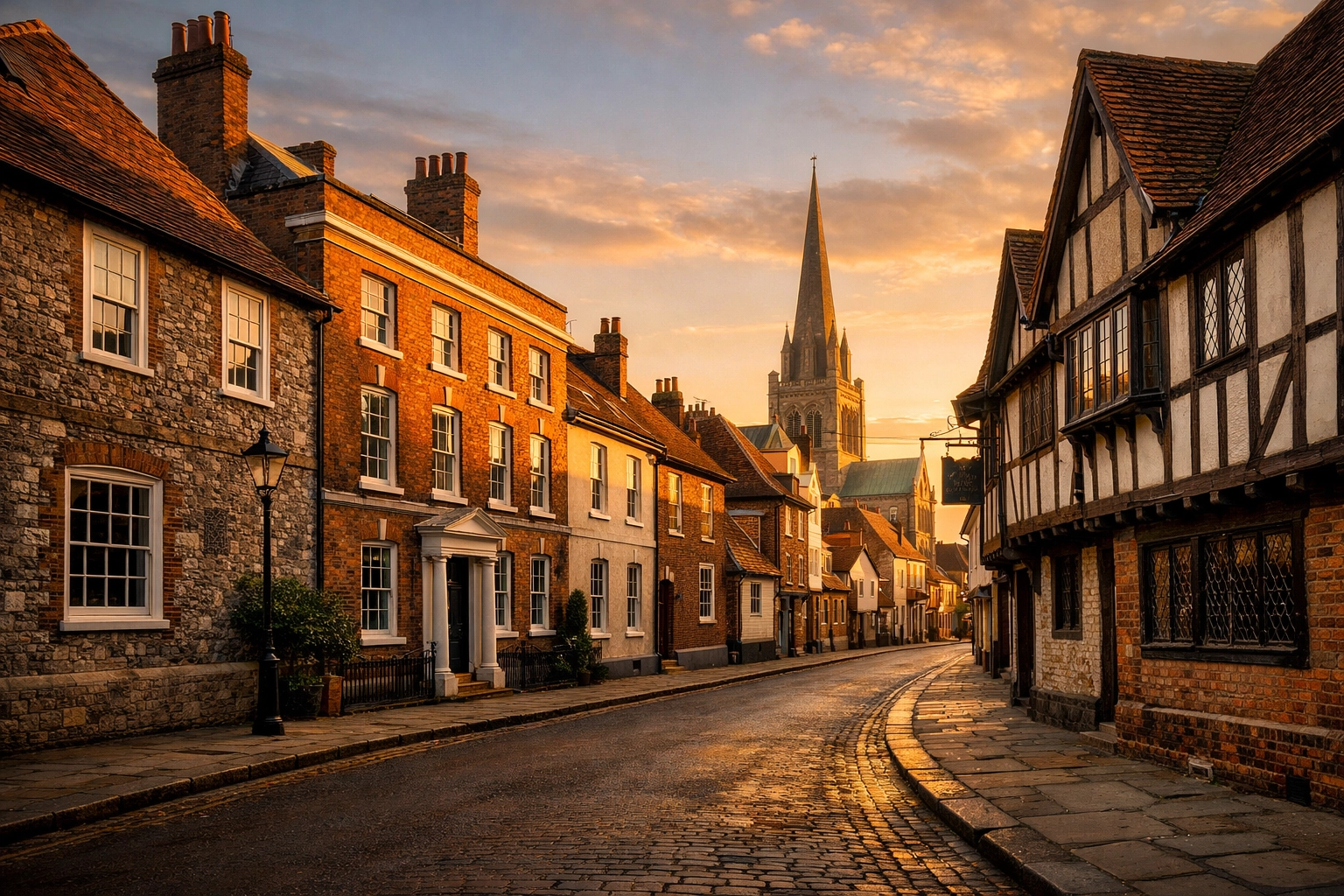
Owning a home in the historic heart of Chichester or under the watchful gaze of Arundel Castle is a dream for many. These areas are defined by their Narrow cobbled streets, flint-walled cottages, and grand Georgian facades that tell a story of West Sussex history. However, when the time comes to modernise your kitchen, extend your living space, or simply replace draughty windows, that dream can often feel like a bureaucratic maze.
Living in a Conservation Area means you aren't just a homeowner; you are a custodian of local heritage. At Swanbourne Construction Ltd, we’ve spent over 20 years navigating the delicate balance between preserving the past and building for the future. Whether you are overlooking the Priory Park in Chichester or tucked away near the River Arun, this guide will help you understand how to renovate successfully in 2026.
1. Understanding the 'Conservation' Label: It’s More Than Just a Title
A Conservation Area is an area of "special architectural or historic interest, the character or appearance of which it is desirable to preserve or enhance." For Chichester, this covers the historic Roman city walls and the four main quadrants. For Arundel, it encompasses almost the entire town centre, focusing on the medieval layout and the Victorian influence of the Estate.
The primary hurdle for homeowners is that Permitted Development (PD) rights: the rules that allow some improvements without planning permission: are significantly restricted in these zones.
The "Character" Factor
In these areas, the local authority (Chichester District Council or the South Downs National Park Authority for Arundel) isn't just looking at your house; they are looking at how your house fits into the street scene. This means even minor changes to the front or side of your property could require a full planning application.
2. The Power of Article 4 Directions
You might have heard the term "Article 4 Direction" whispered in local planning meetings. This is a legal tool used by councils to further restrict the types of work that can be carried out without permission. In many parts of Chichester and Arundel, Article 4 directions mean you need planning permission for things that would normally be "automatic" elsewhere, such as:
- Replacing windows and doors.
- Removing or building front garden walls.
- Painting the exterior of your house a new colour.
- Installing solar panels on a roof slope facing a highway.
Before you buy a single tin of masonry paint, check if your street is under an Article 4 direction. It is a simple step that saves thousands in potential fines and "reversal orders" later. For a deeper dive into these regulations, you can read our guide on the ultimate guide to planning permission in West Sussex.
3. Windows and Doors: The Eyes of the Home
One of the most common conflicts in conservation renovations involves windows. By 2026, energy efficiency is a top priority for every Sussex homeowner, but the planning office will almost always prioritise aesthetic authenticity.
Traditional vs. Modern Materials
If you have original timber sash windows, the council will likely insist on repair rather than replacement. If replacement is the only option, they will demand "like-for-like" materials. This usually means high-quality timber. While high-end uPVC has come a long way, it is still frequently rejected in the Chichester conservation core unless it is a very specific, heritage-approved flush casement design.
Double Glazing in 2026
Gone are the days when conservation meant you had to stay cold. Slim-profile double glazing or "vacuum glass" is now widely accepted if fitted into traditional timber frames. This allows you to maintain that historic Arundel look while benefiting from 21st-century thermal performance.
4. Extending with Sensitivity
We all want more space, but in a Conservation Area, your extension needs to be "subservient" to the original building. This means it shouldn't overshadow or dominate the historic structure.
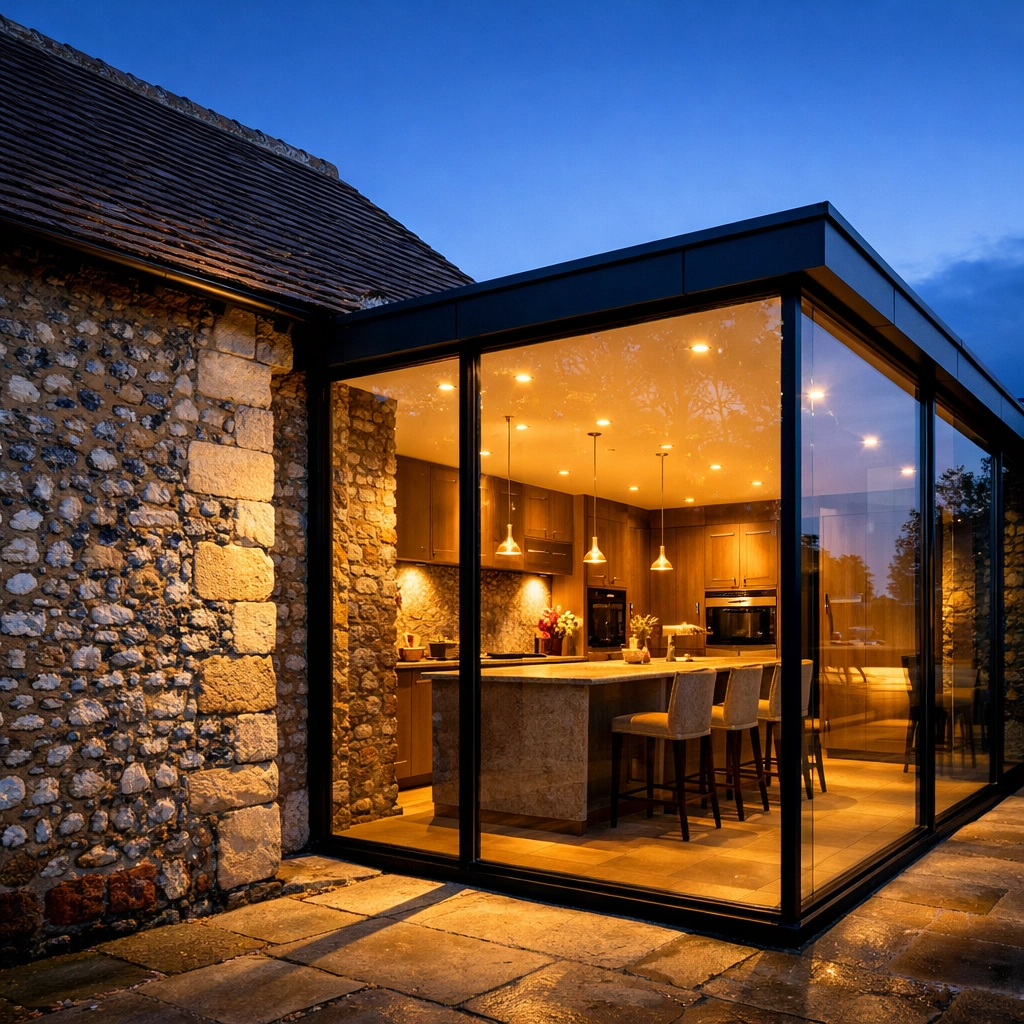
- Matching Materials: If your Arundel cottage is built from Sussex flint and lime mortar, your extension should ideally use the same. At Swanbourne Construction, we pride ourselves on sourcing reclaimed materials that make a new extension look like it has been there for a century.
- The Design Approach: You have two choices: Continuity (making the new part look exactly like the old) or Contrast (using a very modern, high-quality glass and steel design that clearly differentiates the old from the new). Both can work, but the latter requires a very skilled architect and a sympathetic builder.
Thinking about a rear extension? See how we approach maximising your home and lifestyle through extensions.
5. The Heritage Impact Assessment (HIA)
When you submit a planning application in a conservation area, you can’t just send in a few drawings. You often need a Heritage Impact Assessment. This is a document that explains why your property is important and how your proposed changes will protect its character.
This is where our 20+ years of local experience comes into play. We understand what the Chichester and Arundel planning officers are looking for. We know that mentioning the specific "rhythm of the street" or the "historic roofline" in your application can be the difference between a "Yes" and a "No."
6. Energy Efficiency and the 'Green' Transition
In 2026, we are seeing a massive push for air-source heat pumps and solar energy. However, placing a large, whirring heat pump on the front of a Grade II listed building in Arundel is a non-starter.
- Discreet Placement: We work with homeowners to find "blind spots" for modern tech: hidden valleys in rooflines for solar panels or landscaped enclosures for heat pumps.
- Insulation: Internally, you have more freedom. Breathable wood-fibre insulation is a fantastic way to warm up old Sussex homes without causing damp issues (a common problem when using modern PIR boards in old flint walls).
7. Choosing the Right Partner
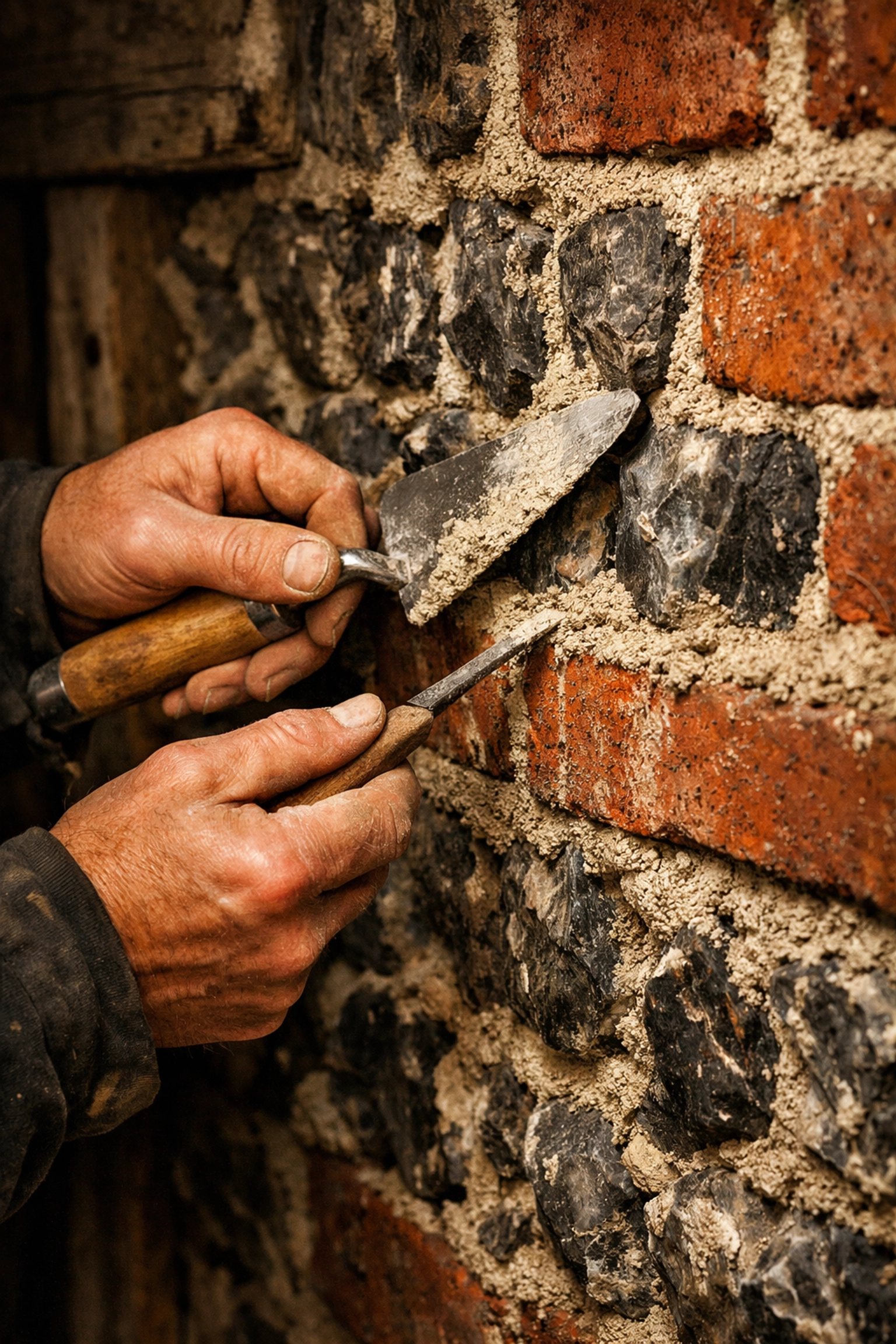
Working in a conservation area isn't the time for a "budget-first" general builder who usually works on modern estates in Bognor Regis. You need someone who understands lime mortar, lead work, and the specific structural quirks of timber-framed buildings.
As a local builder, we’ve seen it all: from hidden wells in Arundel cellars to 300-year-old beams in Chichester that need specialist reinforcement. Choosing a team that understands the local landscape is vital. Learn more about why choosing a local builder in Bognor Regis and the surrounding areas makes such a difference to your project's success.
8. Financial Reality: Is it Worth It?
There is no denying that renovating in a conservation area costs more. Specialist materials (like Welsh slate or hand-made clay tiles) and skilled heritage tradespeople come at a premium. However, the ROI (Return on Investment) in Chichester and Arundel is consistently higher than in non-designated areas.
A sensitively restored period home in these locations is a "blue-chip" asset. By doing the work correctly and getting the right permissions, you aren't just making a nicer home; you are significantly de-risking your investment for the future.
Practical Tips for a Stress-Free Renovation:
- Talk to your neighbours early: In tight-knit communities like Arundel, a friendly chat about your plans can prevent formal objections later.
- Engage a Conservation Officer: Many councils offer pre-application advice. It costs a small fee but can save months of delays.
- Check for Trees: Trees in conservation areas are also protected. You might need permission just to prune a silver birch that’s in the way of your scaffolding.
- Budget for the 'Unknown': When you peel back the layers of an old house, you will find surprises. Always keep a 15% contingency fund.
Moving Forward with Confidence
Renovating in Chichester or Arundel doesn't have to be a battle with the council. When approached with respect for the local history and a clear understanding of the rules, these projects are some of the most rewarding transformations we undertake.
At Swanbourne Construction Ltd, we are here to guide you through every stage, from the first sketch to the final coat of heritage-approved paint. We don't just build extensions; we help preserve the character of the places we call home.
Ready to discuss your Chichester or Arundel project?
Get to know Swanbourne Construction and let’s talk about how we can bring your vision to life while keeping the planners happy. Whether it's a complex loft conversion or a delicate restoration, we have the local expertise you need to succeed.