Not every loft can be successfully converted into usable living space. While loft conversions are increasingly popular across West Sussex, several structural and practical limitations can make conversion impossible or economically unfeasible. Understanding these restrictions before you invest time and money in planning can save significant disappointment and expense.
Insufficient Head Height: The Deal Breaker
The most common reason lofts cannot be converted is insufficient head height. Building regulations require a minimum of 2.2 metres of clear height from the finished floor to the highest point of the ceiling. Many properties, particularly older homes and bungalows, simply don't have adequate ridge height to meet this requirement.
Even when lowering ceilings in rooms below or raising the roof line is considered, the structural work and planning complications can make conversion economically unviable. Properties with shallow roof pitches are particularly problematic, as they provide minimal usable headroom even at the ridge line.
Complicated Truss Roof Systems
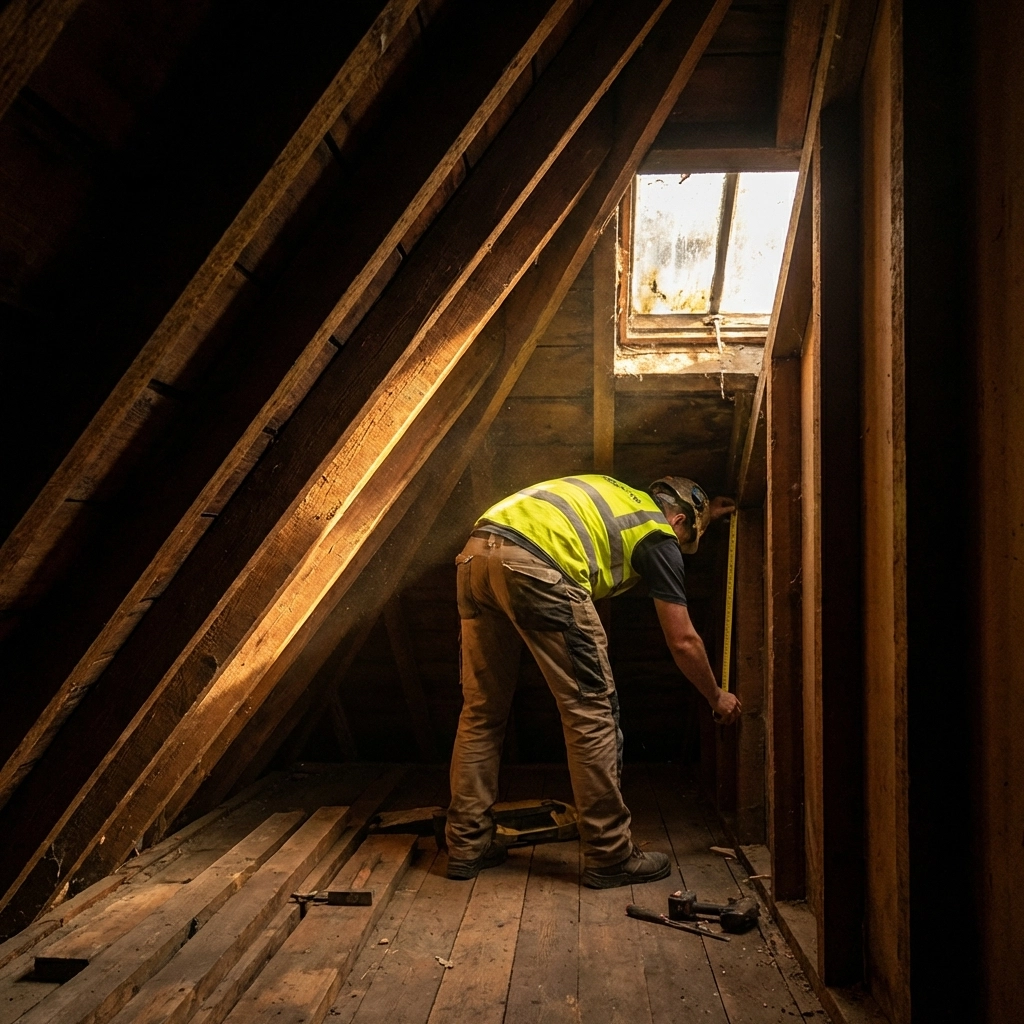
Modern properties built from the 1960s onwards often feature trussed roof construction rather than traditional cut timber roofs. These engineered trusses distribute loads across the entire roof structure, making modification extremely complex and expensive.
Converting a trussed roof typically requires:
- Complete removal of existing trusses
- Installation of new structural steelwork
- Comprehensive structural calculations
- Extensive building control involvement
The costs associated with these modifications often exceed the value added by the conversion, making the project financially unviable for most homeowners.
Listed Buildings and Conservation Restrictions
Listed buildings face significant restrictions that can make loft conversions impossible. Any alteration to a listed property requires Listed Building Consent, and planning authorities often refuse applications that would alter the building's historic character or roofline.
Similarly, properties in conservation areas may face restrictions on:
- External alterations including dormers
- Changes to roof profiles
- Installation of roof windows
- Modifications to chimney arrangements
These restrictions don't automatically prevent conversion, but they severely limit design options and may make achieving adequate space impossible.
Staircase Access Challenges
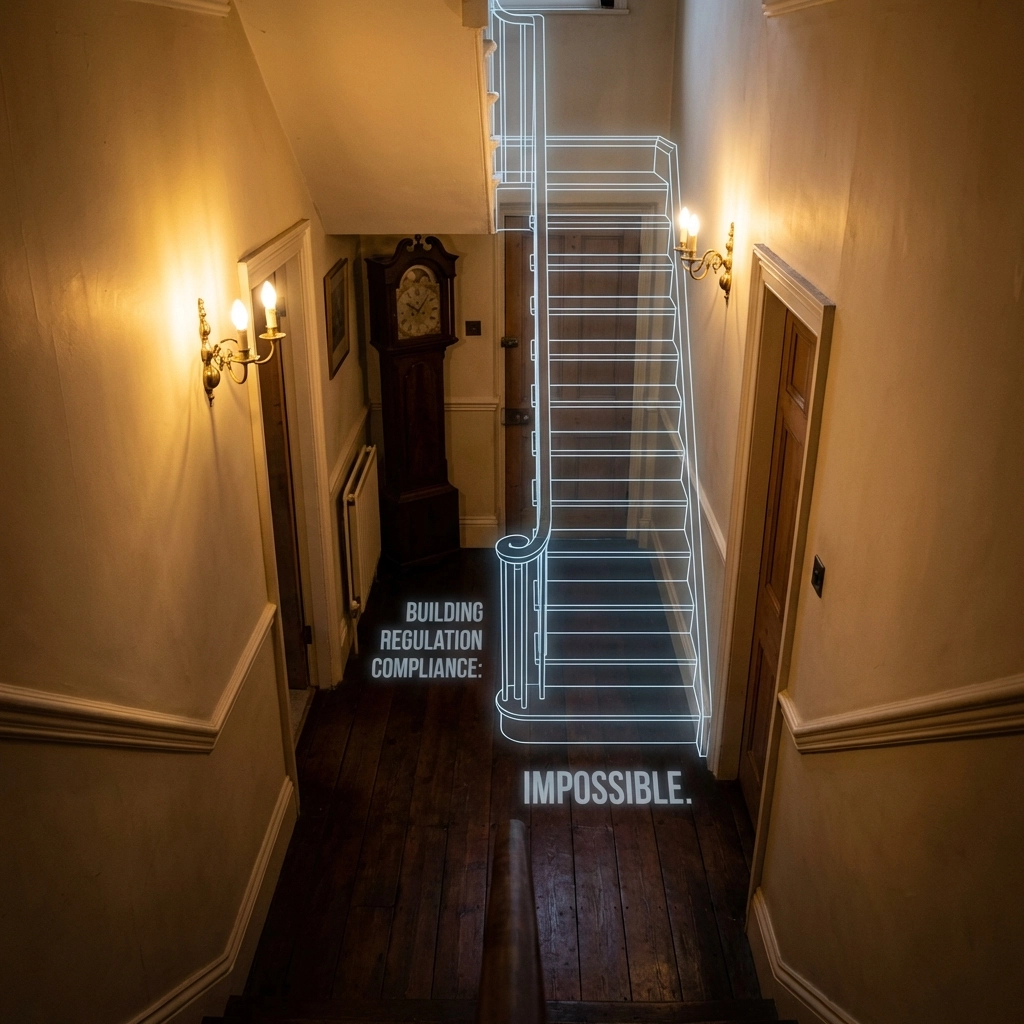
Building regulations require proper staircase access to any habitable loft space. The stairs must meet specific requirements for width (minimum 800mm), pitch (maximum 42 degrees), and headroom (minimum 2 metres).
Some properties simply don't have sufficient space for a compliant staircase. Common problems include:
- Narrow hallways preventing stair installation
- Existing room layouts that can't accommodate stair positioning
- Limited landing space at both floor levels
- Insufficient headroom for stair runs
Without feasible stair access, loft conversion becomes impossible regardless of the roof space quality.
Insufficient Floor Space
Lofts with less than 30 square metres of usable floor space rarely provide worthwhile living areas. After accounting for sloping ceilings, chimney breasts, and access requirements, very small lofts may only yield 15-20 square metres of practical space.
This limitation particularly affects:
- Terraced properties with narrow floor plates
- Properties with complex roof shapes
- Homes with large chimney structures reducing available space
- Properties where dormer additions aren't permitted
Shared Roof Space Complications
Flats and converted properties often have shared ownership of roof space, creating legal complications that can prevent conversion. Converting shared loft space typically requires:
- Unanimous agreement from all freeholders
- Complex legal documentation
- Shared contribution to costs
- Agreement on ongoing maintenance responsibilities
These requirements are often impossible to achieve, particularly in buildings with multiple ownership or when relationships between neighbors are strained.
Severely Compromised Roof Structures
Lofts with significant structural problems may be unsuitable for conversion due to remediation costs. Common issues include:
Wet rot and dry rot requiring extensive timber replacement
Beetle infestation compromising structural integrity
Previous poor repairs affecting load-bearing capacity
Asbestos contamination requiring specialist removal
Inadequate foundations unable to support additional loads
When remediation costs exceed 40-50% of the total conversion budget, projects typically become economically unviable.
Planning Permission Complications
While most loft conversions fall under permitted development rights, certain circumstances require planning permission that may be refused:
- Properties where permitted development rights have been removed
- Conversions exceeding 50 cubic metres of additional space
- Properties in Article 4 Direction areas
- Homes where previous extensions have used up permitted development allowances
Planning refusal effectively prevents conversion unless alternative designs can be developed within permitted parameters.
Economic Viability Considerations
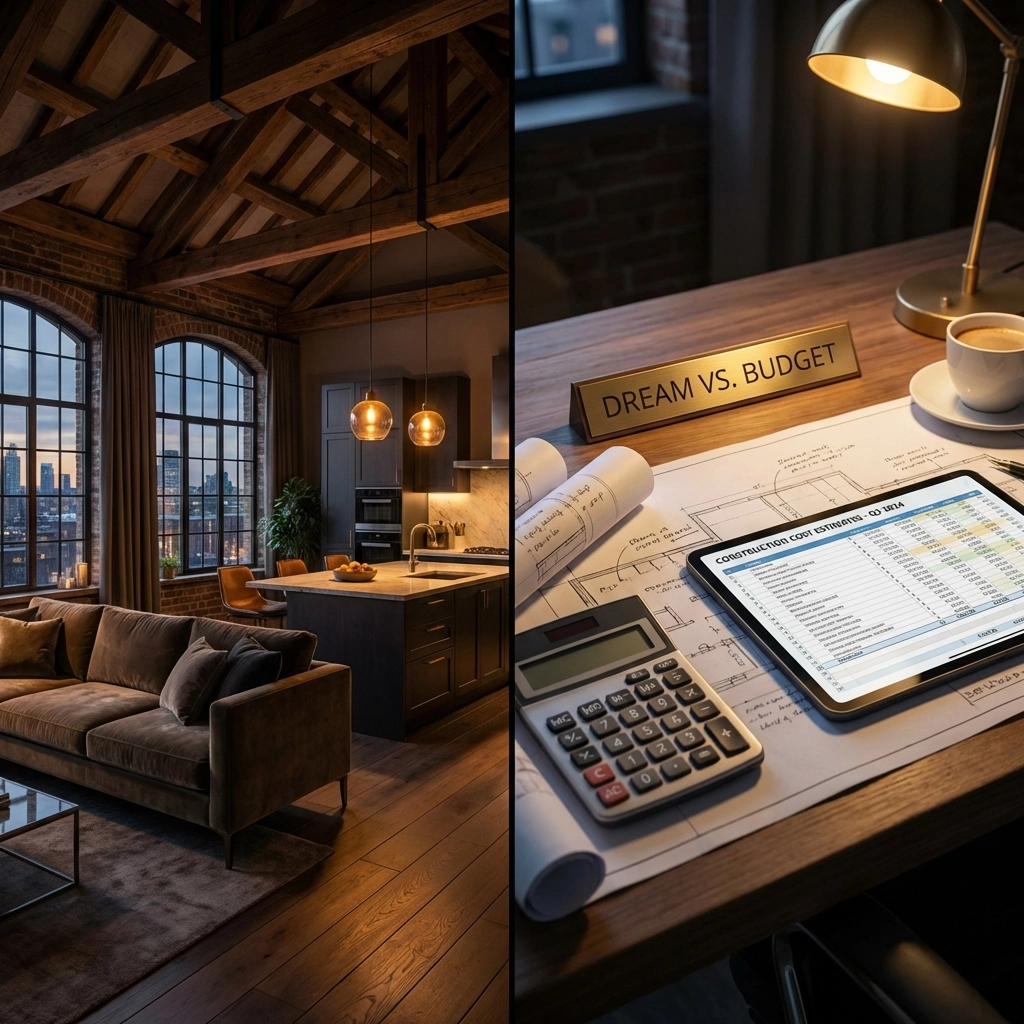
Some lofts technically can be converted but shouldn't be due to poor economic returns. This includes:
Over-improvement scenarios where conversion costs exceed the value added to the property
Properties in declining areas where investment won't be recovered
Homes with other significant maintenance issues requiring immediate attention
Conversions requiring extensive structural work disproportionate to the space gained
Professional Assessment: Your First Step
Determining whether your loft can be converted requires professional evaluation. At Swanbourne Construction Ltd, we provide honest assessments about conversion feasibility, identifying potential obstacles early in the process.
Our comprehensive evaluations consider:
- Structural capacity and roof condition
- Planning and building regulation requirements
- Access and staircase possibilities
- Economic viability and return on investment
- Alternative solutions if conversion isn't feasible
When Conversion Isn't Possible
If your loft cannot be converted, alternative options may still help you gain additional space:
Ground floor extensions can provide similar space increases
Garage conversions offer easier structural solutions
Basement conversions utilize below-ground space
Garden offices create additional functional areas
Internal reconfiguration maximizes existing space efficiency
Making the Right Decision
Understanding loft conversion limitations helps you make informed decisions about your home improvement investment. While many lofts can be successfully converted, recognizing unsuitable properties early prevents costly mistakes and disappointment.
Professional evaluation remains essential for determining your loft's conversion potential. Our experienced team at Swanbourne Construction Ltd provides detailed feasibility assessments, exploring all possibilities and offering alternative solutions when conversion isn't viable.
Don't assume your loft cannot be converted without professional assessment, but equally, don't proceed with unrealistic expectations. Proper evaluation ensures your home improvement investment delivers the results you want while avoiding costly complications and regulatory issues.