
When it comes to designing the perfect bathroom, there's one fundamental principle that separates successful renovations from costly mistakes: function must always come before aesthetics. This golden rule might seem obvious, but you'd be surprised how many homeowners get caught up in beautiful tiles and stunning fixtures, only to discover their dream bathroom doesn't actually work in real life.
At Swanbourne Construction Ltd, we've seen countless bathroom projects where poor planning led to cramped spaces, awkward door swings, and layouts that simply don't flow. That's why we always start with function: ensuring your bathroom works beautifully for your daily routine before we even think about colour schemes.
Why Function Trumps Beauty Every Time
Your bathroom isn't just a showpiece: it's one of the most frequently used spaces in your home. You need to move through it efficiently, whether you're rushing to get ready for work or enjoying a relaxing evening routine. A bathroom that looks stunning but feels cramped or awkward will frustrate you every single day.
Think about it this way: you can always update tiles, change taps, or refresh paint colours later. But if you've positioned your toilet too close to the door, or placed your basin where the door hits it when opening, you're looking at a complete renovation to fix these fundamental flaws.
The golden rule protects you from these expensive mistakes by ensuring every fixture is positioned for optimal usability, safety, and comfort. Once you've nailed the functional layout, you can layer on all the beautiful design elements you want.
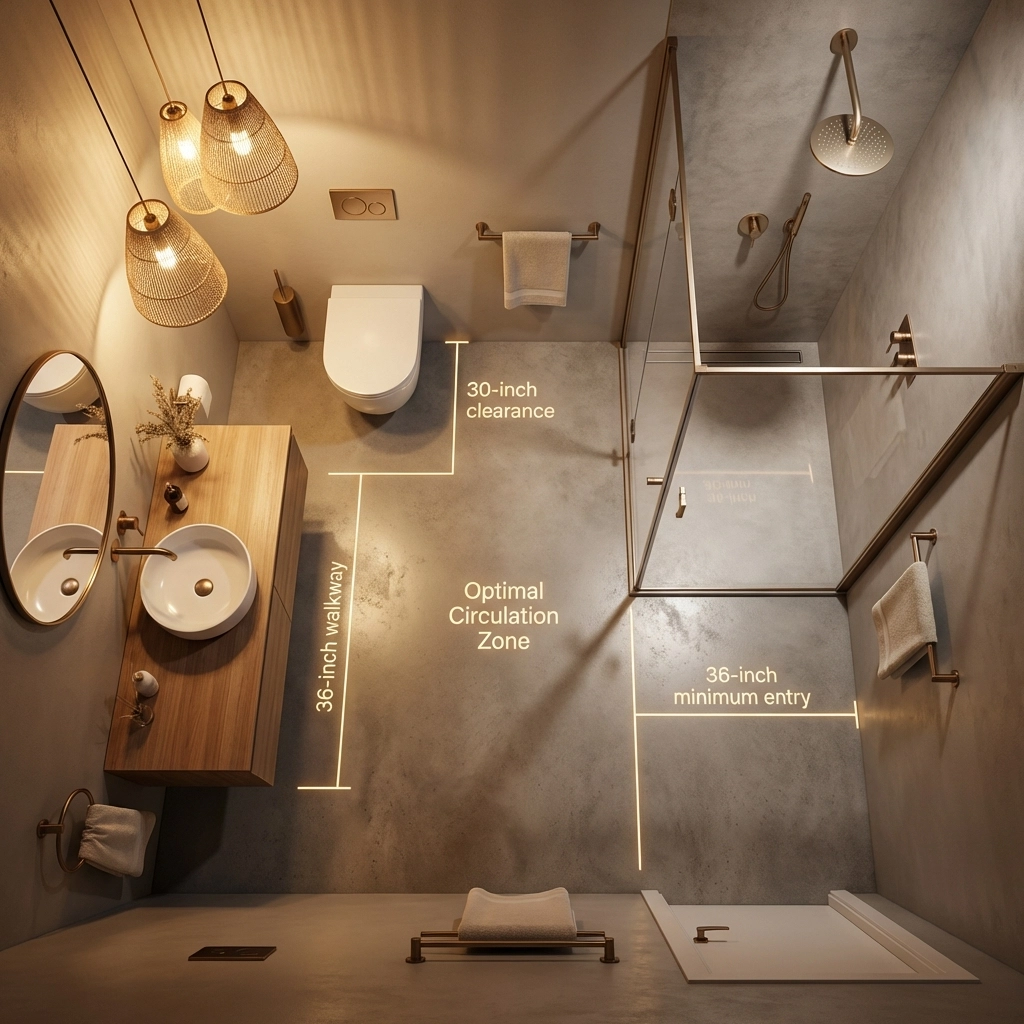
Essential Clearance Requirements for Comfortable Movement
Getting the spacing right between fixtures is crucial for a functional bathroom. You need enough room to move freely without feeling like you're playing Tetris every morning.
Around the toilet, you need a minimum of 75cm of front clearance: that's the space directly in front of the bowl. This gives you enough room to use the facility comfortably and allows for easy cleaning access. Ideally, you want at least 20cm on either side of the toilet as well.
For your basin area, aim for approximately 1 metre between the vanity and any opposite wall or fixture. This prevents you from feeling hemmed in when brushing your teeth or washing your face. If you're sharing the bathroom, this spacing becomes even more critical: there's nothing worse than bumping into your partner while you're both trying to get ready.
Shower and bath areas need particular attention. You should have at least 70cm of clear floor space in front of your shower door or bath. This allows you to step out safely onto a dry surface and gives you room to towel off without dripping water everywhere.
Remember, these aren't just comfort considerations: they're safety requirements too. Inadequate clearances can lead to slips, falls, and accidents, especially in a wet environment.
Creating Logical Flow and Movement Patterns
A well-designed bathroom should feel intuitive to move through. Think about your morning routine: you enter, perhaps use the toilet, move to the basin, then to the shower. This natural sequence should be reflected in your layout.
The most effective approach is to design your bathroom in distinct zones that flow logically into one another. Your entry zone should provide immediate access without obstacles. Your vanity zone needs good lighting and storage. Your toilet area should offer privacy without dominating the space. Finally, your shower or bath zone should feel separate but accessible.
Door positioning is absolutely critical for good flow. Your bathroom door should never block access to key fixtures when it opens. We've seen too many bathrooms where the door hits the toilet when opening, or where you can't fully open vanity drawers because the door's in the way.
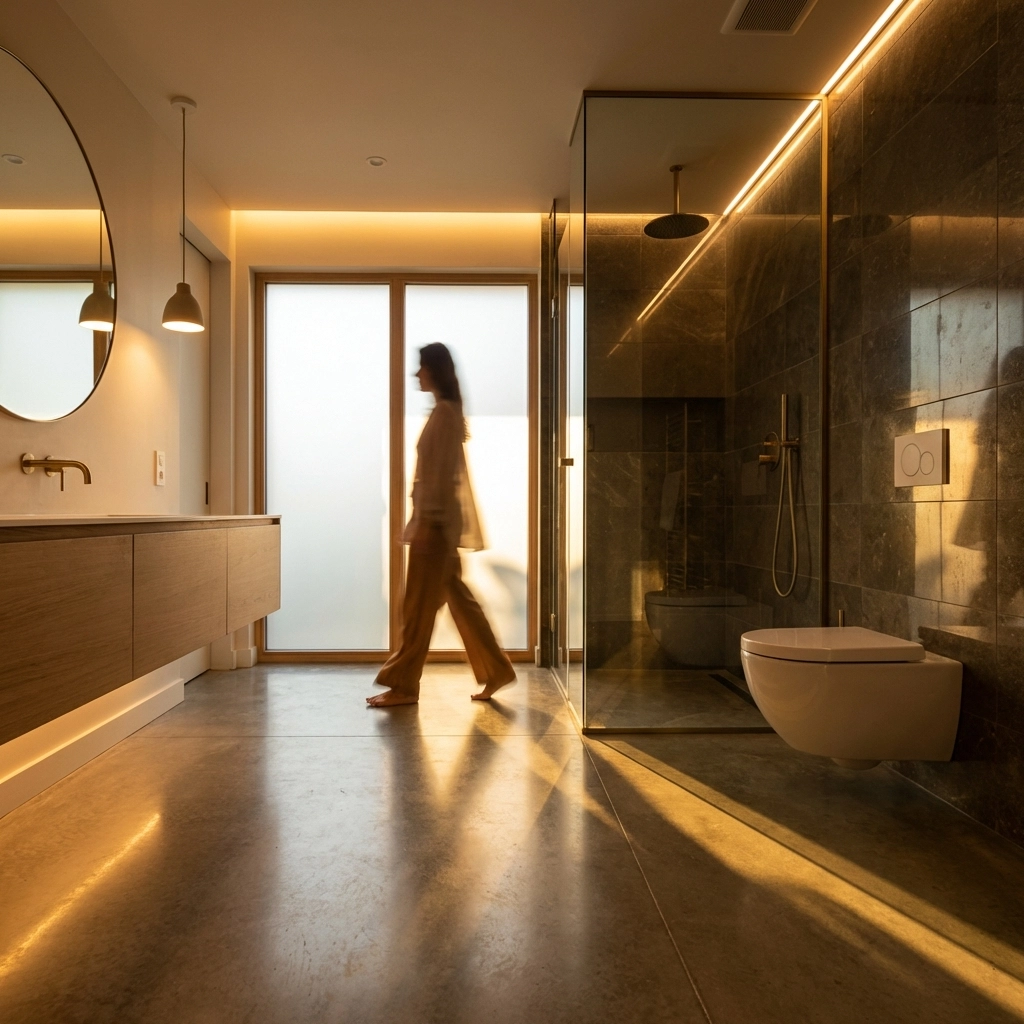
Smart Plumbing Alignment Saves Money and Hassle
Here's where function really pays dividends in your budget: efficient plumbing runs. When you group your wet fixtures: toilet, basin, and shower: on the same wall or in close proximity, you minimise the length of pipe runs needed.
Shorter pipe runs mean several advantages for you. First, reduced installation costs because there's less pipework and labour involved. Second, improved water pressure and temperature because water doesn't have to travel as far. Third, easier maintenance access if you ever need repairs or upgrades.
This principle also applies to your waste pipes. Grouping fixtures near the soil stack (the main waste pipe) keeps everything efficient and reduces the risk of blockages or drainage problems down the line.
At Swanbourne Construction Ltd, we always consider your existing plumbing layout when planning renovations. Sometimes a small adjustment to your proposed layout can save hundreds of pounds in unnecessary pipework.
Wet and Dry Zone Separation
Professional bathroom design separates moisture-prone areas from dry zones. Your shower area should be contained to prevent water spreading throughout the room, while your entry area and storage zones should remain dry for safety and convenience.
This separation isn't just about waterproofing (though that's crucial): it's about creating a logical progression through your bathroom. You naturally move from dry areas toward wet areas, then back to dry areas for drying and dressing.
Good ventilation plays a huge part in this zoning. Steam and moisture should be extracted efficiently from wet areas without affecting the whole room. This prevents condensation problems, protects your fixtures and finishes, and keeps your bathroom comfortable to use.
Common Layout Mistakes That Break the Golden Rule
We've renovated enough bathrooms to know the most frequent layout errors that homeowners make. Placing fixtures too close together is the biggest culprit: it makes everything feel cramped and difficult to use.
Another major mistake is ignoring the door swing. Your bathroom door needs to open without hitting fixtures or blocking access to essential items. Sometimes this means switching from an inward-opening to an outward-opening door, or even considering a sliding door option.
Inadequate storage planning also breaks the golden rule. Your bathroom needs to store toiletries, towels, cleaning supplies, and personal items without cluttering the functional areas. Built-in storage solutions work much better than aftermarket cabinets that eat into your clearance space.
Poor lighting placement can make even a well-laid-out bathroom feel dysfunctional. You need task lighting at the vanity, general lighting for safety, and appropriate lighting in the shower area.

Future-Proofing Your Bathroom Layout
A truly functional bathroom layout considers not just your current needs, but your future requirements too. Accessibility features can be incorporated subtly without compromising style: grab rails, level-access showers, and wider door openings benefit everyone.
Think about how your household might change over time. Will children need easier access to storage? Might mobility become a consideration as you age? Planning for these possibilities now is much more cost-effective than retrofitting later.
Consider your home's resale value too. Buyers appreciate bathrooms that work well for different users and life stages. A thoughtfully planned layout that follows the golden rule will appeal to a wider range of potential purchasers.
The Professional Advantage
While the golden rule might seem straightforward, applying it effectively requires experience and expertise. Professional bathroom designers understand the subtle interactions between plumbing requirements, building regulations, space constraints, and user needs.
At Swanbourne Construction Ltd, we've planned hundreds of bathroom layouts across different property types and budgets. We know how to maximise space in compact rooms, work around awkward structural features, and integrate modern fixtures with period properties.
We also understand local building regulations and ensure your layout complies with all requirements from the start. This prevents costly changes during the building process and gives you confidence that everything's done properly.
Making the Golden Rule Work for Your Project
Every bathroom is different, but the golden rule applies universally. Start by mapping out how you actually use your current bathroom. Where do the frustrations occur? What would make your daily routine smoother?
Consider your household's specific needs. Do multiple people need to use the bathroom simultaneously? Do you prefer baths or showers? How much storage do you actually need?
Work with professionals who understand these nuances. A good bathroom designer will listen to your lifestyle requirements and translate them into a layout that works beautifully: both functionally and aesthetically.
The golden rule for bathroom layouts: function before aesthetics: isn't about compromising on style. It's about creating a foundation that allows your style choices to shine while ensuring your bathroom works perfectly for years to come. When you get the function right first, the beauty follows naturally.
Ready to plan a bathroom that truly works for your lifestyle? Contact Swanbourne Construction Ltd today for expert guidance on creating a functional, beautiful bathroom that follows all the right rules.