
Getting the order right when fitting a bathroom is absolutely crucial. Skip a step or rush the sequence, and you'll face costly repairs, delays, and potentially dangerous failures down the line. At Swanbourne Construction Ltd, we've seen too many DIY disasters and cowboy builder mistakes that could have been avoided with proper planning and execution.
The correct bathroom fitting sequence isn't just about convenience: it's about structural integrity, waterproofing, and long-term durability. Whether you're renovating a family bathroom in Bognor Regis or creating an ensuite in Chichester, following the right order ensures your investment lasts for decades, not just years.
Why the Correct Order Matters
Every bathroom renovation is essentially a complex coordination of trades and materials. Plumbers, electricians, tilers, and decorators all need to work in perfect sequence. Get the timing wrong, and you'll find yourself ripping out newly installed tiles to fix a leak, or worse, discovering waterproofing failures after everything's finished.
The most expensive bathroom renovation mistakes we see at Swanbourne Construction Ltd stem from poor sequencing. Rushed jobs that skip steps often require complete do-overs within 18 months. That's why our experienced team follows a proven methodology that's been refined over hundreds of successful bathroom projects across West Sussex.
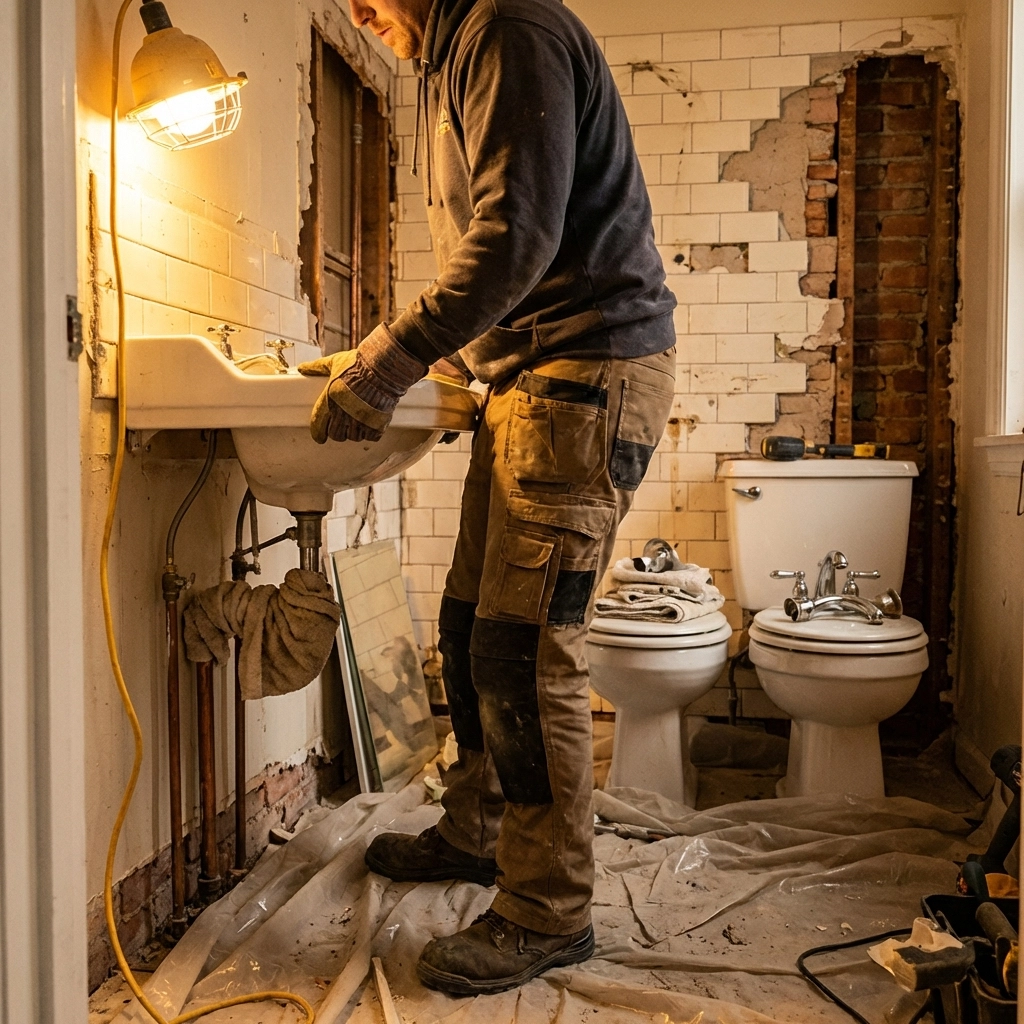
Phase 1: Strip Out and Preparation
The foundation of any successful bathroom renovation starts with complete and careful removal of existing fixtures. This isn't just about ripping everything out: it's about systematic dismantling that preserves the underlying structure while revealing any hidden issues.
Our team begins by turning off water and electricity supplies and carefully removing fixtures in reverse order of installation. Toilets come out first, followed by basins, baths, and finally tiles and wall coverings. This methodical approach prevents damage to pipes and cables that you'll need for the new installation.
Assessment is crucial at this stage. We inspect existing plumbing for corrosion, check electrical systems for compliance with current regulations, and examine the structural condition of floors and walls. Hidden problems discovered now save thousands later.
The preparation phase also involves selecting and ordering all fixtures, fittings, and materials in advance. Nothing delays a bathroom project faster than waiting for the right-sized radiator or discovering your chosen tiles are out of stock. At Swanbourne Construction Ltd, we coordinate all deliveries to arrive precisely when needed, maintaining project momentum.
Phase 2: First-Fix Plumbing and Electrics
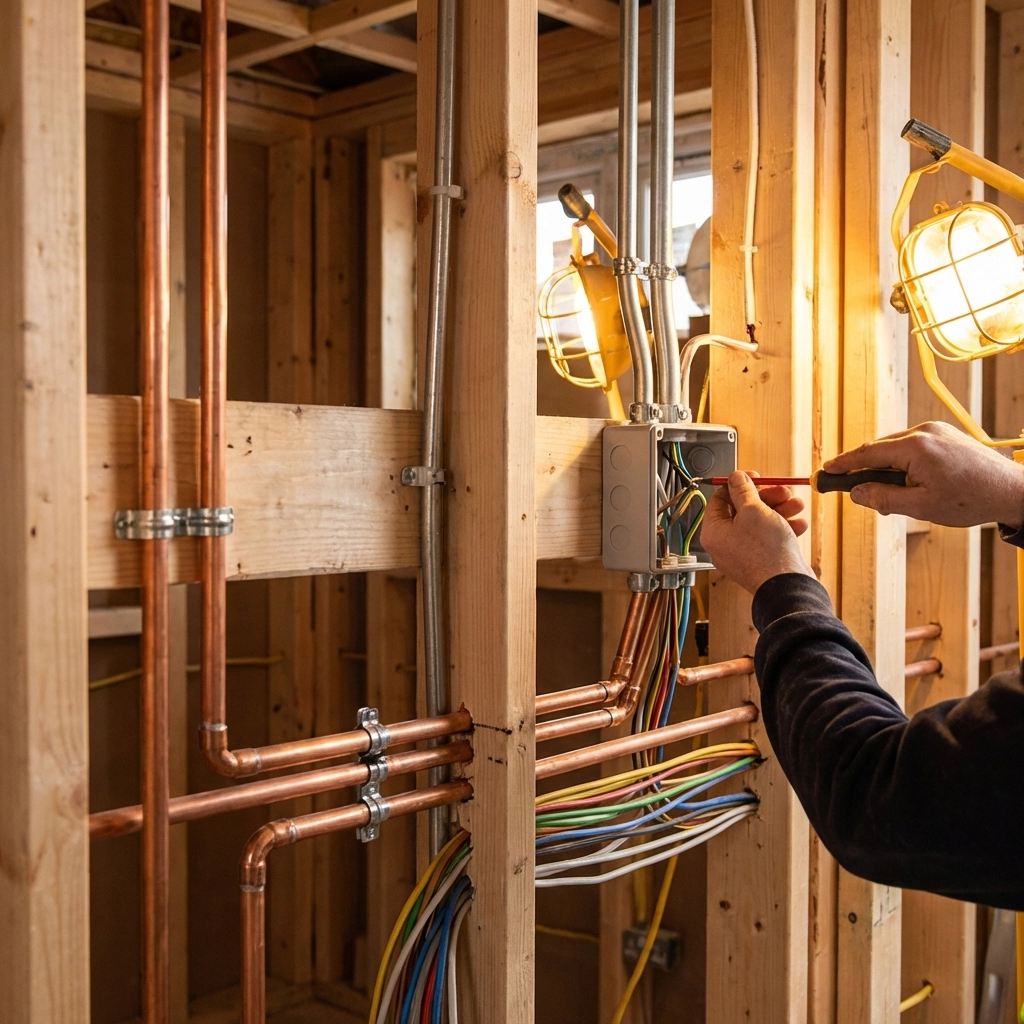
This is where the invisible foundation of your bathroom takes shape. First-fix involves installing all the pipes, cables, and infrastructure before any walls are closed or finished surfaces applied.
Our certified plumbers route new supply pipes and waste connections to match your chosen layout. This includes positioning shower valves at the correct height, ensuring adequate fall on waste pipes, and installing any pumps or macerators if required. Getting pipe positions wrong at this stage means expensive remedial work later.
Simultaneously, qualified electricians install new circuits for lighting, ventilation, heated towel rails, and power outlets. All electrical work in bathrooms must comply with strict safety regulations: IP ratings for fixtures, correct zoning for switches and outlets, and proper earth bonding for metal fittings.
Ventilation planning happens now too. We install extractor fan ducting and any mechanical ventilation systems. Inadequate ventilation causes condensation problems, mould growth, and premature decoration failure.
Phase 3: Floor Preparation and Structural Work
Solid, level floors are essential for successful tiling and waterproofing. This phase involves any necessary structural repairs, floor strengthening, or levelling work.
We inspect and reinforce floor joists if needed, particularly important when installing heavy items like cast iron baths or stone shower trays. Floor deflection causes tile cracks and grout failure: problems that only get worse over time.
Subfloor preparation involves installing appropriate boarding (typically 18mm moisture-resistant chipboard or cement fibre boards in wet areas), ensuring the surface is perfectly level and structurally sound. Any pipes or cables running under the floor are protected and properly secured.
Underfloor heating installation happens at this stage if specified. Electric or water-based systems are laid and tested before any floor finishes are applied. This coordination is crucial: you can't retrofit underfloor heating after tiling without starting over.
Phase 4: Waterproofing – The Critical Foundation
This is arguably the most important phase of any bathroom fit. Proper waterproofing prevents structural damage, protects the property below, and ensures your bathroom renovation lasts decades rather than years.
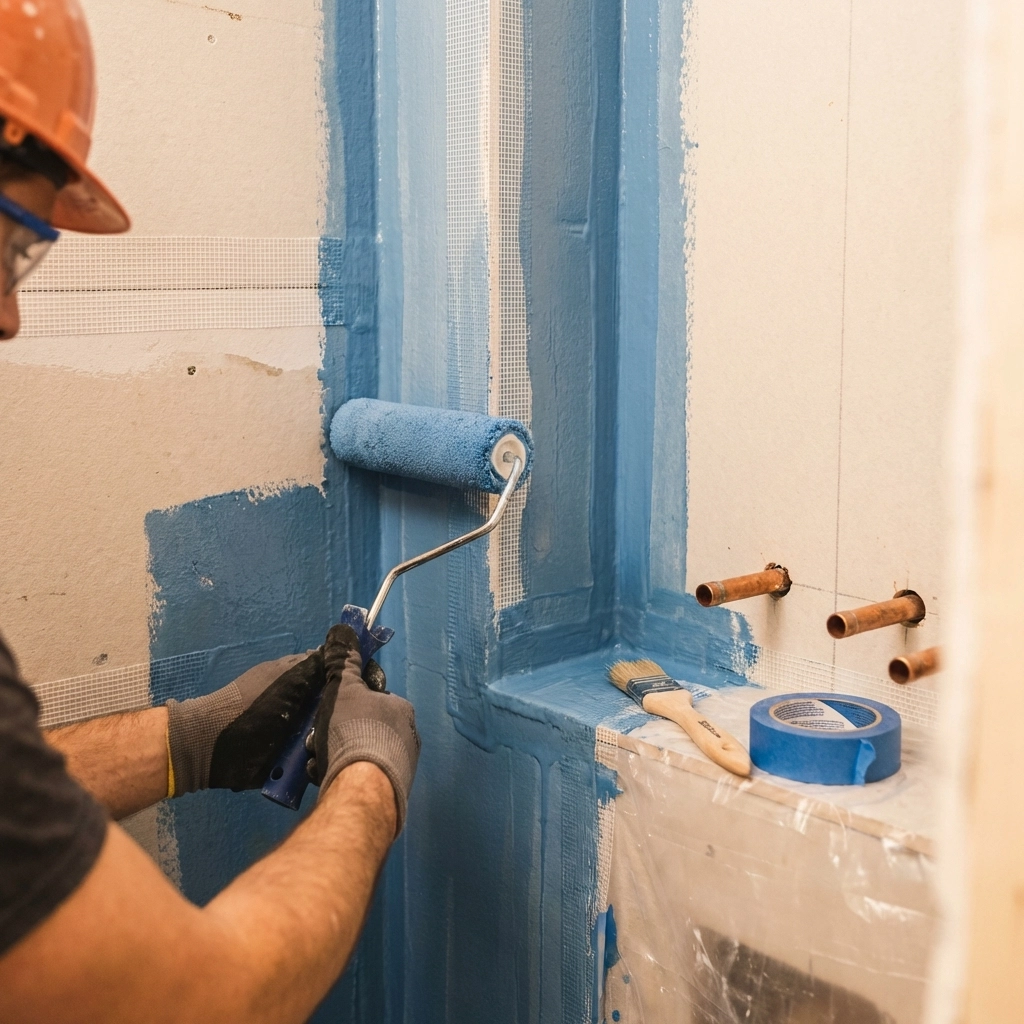
At Swanbourne Construction Ltd, we apply professional-grade waterproofing systems to all wet areas. This includes tanking shower areas, sealing around bath positions, and creating waterproof membranes behind tiles in splash zones.
The key is complete coverage and proper detailing. We seal all penetrations (pipe holes, waste connections), create proper falls to drainage points, and ensure seamless transitions between different surfaces. A single gap in waterproofing can cause thousands of pounds of damage.
Modern waterproofing systems include fleece-backed membranes, liquid coatings, and specialised tapes for joints and corners. These aren't DIY products: they require professional application and understanding of building physics to work effectively.
Phase 5: Tiling – Precision and Permanence
With waterproofing complete, we move to the most visible part of the process: wall and floor tiling. This requires precision, patience, and understanding of how different materials behave.
Our tiling process starts with careful setting out to ensure symmetrical layouts and minimize cut tiles in visible areas. We use laser levels and precise measurements to create perfectly straight lines and consistent spacing.
Material selection matters hugely. We match adhesives and grouts to tile types and environmental conditions. Porcelain tiles require different adhesives than natural stone, and wet areas need flexible, waterproof grouts. Using the wrong materials causes failures within months.
The tiling sequence follows a specific order: floors first (allowing for skirting tile overlap), then walls from bottom to top, finishing with any decorative features or borders. Each area must cure properly before moving to the next: rushing this stage causes hollow tiles and adhesive failure.
Phase 6: Second-Fix and Final Connections
With all surfaces finished, we move to installing and connecting your chosen fixtures and fittings. This phase requires coordination between plumbing, electrical, and carpentry trades.
Baths and shower trays go in first, carefully positioned and sealed. Then basins, toilets, and any fitted furniture. Each connection is tested individually before moving to the next: finding leaks now is far easier than after everything's installed.
Electrical connections happen simultaneously. We connect lighting circuits, install switches and outlets in their final positions, and commission any electronic systems like digital showers or smart mirrors.
Final adjustments and calibrations ensure everything works perfectly. Water pressures are balanced, thermostats are set correctly, and all mechanical systems are tested under full operating conditions.
Phase 7: Final Sealing and Testing
The last phase involves critical sealing work and comprehensive testing of all systems. This is where attention to detail separates professional installations from amateur efforts.
We apply high-quality silicone sealants around all sanitary ware, creating waterproof barriers that flex with building movement. The type and application method varies by location: shower areas require different sealants than around basins.
Comprehensive testing follows. Every tap, valve, and connection is checked for leaks. Drainage systems are tested with full water flow. Electrical systems are verified for safety and compliance. We don't consider a job complete until everything passes our rigorous testing protocol.
Why Professional Installation Matters
Bathroom fitting involves multiple skilled trades, complex regulations, and expensive materials. While DIY enthusiasm is admirable, the consequences of getting it wrong in a bathroom are uniquely severe: water damage affects not just your bathroom but potentially your entire home and neighbouring properties.
At Swanbourne Construction Ltd, our experienced team coordinates all trades, manages the sequence perfectly, and guarantees the quality of our work. We understand local building regulations, have established relationships with quality suppliers, and carry full insurance for complete peace of mind.
Your bathroom renovation should enhance your home's value and your quality of life for decades to come. Getting the order right from the start ensures exactly that outcome: a beautiful, functional bathroom that performs flawlessly year after year.
If you're planning a bathroom renovation in West Sussex, let's discuss your project. Our detailed planning and proven methodology ensure your new bathroom is fitted correctly, on time, and built to last.