
If you have spent any time living in West Sussex, you know that the local property market is as vibrant as it is competitive. Whether you are overlooking the coast in Bognor Regis or nestled in the historic streets of Chichester, the desire for more space is a common thread among homeowners. Perhaps your family is growing, or you have finally decided to create that dedicated home office you’ve always dreamed of.
The "move or improve" debate is one we hear daily at Swanbourne Construction Ltd. In many cases, staying in the area you love, close to the schools, shops, and community you know, is the preferred option. But before you pick out the bi-fold doors or the kitchen island, there is one massive hurdle to clear: Do you actually need planning permission?
The answer isn't always a simple "yes" or "no." It is a landscape of Permitted Development rights, building regulations, and local council nuances. Understanding these rules is the difference between a smooth, value-adding project and a costly legal headache.
The Power of Permitted Development (PD)
For many homeowners in Bognor Regis and the surrounding villages, the good news is that you can often extend your home without ever submitting a formal planning application. This is thanks to Permitted Development (PD) rights.
Permitted Development is a category of work that the government has deemed "pre-approved," provided you stay within very specific criteria. It was designed to cut through red tape and allow homeowners to make sensible improvements to their properties. However, these rights are not a "free-for-all." They come with strict mathematical limits that you must follow to the millimetre.
The Limits of Single-Storey Rear Extensions
For a standard single-storey rear extension to fall under PD, it must adhere to the following:
- Detached Houses: You can extend up to 4 metres from the original rear wall.
- Other Houses (Semi-detached/Terraced): You are limited to 3 metres.
- Height: The extension cannot be higher than the highest part of your existing roof. Furthermore, if the extension is within 2 metres of your property boundary, the eaves height is capped at 3 metres.
The "Larger Home Extension" Scheme
There is a slight caveat to the rules above. Under the "Prior Approval" scheme, you may be able to extend further, up to 8 metres for a detached house or 6 metres for a semi-detached house. However, this requires a "Neighbour Consultation Scheme." Your local council (such as Arun District or Chichester District) will notify your immediate neighbours, and if they raise a valid objection regarding "loss of light" or "overshadowing," the council can still block the build.
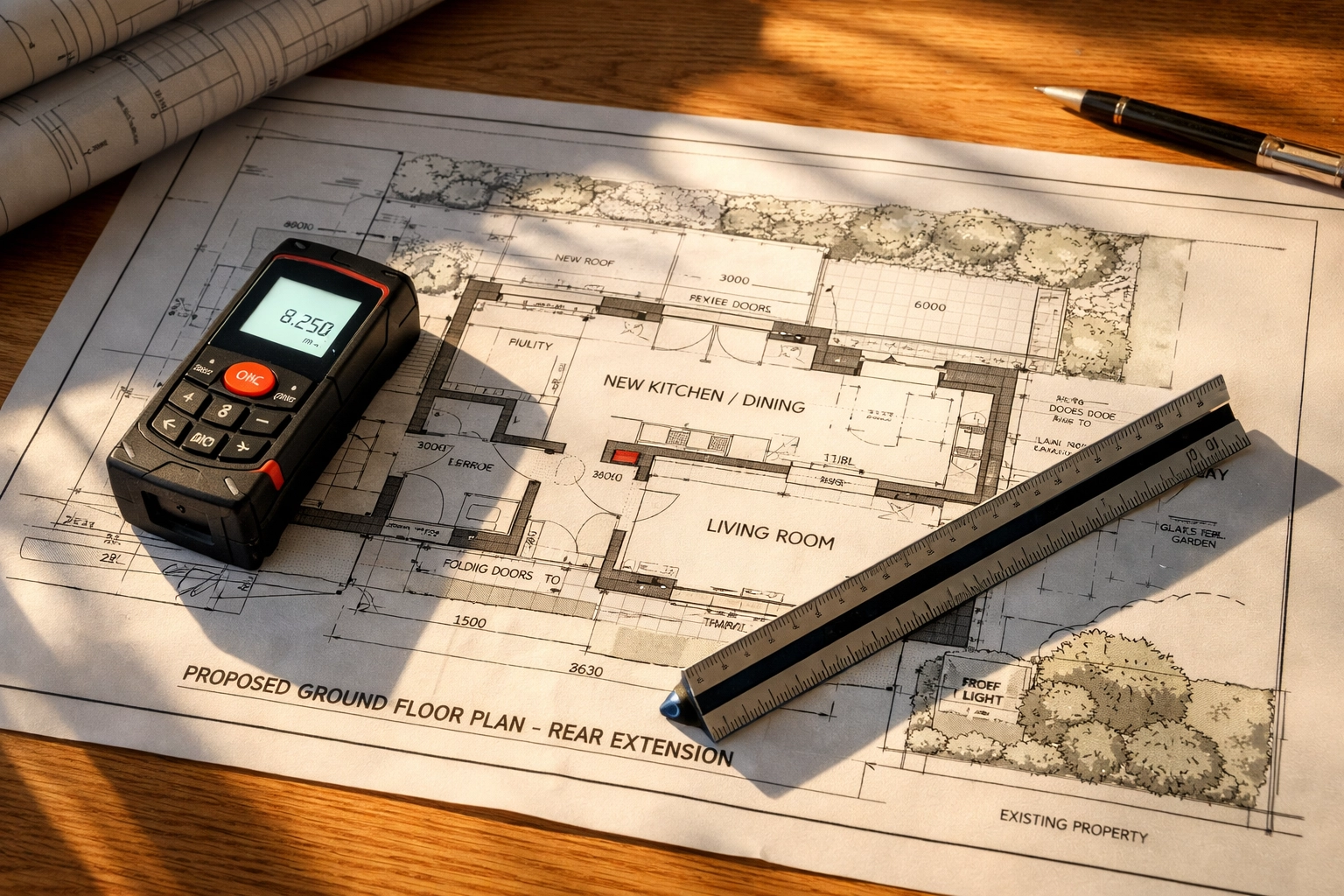
When Planning Permission Becomes Mandatory
While PD covers a lot of ground, many ambitious projects will naturally step outside those boundaries. If your vision for your house extension in West Sussex involves something more substantial, you will likely need to go through the full planning process.
You will almost certainly need planning permission if:
- You are building at the front: Any extension that extends beyond the "principal elevation" (the front of the house facing the road) requires permission.
- It’s a multi-storey project: While some two-storey extensions fall under PD, the rules are incredibly restrictive (they must be at least 7 metres from the rear boundary). Most double-storey projects require a full application.
- You exceed the 50% rule: You cannot cover more than half the area of land around the "original house" with outbuildings or extensions.
- The materials don't match: PD rules generally specify that the exterior finish must be "similar in appearance" to the existing house. If you want a modern timber-clad pod on a traditional brick house, you’ll likely need permission.
- Your home is a Listed Building: If you live in a protected historical property, PD rights are often removed entirely. You will need Listed Building Consent for almost any change.
The Local Context: Bognor Regis and Chichester Councils
Navigating the local planning authorities is where many homeowners get stuck. Swanbourne Construction Ltd frequently works with Arun District Council and Chichester District Council, and we can tell you from experience: the local context matters.
In areas like the Chichester City Conservation Area or parts of the South Downs National Park, PD rights are often "restricted" or "withdrawn" via something called an Article 4 Direction. This means that even a small porch or a change of windows might require a planning application to ensure the character of the area is preserved.
Why does this matter to you? Because starting a build in Bognor or Arundel without checking these local restrictions could lead to an enforcement notice, forcing you to tear down your new extension at your own expense. We always recommend checking the local constraints before a single brick is laid.
Planning Permission vs. Building Regulations: Don't Confuse the Two
This is perhaps the most common misconception in the building industry. Homeowners often think that because they have Permitted Development rights (and therefore don't need Planning Permission), they can just start digging.
This is a mistake.
Planning Permission deals with the appearance of the building and its impact on the neighbours and the environment.
Building Regulations deal with the structural integrity, fire safety, insulation, and drainage of the building.
Every extension, regardless of whether it needs planning permission, must comply with Building Regulations. This involves inspections from a Building Control officer at key stages:
- Excavation of foundations
- Damp proof course (DPC) installation
- Drainage installation
- Structural beams (RSJs)
- Final completion
At Swanbourne Construction, we manage these inspections for our clients, ensuring that your extensions in Bognor or Chichester are not just beautiful, but legally compliant and safe for your family.

Why You Should Get a "Certificate of Lawfulness"
Even if you are 100% certain your project falls under Permitted Development, we strongly advise applying for a Lawful Development Certificate (LDC).
Think of an LDC as your "get out of jail free" card. It is a formal document from the council confirming that your build was legal at the time it was constructed. While not mandatory, it is invaluable when you come to sell your house. A buyer’s solicitor will ask for proof that the extension didn't need planning permission. Without an LDC, you could face delays in your house sale or be forced to pay for "indemnity insurance" to satisfy the buyer's mortgage lender.
The Neighbor Factor: Party Wall Agreements
Even if the council says "yes," your neighbours might have a say. If your extension involves building on or near the boundary line, or if you are digging foundations within 3 to 6 metres of their property, you may need a Party Wall Agreement.
This is a civil matter, not a planning matter. It’s about protecting both parties from structural damage. Failing to serve the correct notice can lead to an injunction that stops your build in its tracks. As your local builder in Chichester, we can help guide you through when a specialist surveyor might be needed to handle these negotiations.
How Swanbourne Construction Simplifies the Process
Building an extension should be an exciting transformation of your home, not a source of constant stress. The reason many homeowners choose Swanbourne Construction Ltd is that we don't just "do the building." We provide a consultative partnership.
We understand the local West Sussex landscape. We know which designs the Chichester planners tend to favor and which ones will likely get pushed back. By involving a professional builder early in the process: even before you've finished your architectural drawings: you can ensure that your design is not only "plannable" but also "buildable" within your budget.
- Expert Consultation: We can review your initial ideas and tell you if they likely fall under PD or require a full application.
- Budget Accuracy: We help you align your design goals with the reality of extension costs in West Sussex.
- Seamless Management: From the first site visit to the final Building Control sign-off, we handle the technical details so you can focus on choosing the finishes.
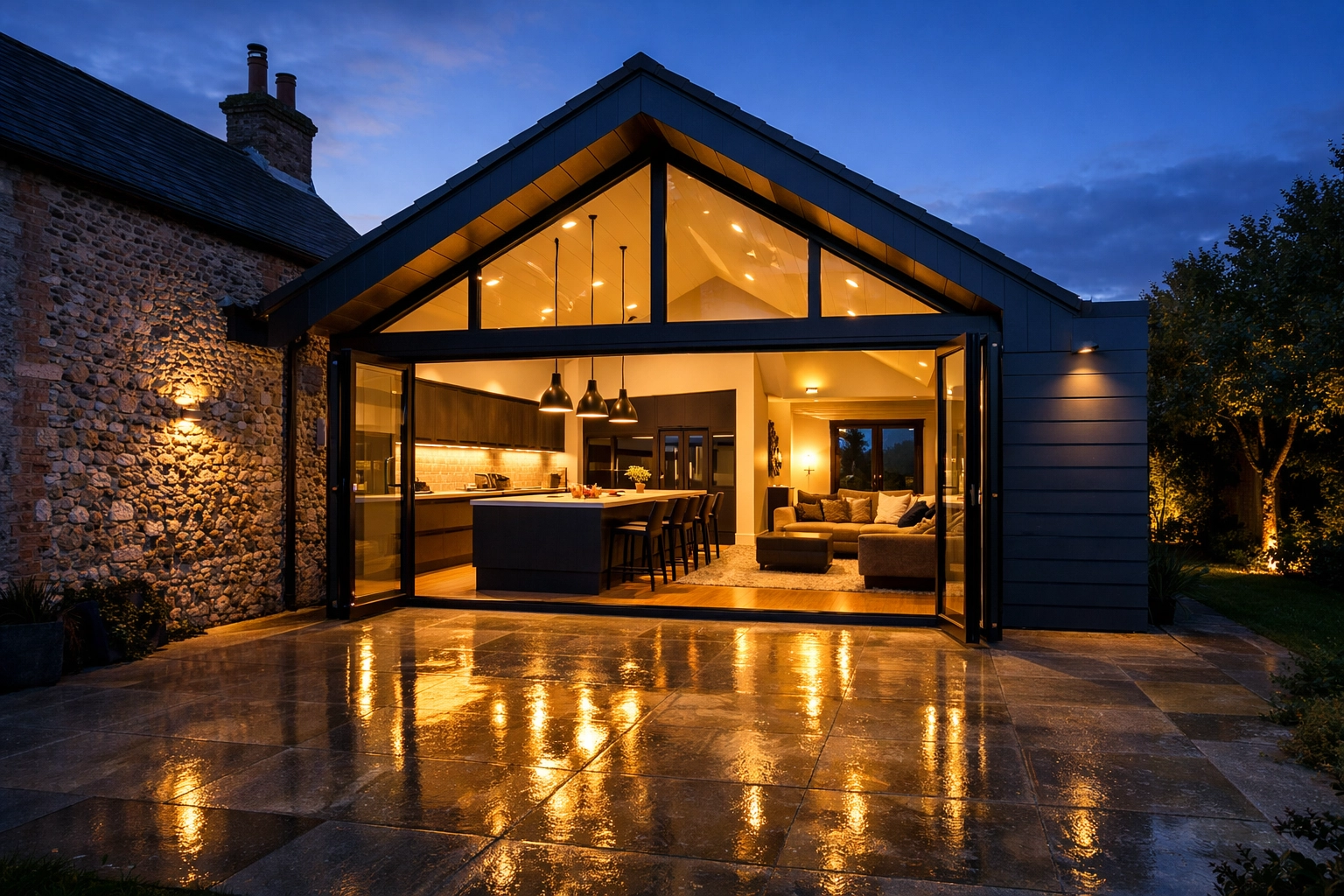
Final Thoughts: Start with the Right Advice
So, do you need planning permission? If you are staying small and building to the rear, you might be in the clear. If you are dreaming of a grand, multi-storey transformation that redefines your home's silhouette, the planning office will be your next stop.
The most expensive mistake you can make is assuming. Before you commit to a design or hire a contractor, take the time to verify your project's status. It saves time, saves money, and most importantly, it gives you peace of mind that your investment is secure.
Ready to explore what’s possible for your home?
Whether you are considering a loft conversion in Bognor Regis or a sprawling kitchen extension in Arundel, we are here to help. Let’s discuss your vision and navigate the planning maze together.
Contact Swanbourne Construction today for a professional consultation on your next project.