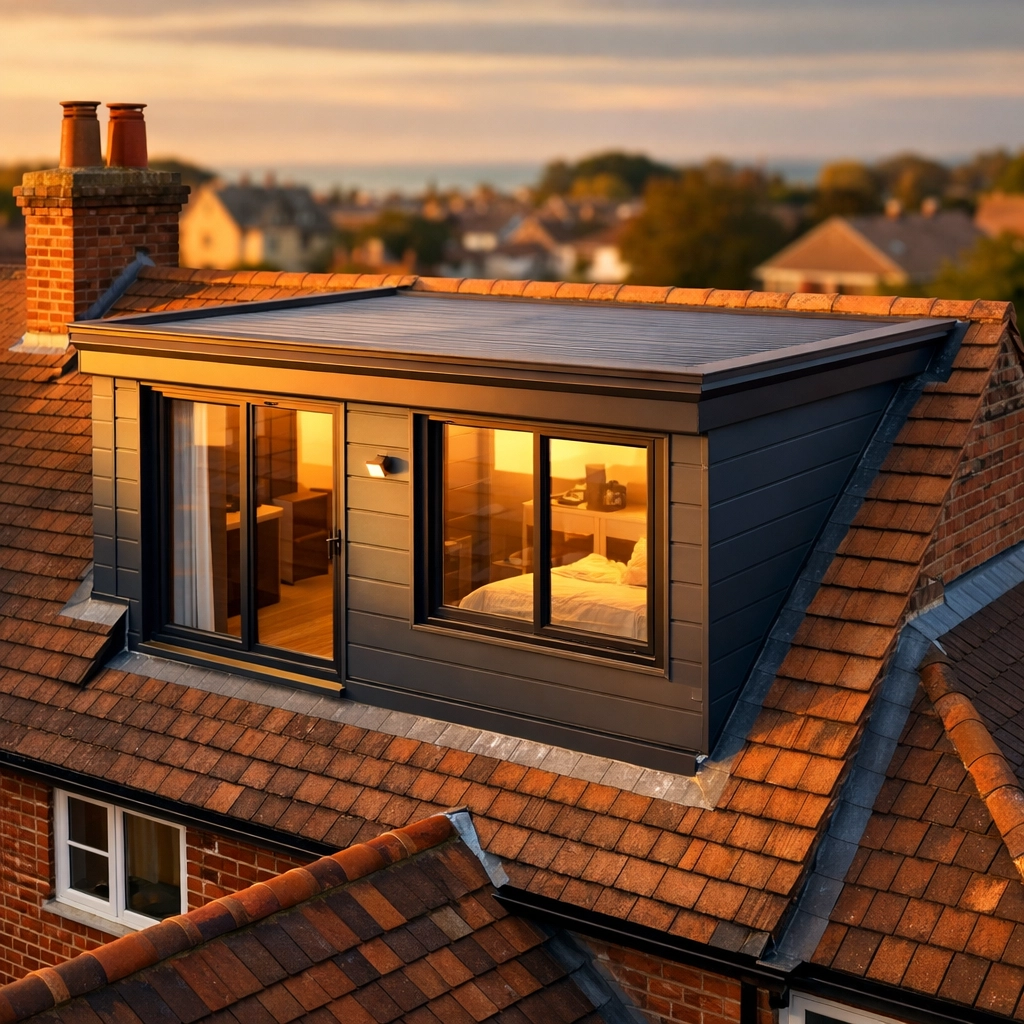
If you’ve spent any time looking up at the rooftops of Bognor Regis, Chichester, or Arundel lately, you’ll notice a trend. Our coastal and historic towns are growing, not outwards into the countryside, but upwards. For many homeowners in West Sussex, the attic represents the "final frontier" of living space. Whether you’re dreaming of a master suite with a view of the Solent or a quiet home office away from the chaos of the kitchen, a loft conversion is often the most sensible way to add significant value and square footage to your property.
However, the very first question that halts most projects before the first floorboard is lifted is: "Do I actually need planning permission?"
The answer is often more encouraging than you might think, but there are specific "tripwires" that can turn a straightforward build into a complex legal process. At Swanbourne Construction Ltd, we’ve guided countless homeowners through the maze of local authority regulations. In this guide, we’ll break down exactly when you can build under Permitted Development and when you’ll need to sit down with the planning officers at Arun or Chichester District Council.
The "Golden Ticket": Permitted Development Rights
For the majority of houses in the UK, a loft conversion falls under what is known as Permitted Development (PD) rights. Essentially, this is a "deemed permission" granted by the government, allowing you to extend your home without needing to submit a full, formal planning application.
Think of it as a pre-approved hall pass for homeowners. As long as your project stays within a specific set of parameters, you can bypass the 8-to-13-week wait for a planning decision and move straight to the technical design stage.
The Volume Limit: 40 and 50 Cubic Metres
The most critical rule for Permitted Development is the total volume of additional roof space you are creating. This isn't the total size of the room, but the volume of the "extension" part (usually the dormer) added to the original roof.
- Terraced Houses: You are allowed up to 40 cubic metres of additional roof space.
- Semi-Detached and Detached Houses: You are allowed up to 50 cubic metres.
Why does this matter? If you are planning a large "L-shaped" dormer, common on Victorian terraced houses in Bognor, you might find yourself creeping close to that 40-cubic-metre limit. Exceeding it by even a single metre triggers the requirement for full planning permission.
The Rules of the Road: When PD Applies
Volume isn't the only factor. To qualify for Permitted Development, your loft conversion must also tick several other boxes:
- Height Matters: The new conversion cannot be higher than the highest part of the existing roof. You can’t "raise the ridge line" under PD; if the ceiling height in your attic is currently too low and the roof needs to be raised, you will definitely need planning permission.
- The "Front of House" Rule: You generally cannot add a dormer to the "principal elevation", the side of the house that faces the road. If you want a dormer on the front of your house to catch the morning sun, you’ll likely need to apply for permission. Most PD loft conversions feature dormers at the rear or side.
- Material Matches: The materials used for the exterior of your conversion (tiles, cladding, window frames) must be "similar in appearance" to the existing house. This ensures the extension doesn't look like a mismatched Lego brick stuck onto your roof.
- The Setback: Any new dormer should be set back at least 20cm from the original eaves, where practicable. This maintains the visual profile of the house from the ground level.
- No Balconies: While you can usually install a "Juliet balcony" (a floor-to-ceiling window with a safety railing) under PD, you cannot build a walk-out balcony or veranda without planning permission.
When Planning Permission is Mandatory
While Permitted Development covers a lot of ground, there are several "red flags" that mandate a formal planning application. If your home falls into any of the following categories, the rules change:
1. Conservation Areas and AONBs
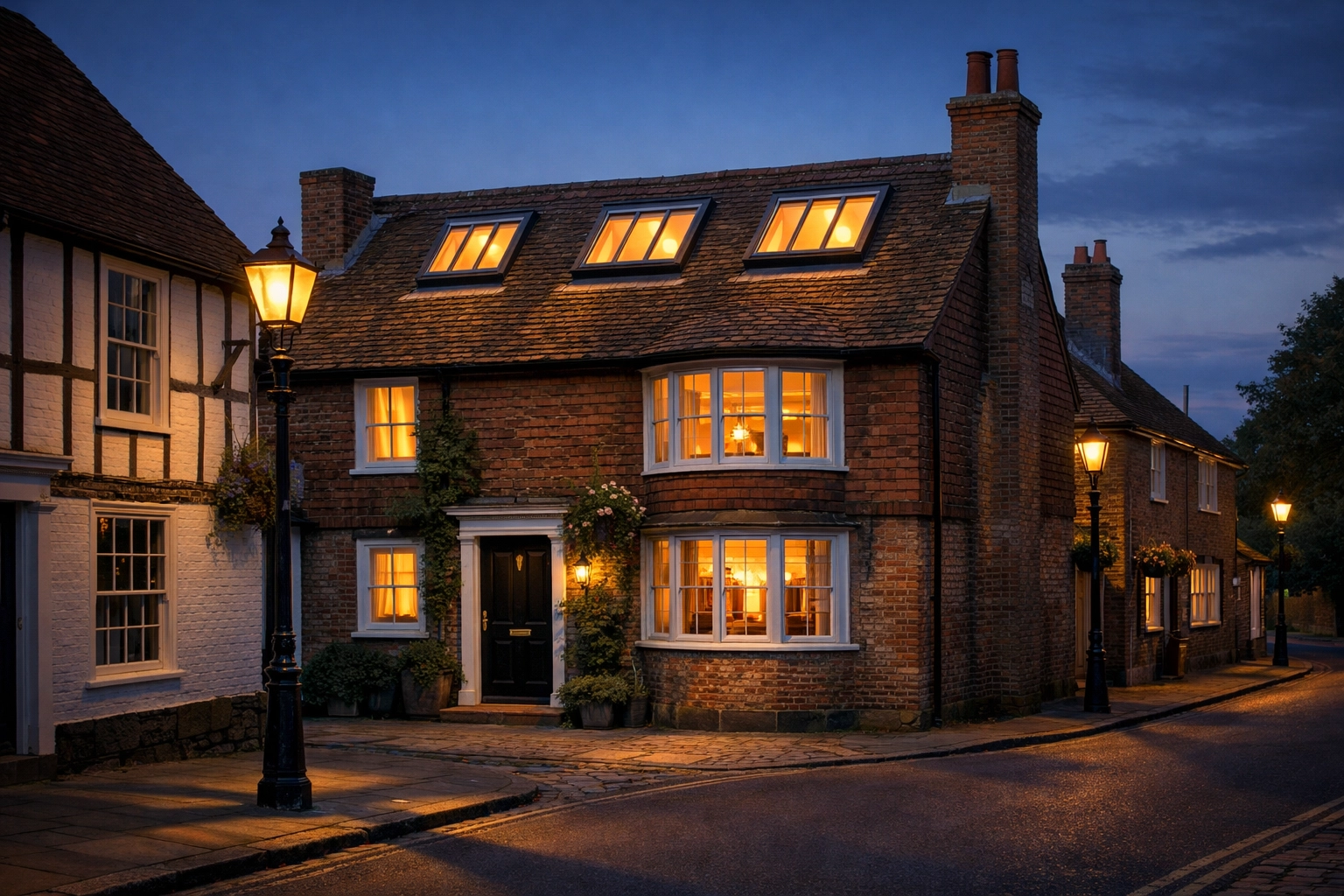
West Sussex is blessed with beautiful heritage. If your home is in a Conservation Area (like much of central Chichester or Arundel) or an Area of Outstanding Natural Beauty (AONB), your Permitted Development rights are often restricted or removed entirely via an "Article 4 Direction." In these areas, the local council wants to ensure that any changes to the skyline preserve the character of the neighborhood.
2. Listed Buildings
If you are lucky enough to live in a Grade I or Grade II listed property, Permitted Development does not apply. You will need Listed Building Consent for any internal or external changes. This is a rigorous process, but it ensures our local history is protected.
3. Flats and Maisonettes
This is a common misconception: Permitted Development rights only apply to houses. If you own a flat or a maisonette in Bognor Regis and want to convert the loft space above you, you will always need full planning permission (and, usually, the permission of the freeholder).
4. Radical Changes to the Roof Profile
If your design involves a "Hip-to-Gable" conversion or a "Mansard" conversion that significantly alters the shape of the roof beyond the volume limits mentioned earlier, planning permission is your next step.
The Difference Between Planning and Building Regulations
This is where many homeowners get caught out. Even if you do not need planning permission, you always need Building Regulations approval.
- Planning Permission deals with how the building looks and its impact on the neighbors and the environment.
- Building Regulations deal with the safety, structural integrity, and energy efficiency of the build.
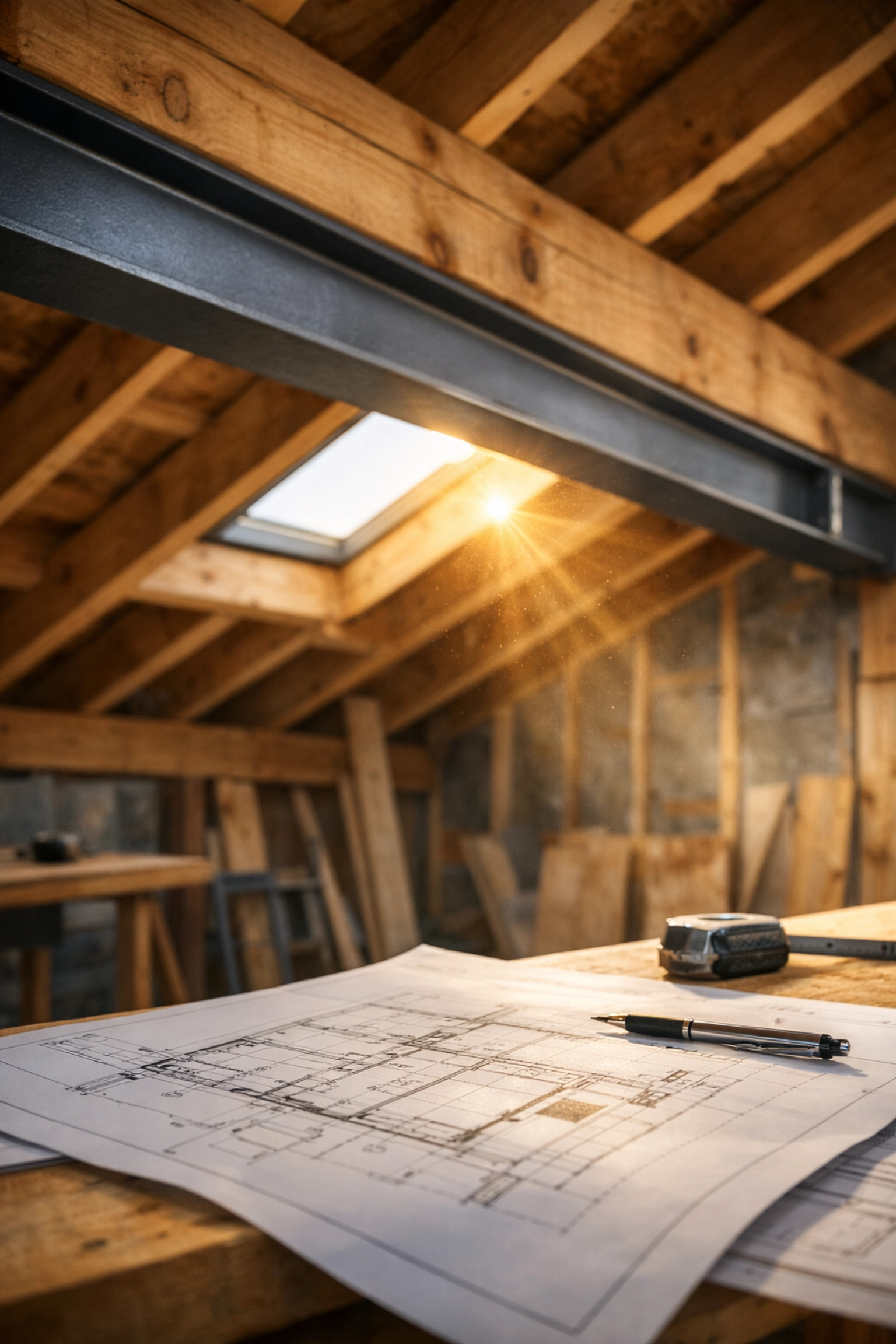
A loft conversion is a major structural change. You are adding significant weight to the house, which means your existing ceiling joists probably aren't strong enough to act as a floor. You’ll need new steel beams, fire-rated doors, a fixed staircase (no, a pull-down ladder doesn't count for a habitable room), and proper insulation to meet modern standards.
At Swanbourne Construction, we manage the building control process for you, ensuring that an inspector visits at key stages to sign off on the work. Without this final "Completion Certificate," you may find it impossible to sell your home in the future.
Why You Should Get a "Lawful Development Certificate"
Even if your project is clearly within Permitted Development rules, we strongly recommend applying for a Lawful Development Certificate (LDC) from your local council.
An LDC is a legal document that proves your loft conversion was built legally without the need for planning permission. Think of it as an insurance policy. When you come to sell your house, the buyer’s solicitor will ask for proof that the loft conversion is "legal." Having an LDC in your hand prevents delays and proves to everyone: including future buyers: that you followed the rules to the letter.
How Long Does the Process Take?
If you do need to apply for planning permission in West Sussex, the statutory time limit for a decision is usually 8 weeks. However, the entire process: from drawing the initial plans to receiving the decision: can take 3 to 4 months.
In contrast, if you are building under Permitted Development, you can technically start work as soon as your structural designs are ready and you’ve submitted your Building Regulations "Full Plans" or "Building Notice."
Local Knowledge: The Bognor and Chichester Context
Working with a local builder like Swanbourne Construction Ltd offers a distinct advantage. We know the local housing stock. We know the difference between the timber-framed properties in the villages and the solid brick terraces of the town centres.
We also understand the local planning nuances of Arun District Council and Chichester District Council. We can often tell you at a glance whether your vision for a loft conversion in Bognor Regis or Chichester will sail through or face hurdles.
Next Steps for Your Loft Project
A loft conversion is one of the most rewarding home improvements you can undertake. It’s an investment that typically returns more than its cost in added property value, and it transforms the way you live in your home.
- Step 1: Measure your head height. You generally need at least 2.2 metres from the top of the ceiling joist to the underside of the ridge timber.
- Step 2: Determine if you are in a Conservation Area.
- Step 3: Calculate your volume. Are you staying under that 40/50m³ limit?
- Step 4: Consult an expert.
Don't let the fear of "red tape" stop you from creating the home you need. Whether you are just starting to wonder "what if?" or you have a set of architectural drawings ready to go, we are here to help.
Ready to see what’s possible under your roof?
Explore our previous projects to see how we’ve transformed attic spaces across West Sussex, or contact us today for a casual, professional consultation about your loft conversion ideas. Let’s figure out the best path forward for your home, together.