
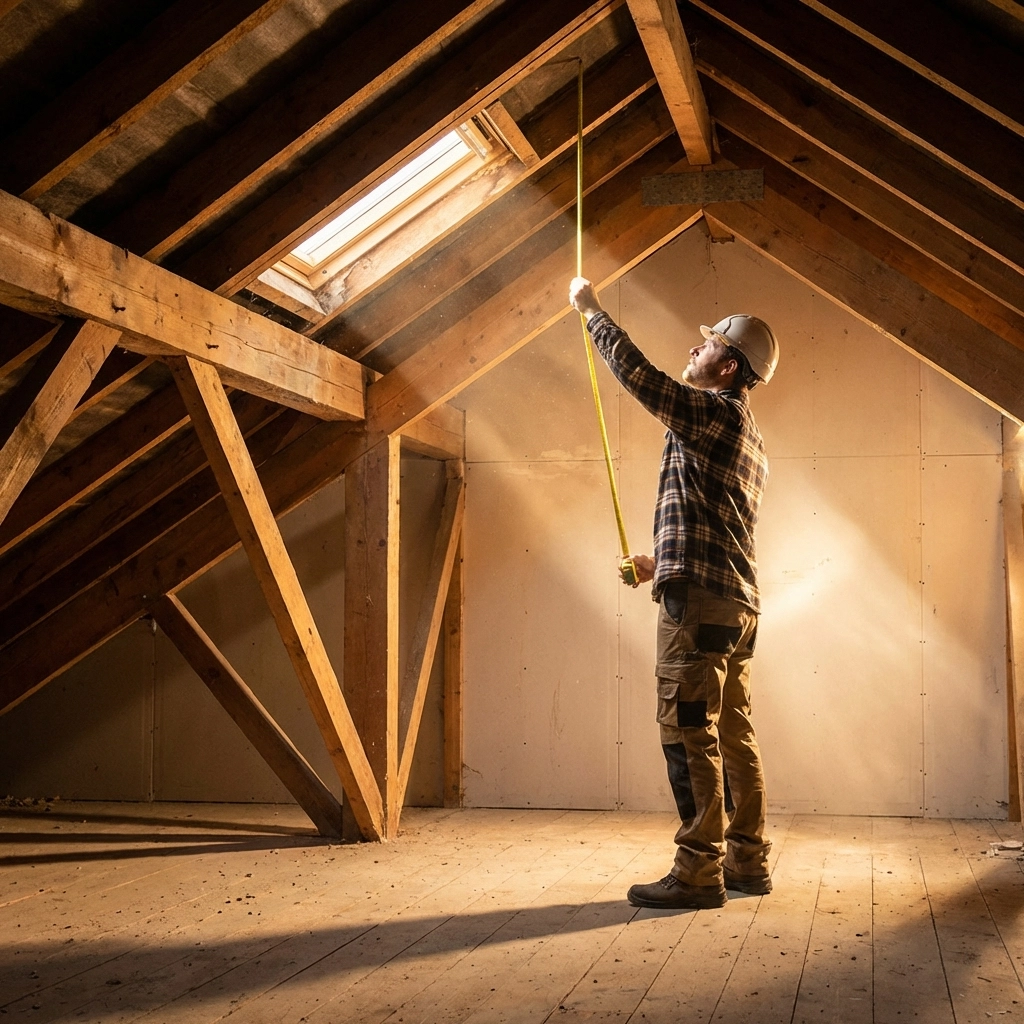
Determining loft suitability starts with checking the head height. You need at least 2.2 metres from floor to the highest point of the roof. This measurement forms the foundation of any successful conversion, as insufficient height makes the space uncomfortable and potentially unusable for everyday living.
Essential Height Requirements
Measure the ridge height carefully, taking into account the new floor structure and insulation that will reduce available headroom. If your loft falls short of the 2.2-metre minimum, don't despair – you still have options. Consider whether lowering ceilings below or raising the roof is feasible, though these modifications will increase your project costs significantly.
The height measurement should be taken at the highest point of your roof's apex. Remember that once you install proper flooring, insulation, and ceiling finishes, you'll lose approximately 200-300mm of the current height. This reduction makes the initial measurement critical for determining whether your space will meet building regulations.
Roof Structure Assessment
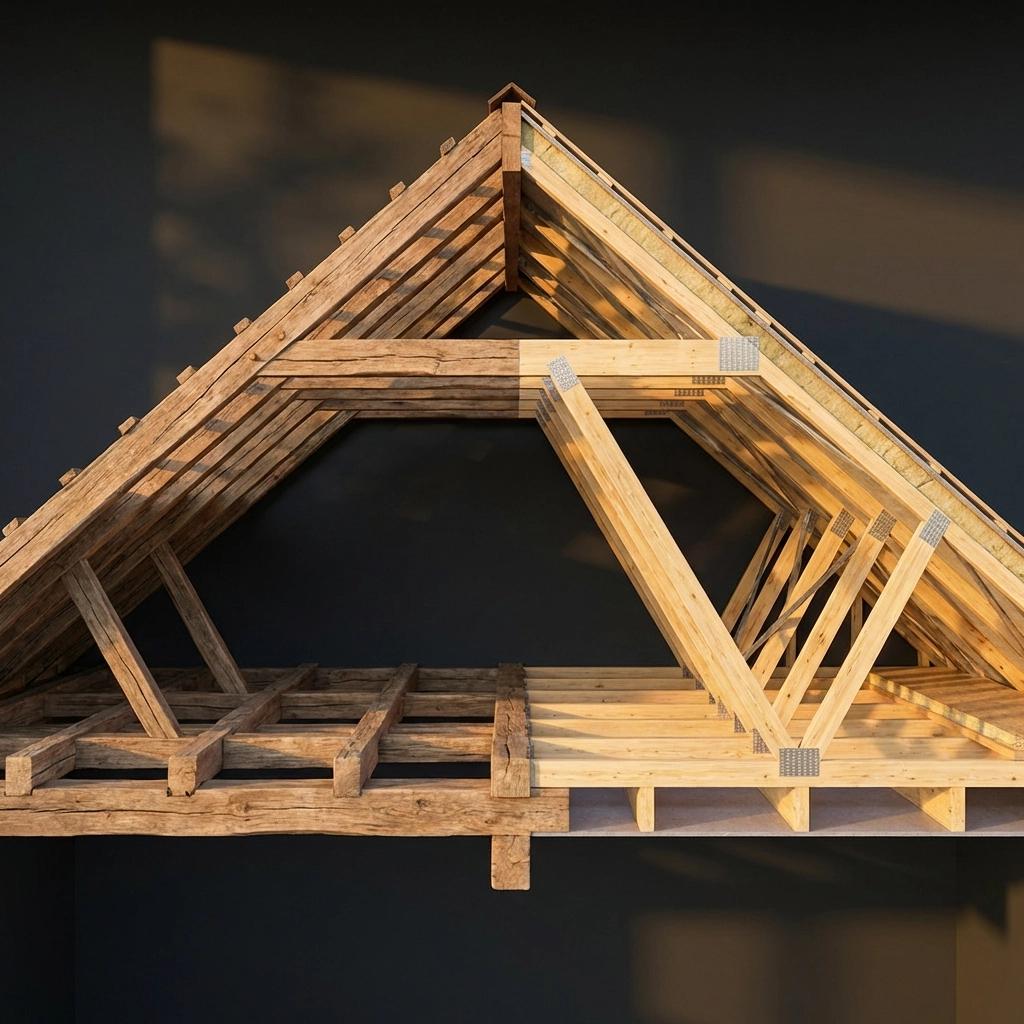
Examine your roof structure carefully, as this determines both conversion complexity and cost. Traditional cut roofs with individual timbers are easier to convert than modern trussed roofs, which require more extensive structural work. Cut roofs feature individual rafters and ceiling joists that can be modified relatively easily, making them ideal for conversion projects.
Trussed roofs, commonly found in homes built after the 1960s, present greater challenges. These engineered systems use interconnected timber members that cannot be altered without compromising structural integrity. Converting a trussed roof typically requires removing existing trusses and installing new structural elements, significantly increasing project complexity and cost.
Check the roof pitch as well – steeper pitches typically provide more usable space. A pitch of at least 30 degrees offers better headroom, particularly toward the edges where sloping ceilings can otherwise create awkward, unusable areas.
Floor Structure and Load-Bearing Capacity
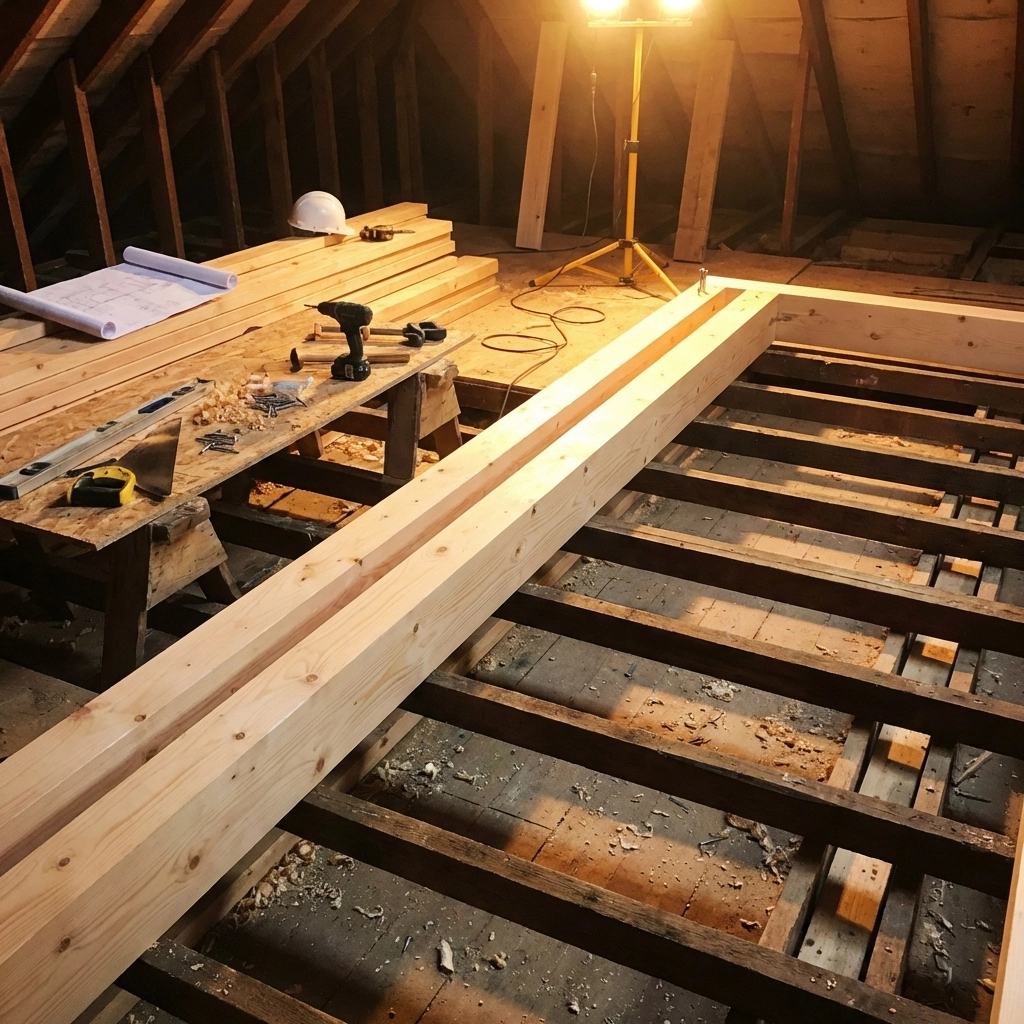
Assess the floor joists to determine if they can support habitable space or need strengthening. Original loft floor joists were designed to support only storage loads, typically around 0.5 kN/m². Converting to habitable space requires upgrading to 1.5 kN/m² to accommodate furniture, people, and daily use safely.
Most existing floor joists will need reinforcement or complete replacement to meet building regulation standards. This structural work often represents a significant portion of conversion costs but remains essential for safety and regulatory compliance.
Consider the span between supporting walls as well. Longer spans may require additional structural support, potentially affecting the layout and design possibilities for your converted space.
Access Points and Staircase Planning
Consider access points and whether there's sufficient space for building regulation-compliant stairs. The staircase represents one of the most challenging aspects of loft conversion planning, as it must meet strict safety standards while fitting into existing home layouts without disrupting room functionality.
Building regulations specify minimum staircase requirements: 800mm width, maximum 42-degree pitch, minimum 2-metre headroom, and adequate landing spaces. The staircase location affects your entire home's flow, so careful planning prevents future regrets.
Most conversions require permanent staircases rather than loft ladders. This means identifying suitable locations that don't compromise existing rooms while providing safe, convenient access to your new space.
Planning Status and Regulatory Considerations
Review your property's planning status, especially if it's listed or in a conservation area. Listed buildings face significant restrictions that may limit conversion possibilities or require specialist approaches. Conservation areas often have guidelines affecting external alterations, particularly visible elements like dormer windows or roof lights.
Even properties without special designations must comply with permitted development rules. Understanding these regulations early prevents costly design changes later in your project.
Building regulations apply to all loft conversions regardless of planning requirements. These cover structural safety, fire safety, insulation standards, and ventilation requirements that ensure your converted space is safe and comfortable.
Common Obstacles to Consider
Look for obstacles like water tanks, complex chimney arrangements, or insufficient floor area. Water tanks can often be relocated, though this adds complexity and cost to your project. Modern combi boilers have eliminated cold water storage needs in many homes, making tank removal straightforward.
Chimney breasts and flue systems can limit layout options but don't necessarily prevent conversion. Creative design can work around these features, sometimes incorporating them as architectural elements that add character to the finished space.
Insufficient floor area affects conversion viability. Generally, you need at least 30 square metres of usable floor space to create a worthwhile room. Remember that structural elements, insulation, and access requirements will reduce the total floor area available.
Natural Light and Ventilation
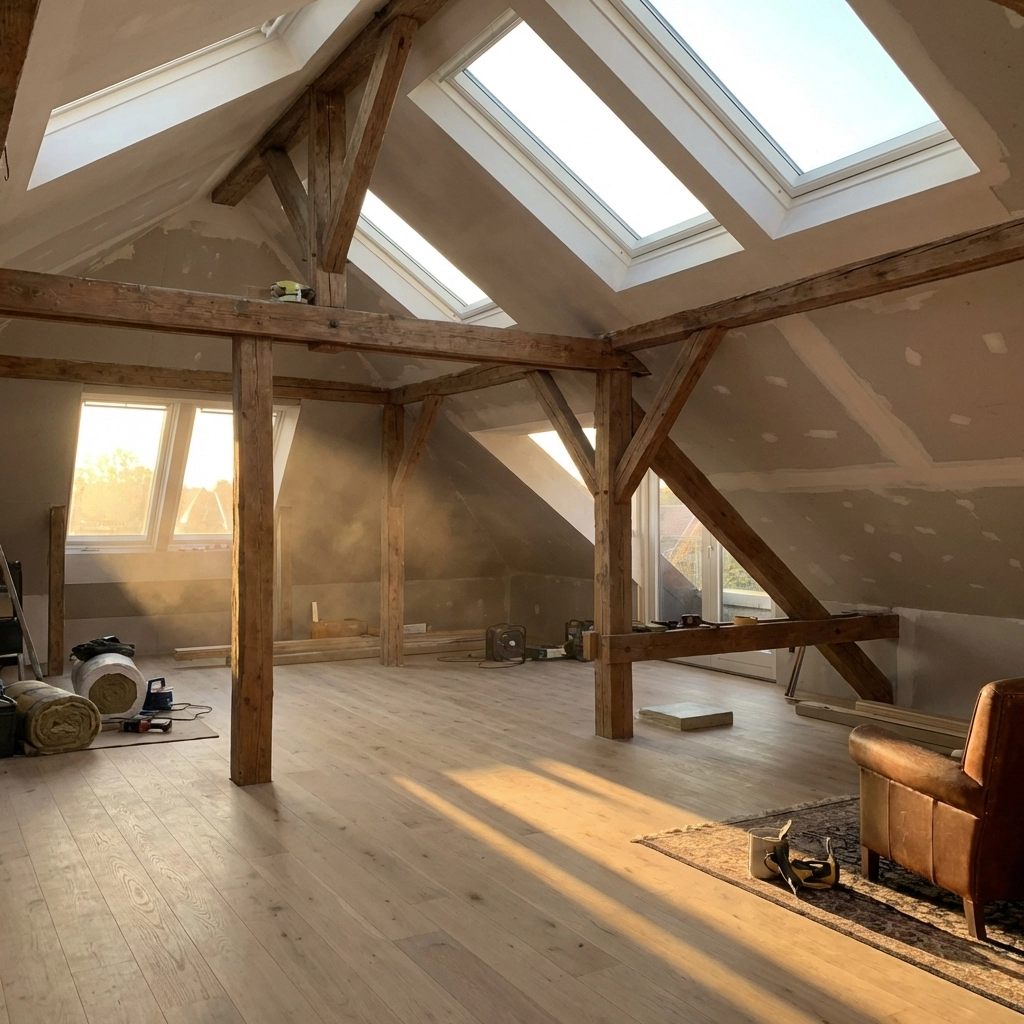
Evaluate natural light opportunities through dormers or roof windows. Adequate daylight transforms loft spaces from dark storage areas into bright, welcoming rooms. Building regulations specify minimum window areas relative to floor space, ensuring sufficient light for habitable use.
Roof windows offer cost-effective solutions for bringing light into loft conversions. They're typically easier to install than dormers and often fall under permitted development rights, avoiding planning permission requirements.
Ventilation requirements ensure healthy indoor air quality. Modern building standards demand mechanical ventilation systems in habitable rooms, particularly important in loft spaces where natural ventilation can be limited.
Professional Assessment Benefits
A professional assessment from Swanbourne Construction Ltd can provide definitive answers, using structural surveys and measurements to determine your loft's conversion potential and identify any necessary modifications. Professional evaluation considers factors beyond basic measurements, including structural calculations, regulatory requirements, and design possibilities.
Structural engineers can assess load-bearing capacity accurately, determining what reinforcement your conversion requires. This professional input prevents costly surprises during construction and ensures your project meets all safety standards.
Experienced conversion specialists understand local planning requirements and can navigate regulatory processes efficiently. Their expertise helps identify potential problems early, when solutions are most cost-effective.
Cost Implications of Different Scenarios
Understanding cost implications helps make informed decisions about conversion feasibility. Simple conversions in suitable lofts with adequate height and traditional roof structures typically cost less than complex projects requiring extensive structural modifications.
Properties needing roof raising, truss replacement, or significant structural reinforcement will see higher costs. However, these investments often prove worthwhile when considering the value added to your property and the cost of moving to gain additional space.
Budget considerations should include all necessary work, not just basic conversion costs. Hidden issues like asbestos, structural problems, or complex service runs can affect project budgets, making professional assessment valuable for accurate cost planning.
Making Your Decision
Your loft's conversion suitability depends on multiple interconnected factors. Height, structure, access, and regulatory compliance all contribute to project feasibility and cost. Properties meeting basic requirements with minimal structural work offer the most straightforward conversion opportunities.
Even challenging lofts may be convertible with creative solutions and appropriate investment. Professional guidance helps weigh costs against benefits, ensuring you make decisions based on complete information rather than assumptions.
The investment in professional assessment typically pays for itself through accurate cost estimates, design optimization, and problem identification before work begins. This approach ensures your loft conversion project proceeds smoothly from concept to completion.
Starting with a thorough suitability assessment sets the foundation for successful loft conversion, helping you understand your property's potential and the investment required to unlock that additional living space.