
If you're looking to create more space in your West Sussex home, a loft conversion could be the perfect solution. But before you start dreaming about that extra bedroom, home office, or family room tucked away in your roof space, it's essential to understand the rules and regulations that govern loft conversions in the UK.
Many homeowners across Bognor Regis, Chichester, and Arundel assume that converting their loft is a straightforward DIY project or that they can simply hire any builder without worrying about permissions. The reality is quite different – loft conversions are subject to strict building regulations and may require planning permission, depending on your specific circumstances.
Don't worry though. While the regulations might seem complex at first glance, understanding them is straightforward when you know what to look for. More importantly, working with experienced professionals who navigate these requirements daily makes the entire process smooth and stress-free.
Building Regulations: The Non-Negotiable Requirements
Here's something that catches many homeowners off guard: building regulations approval is mandatory for every single loft conversion in the UK, regardless of whether you need planning permission or not. There are no exceptions to this rule.
Building regulations exist to protect you, your family, and future occupants of your home. They ensure that your conversion meets essential safety and health standards that could literally be the difference between life and death in an emergency situation.
Structural Safety Requirements
Your existing roof structure wasn't designed to handle the additional weight of a fully converted living space, furniture, and people moving around regularly. Building regulations require comprehensive structural assessments to ensure:
- The new floor can safely handle increased loads without compromising the integrity of your home
- Roof stability remains intact throughout and after the conversion process
- Load-bearing calculations account for everything from furniture weight to multiple occupants
- Structural modifications use appropriate materials and construction methods
Fire Safety and Escape Routes
This is arguably the most critical aspect of loft conversion regulations. Fire safety requirements are extensive and detailed, covering:
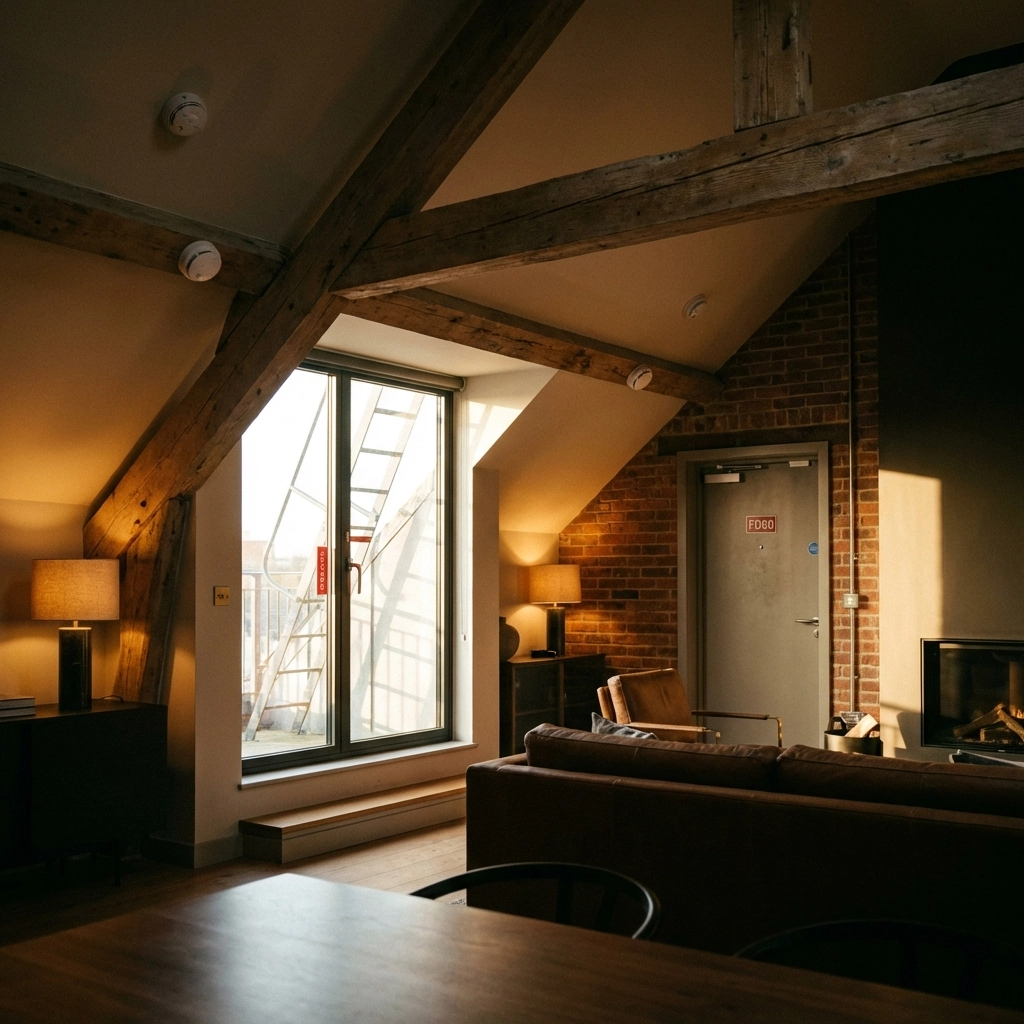
- Escape windows that meet specific size requirements and can be safely accessed
- Fire-resistant doors that provide adequate time for safe evacuation
- Protected escape routes from the loft to the ground floor
- Smoke detection systems integrated throughout the conversion area
- Fire separation between the conversion and existing parts of your home
Essential Technical Standards
Building regulations also mandate several other crucial requirements:
Electrical Safety: All electrical work must be completed by certified electricians, with installations meeting current safety standards and proper certification provided.
Sound Insulation: Your conversion must include adequate sound insulation between the new space and existing rooms below, ensuring comfortable living for everyone in your home.
Insulation and Energy Efficiency: Modern insulation standards ensure your conversion contributes to your home's overall energy efficiency rather than becoming a source of heat loss.
Ventilation Systems: Proper ventilation prevents condensation, mould, and ensures healthy air quality in your new living space.
Planning Permission: When Do You Need It?
The good news is that most loft conversions fall under permitted development rights, meaning you won't need planning permission. However, this comes with specific conditions that must be met.
Permitted Development Criteria
Your loft conversion can proceed without planning permission if:
- Volume limits: The conversion doesn't exceed 50 cubic metres of additional space
- Roof modifications: Any dormers or extensions (except hip-to-gable conversions) are set back at least 200mm from the original eaves
- Wall extensions: No extensions overhang the outer face of your original walls
- Height restrictions: The conversion doesn't increase the overall height of your roof
When Planning Permission IS Required
Several circumstances automatically trigger the need for planning permission:
Listed Buildings: If your home has listed building status, you'll need both planning permission and Listed Building Consent before any work begins.
Conservation Areas: Properties in Conservation Areas, Areas of Outstanding Natural Beauty, National Parks, or World Heritage Sites face additional restrictions.
Article 4 Directions: Some local authorities issue Article 4 directions that remove permitted development rights in specific areas.
Exceeding Permitted Development: Any conversion that exceeds the size, height, or positioning limits mentioned above requires planning permission.
Technical Requirements You Need to Know
Beyond the regulatory approvals, your loft conversion must meet specific technical standards that affect the usability and safety of your new space.
Headroom Requirements
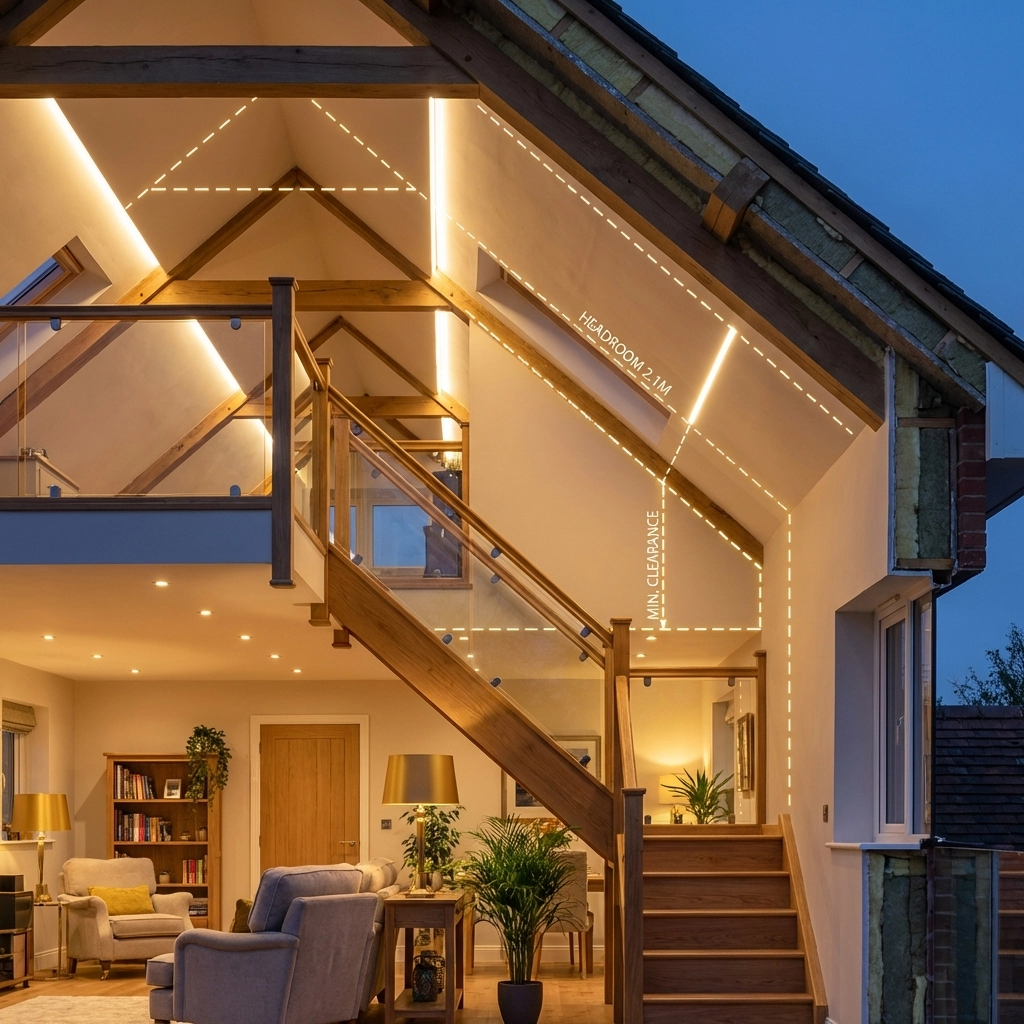
Minimum headroom is crucial for both safety and comfort. Current regulations require:
- 1.9 metres of headroom at the centre of the conversion
- 1.8 metres at the edges where sloping roofs exist
- Adequate headroom on staircases for safe navigation
Many older properties struggle to meet these requirements, which is why professional assessment is essential before committing to a conversion project.
Staircase Design and Safety
Your new staircase isn't just about getting upstairs – it's a critical safety feature that must meet specific design requirements:
- Appropriate rise and going measurements for safe navigation
- Adequate handrails and balustrades
- Sufficient headroom throughout the stair's path
- Proper positioning that doesn't compromise existing rooms
Party Wall Considerations
Unless you live in a detached property, you'll likely need a Party Wall Agreement with your neighbours before work begins. This legal requirement is separate from building regulations approval and protects both your interests and your neighbours' rights.
Why Professional Management Makes All the Difference
Here's where many DIY enthusiasts and inexperienced builders fall short: navigating the regulatory maze while actually completing quality construction work requires specific expertise and project management skills.
At Swanbourne Construction Ltd, we've handled countless loft conversion projects across West Sussex, and we understand that regulatory compliance isn't just about ticking boxes – it's about protecting your investment and ensuring your family's safety.
Our Comprehensive Approach
We handle every aspect of regulatory compliance, including:
- Initial feasibility assessments that identify potential issues before you commit to the project
- Building regulation applications prepared and submitted correctly the first time
- Planning permission applications when required, with compelling supporting documentation
- Structural calculations by qualified engineers who understand local building requirements
- Regular building control inspections scheduled and managed throughout the project
- Final certification ensuring you receive all necessary completion documents
The Value of Experience
When you work with experienced professionals who specialise in house extensions and loft conversions, you're not just hiring builders – you're gaining access to:
Local Authority Relationships: We work regularly with West Sussex building control departments and understand their specific requirements and preferences.
Problem-Solving Expertise: When unexpected issues arise (and they often do in older properties), our experience helps find solutions that satisfy regulations while keeping your project on track.
Quality Assurance: We ensure every aspect of your conversion meets or exceeds regulatory requirements, giving you complete peace of mind throughout the project.
Common Pitfalls to Avoid
Many homeowners make costly mistakes when approaching loft conversions without proper guidance:
Assuming DIY is Acceptable: Building regulation compliance requires specific expertise, proper documentation, and professional oversight that DIY approaches simply cannot provide.
Choosing the Cheapest Quote: Builders who offer significantly lower prices often cut corners on regulatory compliance, leaving you with expensive remedial work and potential safety issues.
Ignoring Structural Requirements: Inadequate structural work doesn't just fail building regulations – it can compromise your entire home's stability.
Overlooking Fire Safety: Incomplete or inadequate fire safety measures put your family at risk and will fail building control inspections.
Making Your Loft Conversion Dreams a Reality
Understanding the rules for loft conversions might seem overwhelming, but it doesn't have to derail your plans for creating additional space in your West Sussex home. The key is working with professionals who handle regulatory compliance as naturally as they handle construction work.
Every successful loft conversion starts with proper planning and regulatory compliance. When these foundations are solid, your project proceeds smoothly from initial concept through to final completion certificate.
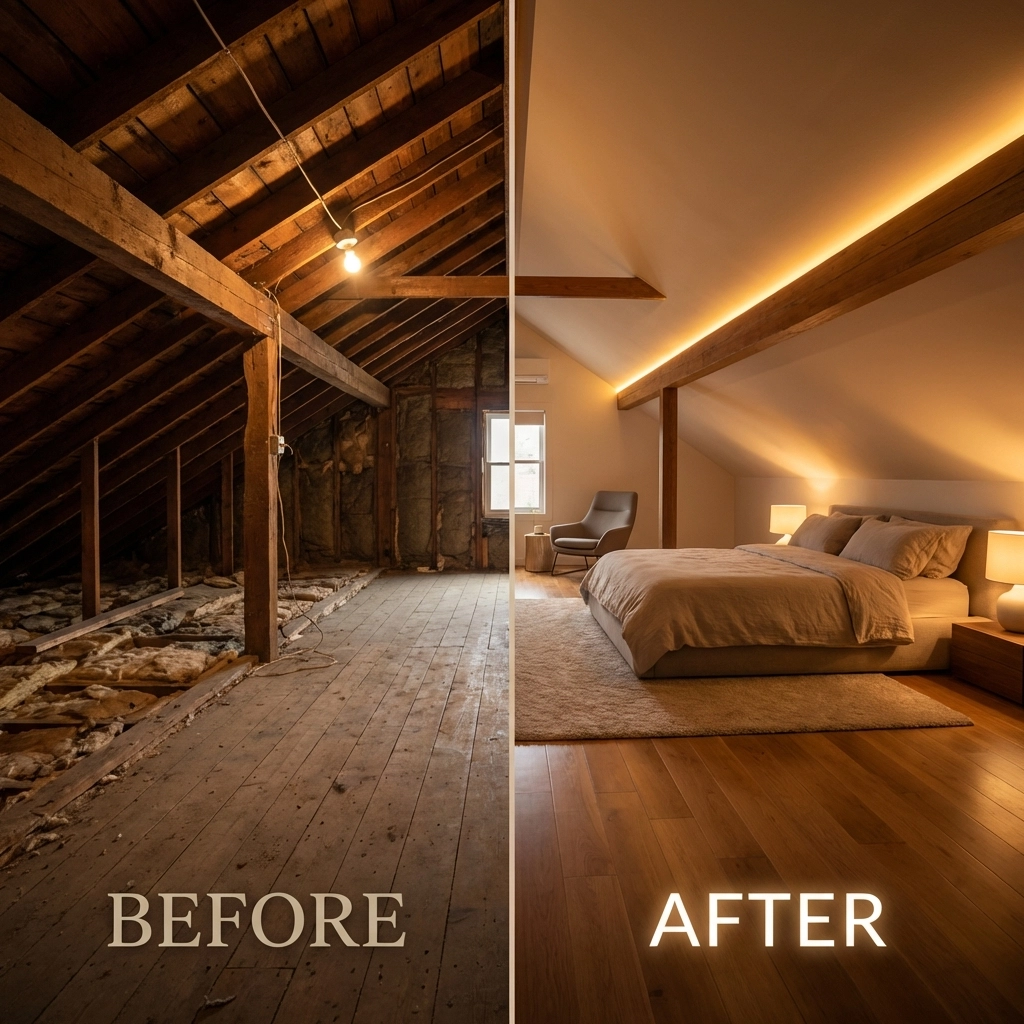
Your loft conversion should enhance your home's value, improve your quality of life, and provide safe, comfortable additional living space for years to come. Achieving these goals starts with understanding and properly addressing the regulatory requirements that govern all loft conversion projects in the UK.
Ready to explore the possibilities for your West Sussex property? Contact Swanbourne Construction Ltd today for a comprehensive consultation that covers both the creative potential and regulatory requirements for your loft conversion project. We'll help you understand exactly what's possible within the rules and regulations, ensuring your dream conversion becomes a safe, legal, and valuable reality.