For many homeowners across Bognor Regis, Chichester, and the surrounding South Coast, the dream of a more spacious home often feels gated behind a wall of red tape. You know you need more room, perhaps for a growing family, a dedicated home office, or that open-plan kitchen-diner you’ve been eyeing on Pinterest, but the thought of navigating the local planning department at Arun or Chichester District Council can feel overwhelming.
What if you could bypass the standard planning application altogether?
This is where Permitted Development (PD) rights become your most valuable asset. Established by the government to simplify the improvement of the UK’s housing stock, these rights allow you to carry out specific types of work without needing to apply for full planning permission. However, "simplified" does not mean "unregulated." To ensure your house extension west sussex project remains legal and value-adding, you must strictly adhere to specific limits on size, height, and placement.
In this guide, Swanbourne Construction Ltd breaks down exactly what you can build under these rules, helping you transform your property with confidence.
The Foundation: What Exactly Are Permitted Development Rights?
Permitted Development rights are essentially an implied form of planning permission granted by Parliament. They allow you to extend or alter your home provided the work meets a rigid set of criteria.
It is important to note that these rights only apply to houses. If you live in a flat, maisonette, or a converted house, you generally do not have PD rights and will likely need full planning permission for any external changes. Furthermore, if your property is a Listed Building or situated within a Conservation Area (such as parts of Chichester city centre or the Arundel town centre), your rights may be significantly restricted or removed entirely via an "Article 4 Direction."
1. Single-Storey Rear Extensions: The Most Popular Choice
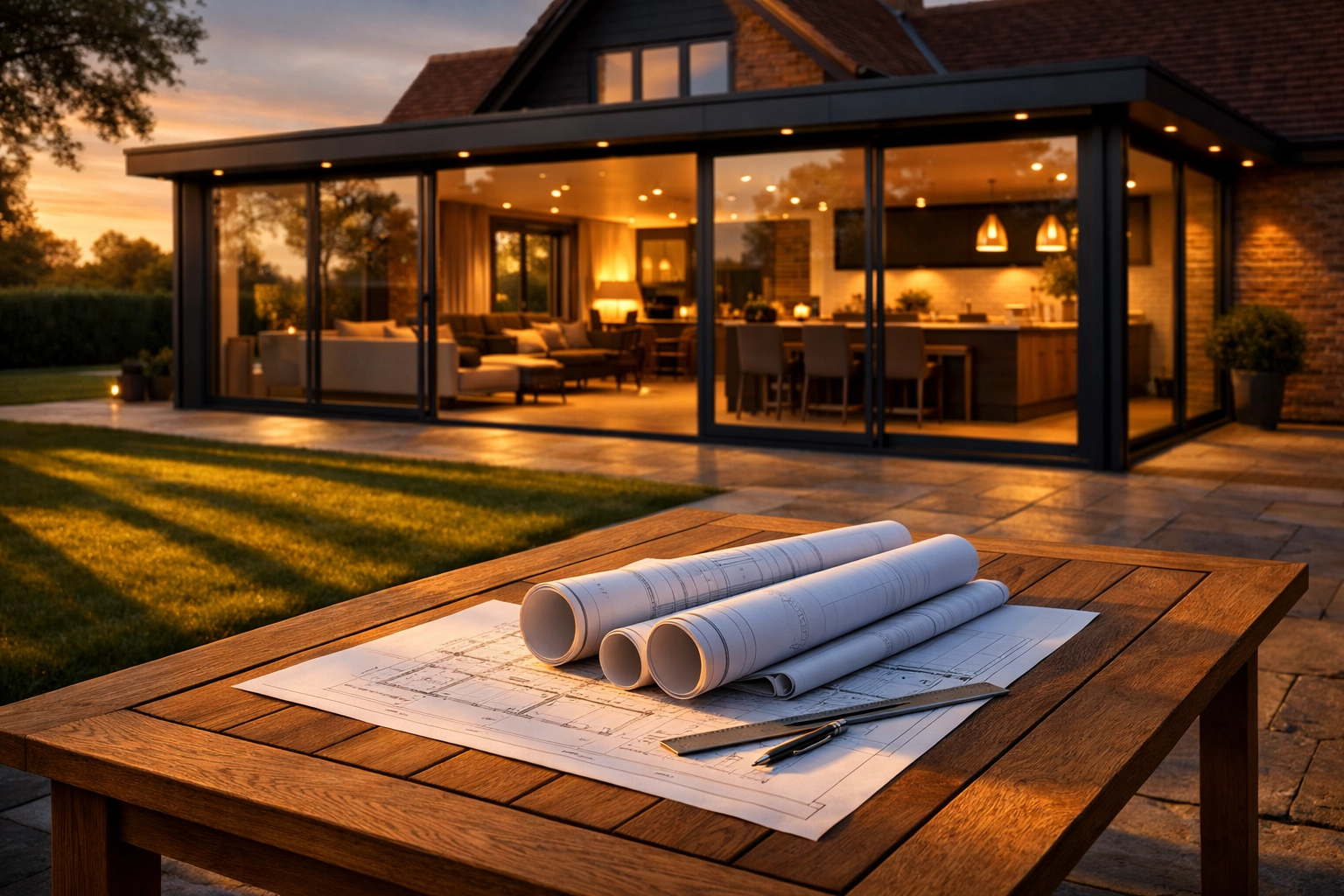
When homeowners look for a house extension west sussex, a single-storey rear extension is often the first port of call. It is the most effective way to create that sought-after "heart of the home" kitchen space.
Under PD rules, you can typically build:
- For Terraced or Semi-Detached Houses: You can extend up to 3 metres beyond the rear wall of the original house.
- For Detached Houses: You can extend up to 4 metres beyond the rear wall.
The Height Factor: To stay within PD, the extension must not be higher than the highest part of the existing roof. The maximum eaves height (where the wall meets the roof) must be no more than 3 metres if the extension is within 2 metres of a boundary. If the extension is further away, the overall height can go up to 4 metres.
The "Larger Home Extension" Scheme: Did you know you might be able to go even further? Under the "Prior Approval" scheme, you can often double these depths, reaching 6 metres for semi-detached and 8 metres for detached houses. This requires a simplified notification to the council, who will then consult your immediate neighbours. If no objections are raised (or if the council deems the objections unfounded), you are good to go.
2. Side Extensions: Maximising Your Plot
If you have unused space to the side of your property, a side extension can provide a vital utility room, a downstairs W/C, or an extension to your living room. However, the rules for side extensions are stricter than those for the rear:
- Single Storey Only: Side extensions must be single-storey to fall under PD.
- Width Limits: The extension cannot exceed half the width of the "original" house (the house as it stood in 1948 or when it was first built).
- Height: The maximum height is 4 metres, and if it is within 2 metres of the boundary, the eaves height is capped at 3 metres.
3. Double-Storey Extensions: Looking Up and Out
Yes, it is possible to build a two-storey extension under Permitted Development, but the constraints are very specific. This is where many homeowners benefit from a professional consultation to ensure they don't accidentally cross the line into requiring full planning.
Key rules for two-storey PD extensions include:
- They must be at the rear of the property, never the side.
- They cannot extend more than 3 metres beyond the original rear wall.
- They must be at least 7 metres away from the rear boundary.
- The roof pitch must match the existing house as closely as possible.
4. Loft Conversions: Unlocking the "Hidden" Floor
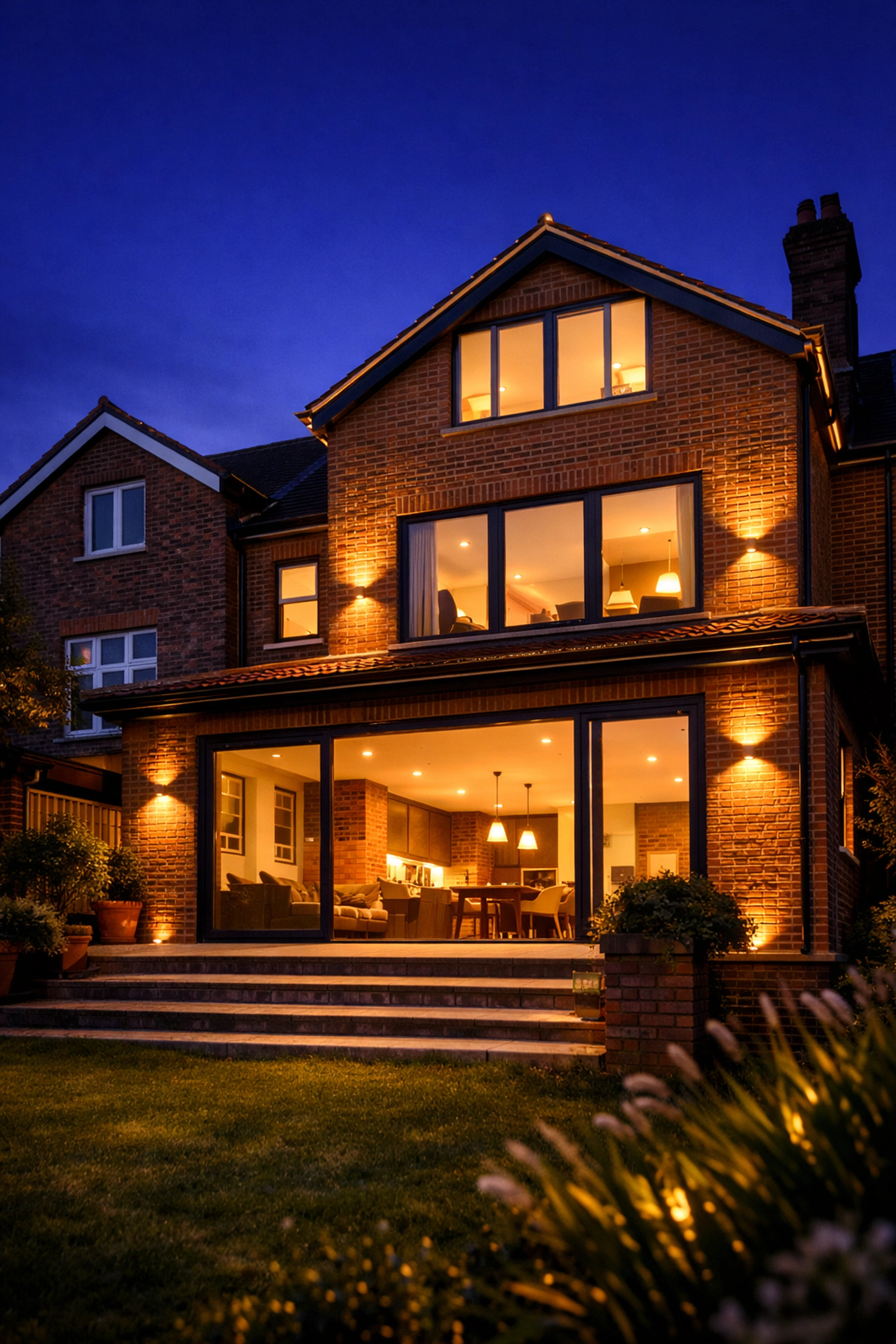
Loft conversions are an incredible way to add a master suite or extra bedrooms without sacrificing your garden space. For most residents in West Sussex, this falls under PD provided you stay within volume limits.
- Volume Allowance: You can add up to 40 cubic metres of space for terraced houses, and 50 cubic metres for detached and semi-detached houses.
- Placement: No part of the conversion can be higher than the highest part of the existing roof.
- Materials: The appearance of the materials used (tiles, cladding) must match the existing house.
- Side Windows: Any side-facing windows must be obscure-glazed and non-opening (unless the opening part is more than 1.7 metres above the floor).
If you are considering this route, explore our dedicated services for loft conversions in Bognor Regis or Chichester.
5. Outbuildings and Garden Rooms
The rise of remote working has seen a surge in demand for garden offices. Under PD, you can build sheds, garages, and summerhouses provided:
- The building is not in front of the "principal elevation" (usually the front of the house).
- It is single-storey with a maximum eaves height of 2.5 metres.
- The total area of all outbuildings and extensions does not cover more than 50% of the total garden area.
Critical Boundaries: Proximity and Materials
A common question we hear at Swanbourne Construction is: "How close to my neighbour can I build?"
Under PD, you can technically build right up to the boundary line, but you must be wary of the height restrictions (the 3-metre eaves limit within 2 metres of the boundary). Furthermore, building on a boundary will almost certainly trigger the Party Wall Act 1996, requiring you to serve notice to your neighbours.
The Aesthetic Rule: For almost all PD work, the materials used must be of a similar appearance to those on the existing house. If you are planning a modern, zinc-clad extension on a traditional brick house, you will likely need to step outside of PD and apply for full planning permission.
Why You Still Need Building Regulations
It is the most common misconception in the industry: "I have Permitted Development rights, so I don't need the council involved."
Planning Permission and Building Regulations are two entirely different things. Planning deals with how a building looks and its impact on the area. Building Regulations deal with how a building is constructed: its structural integrity, insulation, fire safety, and drainage.
Even if your house extension in West Sussex doesn't need planning permission, it must comply with Building Regulations. At Swanbourne Construction Ltd, we handle the inspections and certifications to ensure your new space is safe, legal, and adds genuine value when you eventually come to sell.
The Importance of a Lawful Development Certificate (LDC)
While not mandatory, we strongly advise our clients to apply for a Lawful Development Certificate from the local authority before starting work.
Why? Because it provides you with legal proof that your project was built under PD rights. If you ever decide to sell your home, the buyer’s solicitor will ask for planning proof. Without an LDC, you might find yourself in a stressful rush to get retrospective approval, which could delay or even tank your house sale. It is a small upfront cost for total peace of mind.
Navigating the Local Landscape
Living in West Sussex offers a beautiful mix of coastal charm and rural heritage. However, this means we have many "Article 4" areas where the council has removed PD rights to protect the character of a neighbourhood. Whether you are in a Victorian terrace in Chichester or a seaside bungalow in Bognor, checking your local constraints is the first step of any successful build.
Are you unsure if your project qualifies? Do you want to maximise your space without the 8-week wait for a planning officer’s decision?
At Swanbourne Construction Ltd, we pride ourselves on being more than just builders. We are consultants who help you navigate the complexities of UK building law. From initial design to the final coat of paint, we ensure your project is seamless.
Ready to start? Explore our previous projects to see how we've transformed homes across West Sussex, or check our FAQ for more insights on costs and timelines.
Let’s build something extraordinary together: without the unnecessary paperwork. Contact us today for a professional consultation.