
If you're considering a loft conversion, you've likely encountered references to the 1 metre boundary rule during your research. This planning regulation can significantly impact your conversion design, particularly if you're hoping to add dormers or extend your roof space. Understanding this rule is crucial for any homeowner in West Sussex looking to maximize their loft conversion potential while staying within permitted development rights.
The 1 metre boundary rule affects far more than just loft conversions, touching everything from garden fences to side extensions. However, for loft conversions specifically, this regulation determines how close dormers and roof extensions can be positioned to your property boundaries: decisions that directly impact your available space and overall project cost.
Understanding the 1 Metre Rule for Loft Conversions
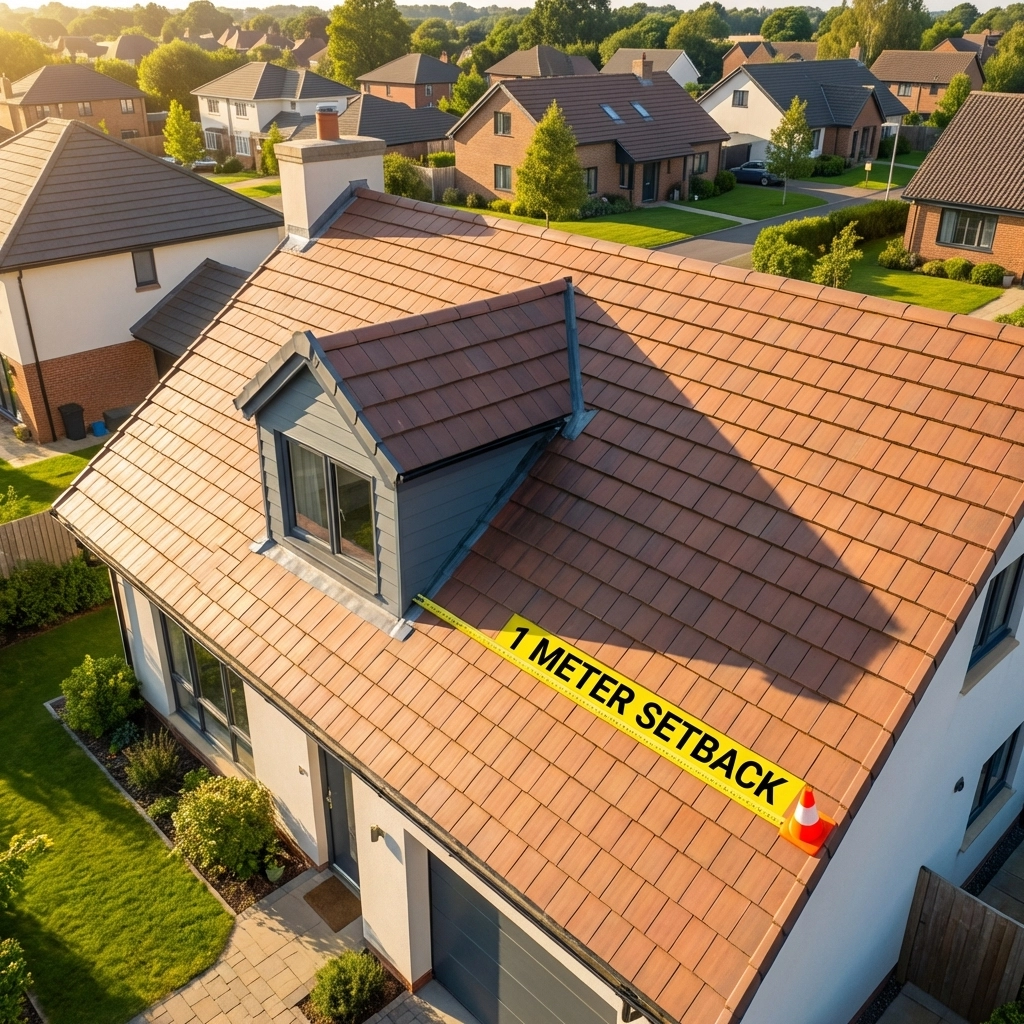
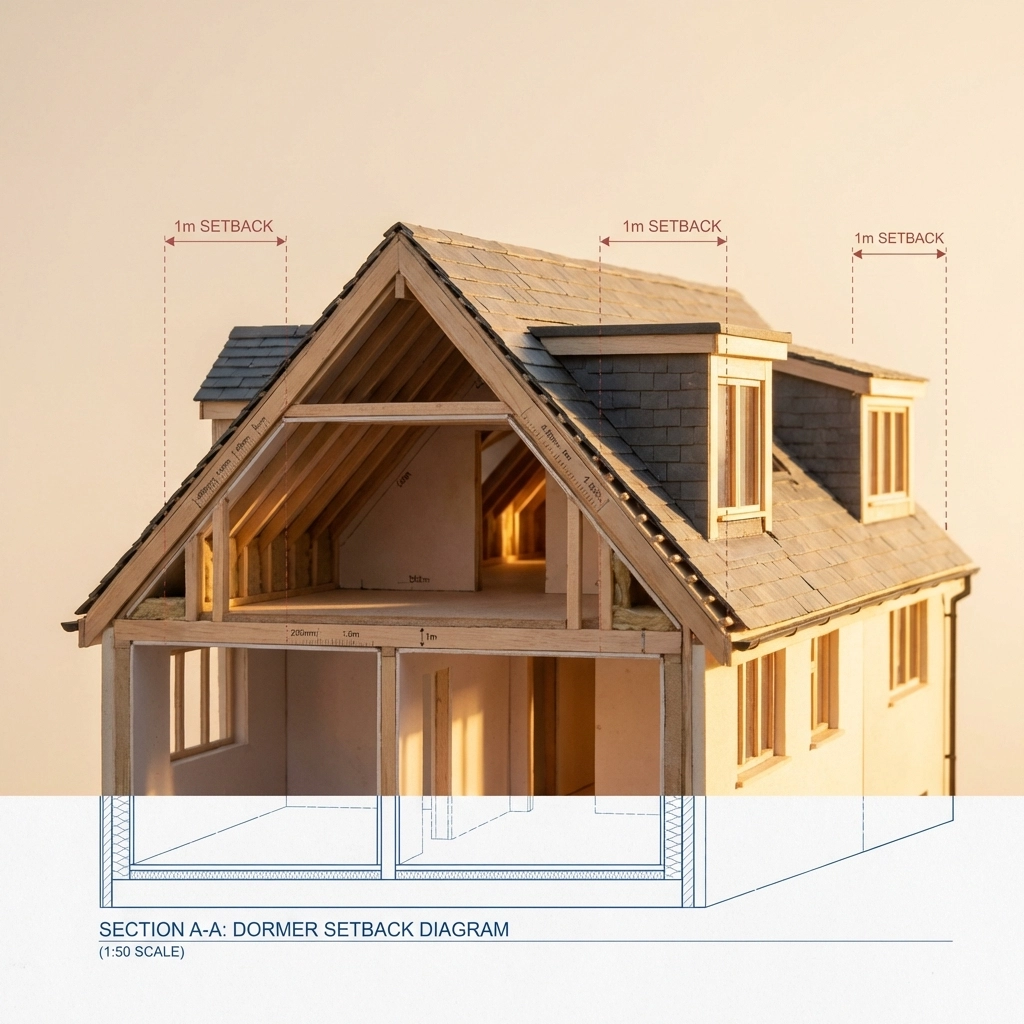
The one-metre boundary rule is a planning regulation that applies specifically to permitted development rights for loft conversions. Under this rule, any extension to your roof space, such as a dormer, must be set back at least one metre from the eaves on all sides facing a boundary. This ensures conversions don't dominate the roofline or impact neighbors' amenity excessively.
This setback requirement serves multiple purposes. It prevents loft conversions from becoming overly imposing on neighboring properties, maintains the street scene's character, and ensures adequate separation between properties. For homeowners, it means careful planning is essential to maximize usable space within these constraints.
The rule specifically applies when you're relying on permitted development rights rather than applying for full planning permission. This distinction is crucial because many homeowners choose the permitted development route to avoid lengthy planning processes and potential neighbor objections.
How the Rule Affects Your Dormer Design
The one-metre setback significantly impacts dormer size and positioning, particularly on smaller properties where this restriction can substantially reduce usable space. On terraced houses or properties with smaller plots, the one-metre rule can be especially limiting, forcing designers to create more compact dormers than originally envisioned.
When planning your loft conversion, consider how this rule affects different dormer types:
Rear dormers are typically where homeowners feel the impact most. Since most properties have gardens extending to rear boundaries, the one-metre setback from the rear eaves can reduce the dormer's depth considerably. This limitation affects both floor space and ceiling height in the converted area.
Side dormers face similar constraints, particularly on semi-detached or terraced properties where side boundaries are close to the building line. The setback requirement here can make side dormers impractical on narrow plots.
Front dormers are rarely affected by boundary setbacks since most properties have sufficient front garden space. However, front dormers face stricter planning scrutiny due to their visual impact on street scenes.
It's worth noting that roof lights and windows installed flush with the roof plane aren't subject to this restriction. This exception makes roof windows an attractive alternative when dormer space is limited by boundary setbacks.
When the Rule Doesn't Apply
Understanding when the 1 metre boundary rule doesn't apply can open up additional design possibilities for your loft conversion. If your desired design exceeds permitted development limits, including violating the one-metre rule, you'll need planning permission: but this also means the one-metre restriction no longer applies.
Properties in conservation areas often have different requirements that may override standard permitted development rules. Some conservation areas prohibit dormers entirely, while others have specific design requirements that supersede the one-metre rule.
Listed buildings require listed building consent for any alterations, making permitted development rights irrelevant. In these cases, the one-metre rule doesn't apply, but you'll face different, often more stringent, requirements based on the building's historical significance.
If you're willing to pursue full planning permission from the outset, the one-metre boundary rule becomes irrelevant to your design. This route takes longer and costs more initially, but it can provide greater design freedom, particularly on constrained sites.
Beyond Loft Conversions: Other Applications
While loft conversions represent a significant application of the 1 metre boundary rule, it affects various other home improvement projects across West Sussex. Understanding these broader applications helps homeowners plan comprehensive property improvements.
Front garden fences must not exceed 1 metre in height, particularly important if your property borders public footpaths, bridleways, waterways, or parks. This rule ensures adequate visibility for pedestrians and drivers, contributing to neighborhood safety.
Side extensions typically require at least a 1-metre gap from boundaries, especially for two-storey builds. Single-storey extensions sometimes enjoy more flexibility, depending on specific circumstances and building regulations.
Garden buildings and rooms follow specific setback requirements based on size. Structures up to 15 square metres internally can sometimes be positioned within 1 metre of boundaries, while buildings between 10-30 square metres typically require the full 1-metre setback.
Interestingly, air source heat pump installations previously required 1-metre setbacks from boundaries to address noise concerns, but this rule has since been scrapped, making heat pump installation easier for homeowners with limited space.
Planning Your Loft Conversion Within the Rules
Successfully navigating the 1 metre boundary rule requires careful planning and professional expertise. The key is understanding how this constraint affects your specific property and desired outcomes before committing to design directions that may prove unworkable.
Start by accurately measuring your property's dimensions and identifying all boundary lines. Many homeowners underestimate how boundary setbacks will impact their available space, leading to disappointment when initial designs require modification.
Consider alternative design approaches that work within the constraints. Sometimes, multiple smaller dormers provide better space utilization than a single large dormer affected by boundary setbacks. Roof windows combined with internal layout optimization can often achieve similar results to dormers while avoiding boundary restrictions entirely.
Professional survey and design services become invaluable when dealing with constrained sites. Experienced professionals understand how to maximize space within regulatory limits and can often identify creative solutions that homeowners miss.
At Swanbourne Construction Ltd, we're thoroughly familiar with permitted development rules and planning requirements, ensuring your loft conversion design complies with all regulations while maximizing your available space and meeting your specific needs effectively.
Making the Right Choice for Your Property
The decision between working within permitted development constraints or pursuing planning permission depends on your specific circumstances, timeline, and budget considerations. Understanding the trade-offs helps you make informed decisions about your loft conversion approach.
Permitted development offers speed and certainty when your design works within the constraints. Projects can commence without lengthy planning processes, and there's no risk of neighbor objections derailing your plans. However, the 1 metre boundary rule and other restrictions may limit your design ambitions.
Planning permission provides design freedom but introduces uncertainty, longer timescales, and additional costs. If maximizing space is crucial and your design significantly conflicts with permitted development rules, this route may be worthwhile despite the complications.
Consider your long-term property plans when making this decision. If you're planning additional improvements or extensions in coming years, a comprehensive planning application now might prove more cost-effective than multiple separate applications later.
Local planning authority attitudes vary across West Sussex, with some councils more supportive of innovative loft conversion designs than others. Professional advice based on local experience can help you understand your realistic chances of planning success.
Professional Guidance Makes the Difference
The 1 metre boundary rule represents just one of many regulations affecting loft conversions, and navigating these requirements successfully requires professional expertise. Attempting to interpret planning rules without professional guidance often leads to costly mistakes and project delays.
Building regulation compliance, structural requirements, fire safety considerations, and energy efficiency standards all interact with planning constraints to determine what's achievable on your property. Professional designers understand how these various requirements work together and can optimize designs to meet all applicable standards.
Early professional involvement helps avoid design changes mid-project, which can prove expensive and disruptive. Professional loft conversion specialists can assess your property's constraints and opportunities, providing realistic guidance about achievable outcomes within your budget and timeline.
The 1 metre boundary rule may seem like a simple setback requirement, but its implications for loft conversion design, cost, and functionality can be significant. Understanding how this rule affects your specific property and conversion goals is essential for making informed decisions about your project approach.
Whether working within permitted development rights or pursuing planning permission, professional guidance ensures your loft conversion maximizes your property's potential while complying with all applicable regulations. With careful planning and expert advice, the 1 metre boundary rule becomes just another design parameter to work with rather than an insurmountable obstacle to your loft conversion ambitions.
One Response