Planning a loft conversion in West Sussex? You're probably wondering where most of your budget will go. Understanding the cost breakdown helps you make informed decisions and avoid nasty surprises mid-project.
The structural work is typically the most expensive component, often consuming 35-45% of your total loft conversion budget. This isn't just about adding a few beams: it's about fundamentally transforming your roof space into a safe, habitable room that meets modern building standards.
Why Structural Work Dominates Your Budget
Your existing loft wasn't designed for people to live in. The floor joists, roof timbers, and overall structure need significant reinforcement to support the additional weight of furniture, occupants, and the conversion itself.
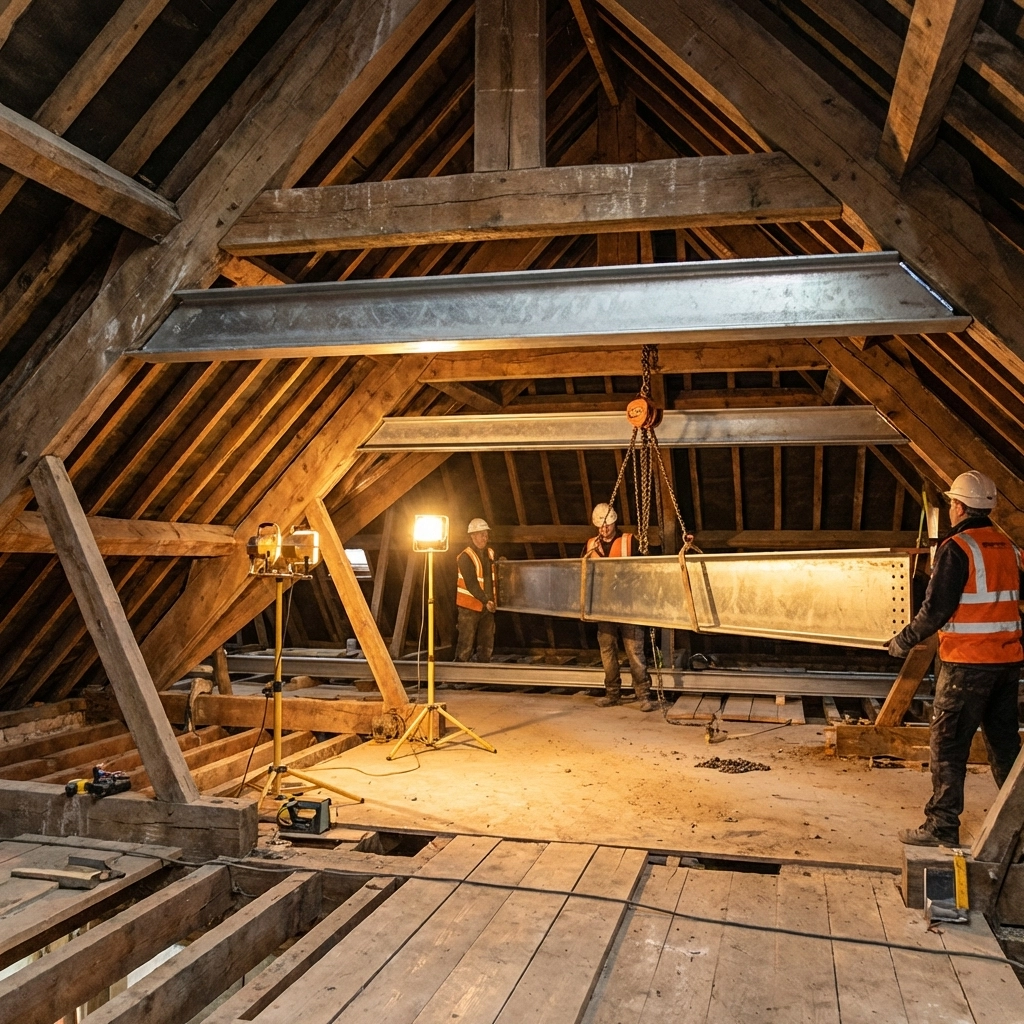
Steel beam installation represents the largest single structural expense. These essential supports typically cost between £1,500 and £4,000, with complex installations reaching even higher. When access is difficult: common in many West Sussex period properties: costs increase substantially due to the additional time and specialist equipment required.
The existing floor structure rarely meets habitable space requirements. Floor strengthening and new joist installation typically costs £2,000-£5,000, depending on room size and structural requirements. Your original loft floor was designed to support stored boxes, not beds, wardrobes, and people moving around daily.
Roof modifications add another significant expense. Whether you're installing dormers, converting hip-to-gable, or creating mansard conversions, these alterations require extensive structural work that impacts both interior and exterior elements of your property.
Building Regulation-Compliant Staircases
Don't underestimate staircase costs. Building regulation-compliant loft staircases represent a major expense, particularly when custom-designed for challenging spaces common in older properties.
Standard loft ladders won't suffice for habitable conversions. You need properly designed staircases meeting strict safety requirements: minimum 800mm width, maximum 42-degree pitch, adequate headroom, and proper handrail specifications. Custom staircases designed to fit awkward spaces often cost significantly more than standard installations.
The staircase location affects costs substantially. If your ideal position requires structural alterations to existing rooms or creates complex installation challenges, expect higher expenses. Many West Sussex properties require creative solutions that increase both design and installation costs.
Dormer Construction Expenses
Dormer construction adds substantial cost, especially for larger box dormers requiring extensive roof alterations. Unlike simple roof windows, dormers involve:
- Cutting through existing roof structure
- Installing new supporting framework
- Weatherproofing complex roof junctions
- Internal finishing and integration
- External rendering or cladding to match existing property
Hip-to-gable conversions, popular in semi-detached West Sussex homes, involve removing the sloped end wall and replacing it with a vertical gable wall. This creates more usable space but requires significant structural work and often planning permission.
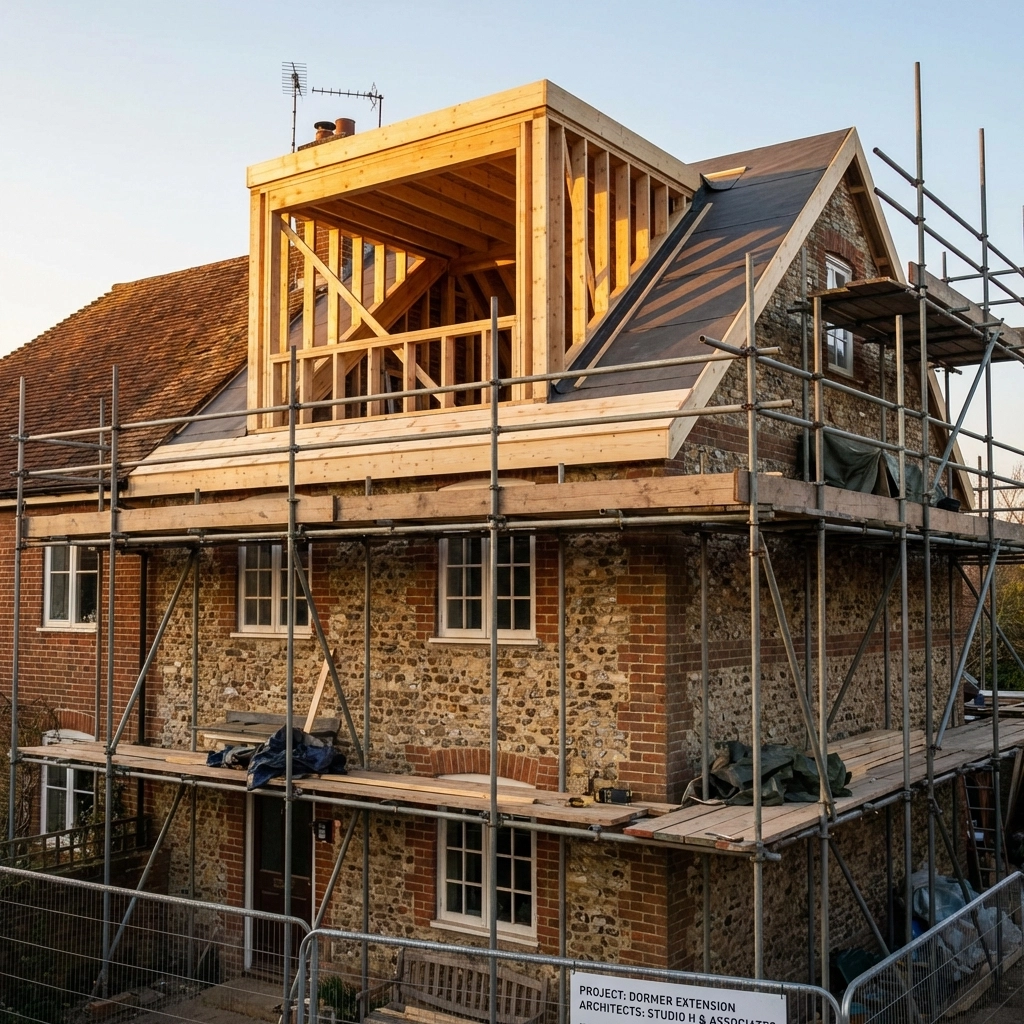
Mansard conversions represent the most expensive dormer option because they involve restructuring the entire roof to create near-vertical walls. While they maximize space, the extensive structural and roofing work makes them the costliest conversion type.
Electrical and Plumbing Installations
Electrical and plumbing work represents the second-largest expense category, typically accounting for 10-15% of your total budget.
Electrical installations for loft conversions cost £1,500-£3,000 for basic wiring, with costs increasing for complex layouts or when running cables from distant consumer units. Your conversion needs adequate lighting, power outlets, and possibly electric heating systems, all requiring professional installation to current safety standards.
Plumbing installations become particularly expensive when adding ensuites or running services from ground floor locations. Expect costs of £1,000-£2,500 for basic plumbing, with ensuite installations adding substantially more. The challenge lies in routing pipes and waste connections through existing structure without compromising other areas.
Hot water supply often requires upgrading your existing system, particularly if your current boiler lacks capacity for additional rooms. This hidden cost catches many homeowners off-guard during planning stages.
Insulation Investment
High-quality insulation meeting current building regulations represents a significant investment, but it's essential for comfort and energy efficiency.
Modern loft conversions must meet Part L building regulations for energy efficiency. This requires substantial insulation thickness in roofs, walls, and floors: far exceeding what was previously acceptable. Quality insulation systems cost considerably more than basic options but provide long-term energy savings and improved comfort.
Thermal bridging prevention adds complexity and cost to insulation installation. Ensuring continuous insulation without gaps or thermal bridges requires careful design and premium materials, but it's essential for preventing condensation problems and heat loss.
Windows and Glazing Costs
Windows and glazing represent another significant expense category. Roof windows, particularly high-quality versions from established manufacturers, cost considerably more than standard wall windows due to their specialized waterproofing and structural requirements.
Dormer windows add substantial cost compared to roof windows because they require the complete dormer structure. However, they provide better headroom and often better views, making them worthwhile investments in many conversions.
Planning permission may restrict window sizes, styles, or positions, potentially requiring more expensive custom solutions to meet both regulatory requirements and design preferences.
Professional Fees and Hidden Costs
Professional fees accumulate quickly throughout loft conversion projects. Structural engineers, architects, and building control costs typically range from £1,500-£4,000, depending on project complexity.
Building control fees are mandatory for all loft conversions, regardless of whether you need planning permission. These cover plan checking, site inspections, and final certification: essential for insurance and future property sales.
Structural calculations are required for any significant structural modifications. Complex conversions may need multiple engineering assessments, each adding to professional fee costs.
Party wall agreements may be necessary for terraced or semi-detached properties, adding legal and surveying costs that many homeowners don't anticipate during initial budgeting.
How Conversion Type Affects Costs
Different conversion types shift where your major expenses fall:
Velux conversions keep structural costs lower by working within existing roof space, making them the most cost-effective option. However, you're limited by existing headroom and space constraints.
Dormer conversions increase structural and exterior work costs but provide more usable space and better headroom. Single dormers cost less than multiple dormers, but multiple smaller dormers sometimes work better with property proportions.
Hip-to-gable conversions involve significant structural work but can dramatically increase usable space in semi-detached properties, often justifying the additional expense.
Mansard conversions have the highest structural costs but provide maximum additional space, making them worthwhile for properties where space gain justifies the investment.
Managing Your Loft Conversion Investment
Understanding where costs concentrate helps you make informed decisions about your loft conversion. While structural work dominates expenses, skimping on this essential element creates safety risks and potential regulatory issues.
At Swanbourne Construction Ltd, we provide transparent, detailed quotations breaking down all cost components. Our loft conversion specialists help you understand where your investment goes and explore options to manage expenses without compromising quality or regulatory compliance.
Our comprehensive approach to building works ensures all structural, electrical, plumbing, and finishing work integrates seamlessly, preventing costly coordination issues and ensuring your conversion proceeds smoothly from start to finish.
Ready to explore your loft conversion options? Contact Swanbourne Construction Ltd for a detailed assessment of your property's potential and a transparent breakdown of expected costs. We'll help you understand exactly where your investment goes and ensure your conversion delivers maximum value for your West Sussex home.