If you have spent any time recently looking at property prices in Bognor Regis, Chichester, or Arundel, you already know the score. Moving is expensive. Between the stamp duty, the legal fees, and the sheer stress of uprooting your life, many homeowners in West Sussex are reaching the same conclusion: don’t move, improve.
But as your family grows or your need for a dedicated home office becomes non-negotiable, that "dead" space above your head starts looking more like a missed opportunity. A loft conversion is arguably the most effective way to add significant square footage and market value to your home without sacrificing your garden.
However, before you start picking out paint colours or scouting for furniture, there is one fundamental question you need to answer: Which type of loft conversion is actually right for your specific house?
At Swanbourne Construction Ltd, we see it all the time: homeowners who have a vision but aren't sure if their roof structure can support it. The "best" conversion isn't just about what looks good in a magazine; it’s about your roof pitch, your budget, and local planning constraints. Let’s break down the options to find your perfect match.
The First Hurdle: Is Your Loft "Convertible"?
Before diving into the styles, we need to talk about the 2.2-metre rule. To comply with UK building regulations, a traditional loft conversion requires a finished head height of at least 2.2 metres in the highest part of the loft.
The Measurement Test: Stand in the centre of your loft and measure from the top of the ceiling joists to the bottom of the ridge timber. If you have 2.2m or more, you are in the "green zone" for most conversion types. If you have less, don't panic: we can often lower the ceilings of the rooms below, though this adds complexity and cost to the project.
Beyond height, we also look at the Roof Pitch (the steeper the angle, the more usable central space you have) and Internal Obstructions like chimneys or water tanks. Once we know what we’re working with, we can look at the four main conversion types.
1. The Roof Light (Velux) Conversion: The "Low-Impact" Winner
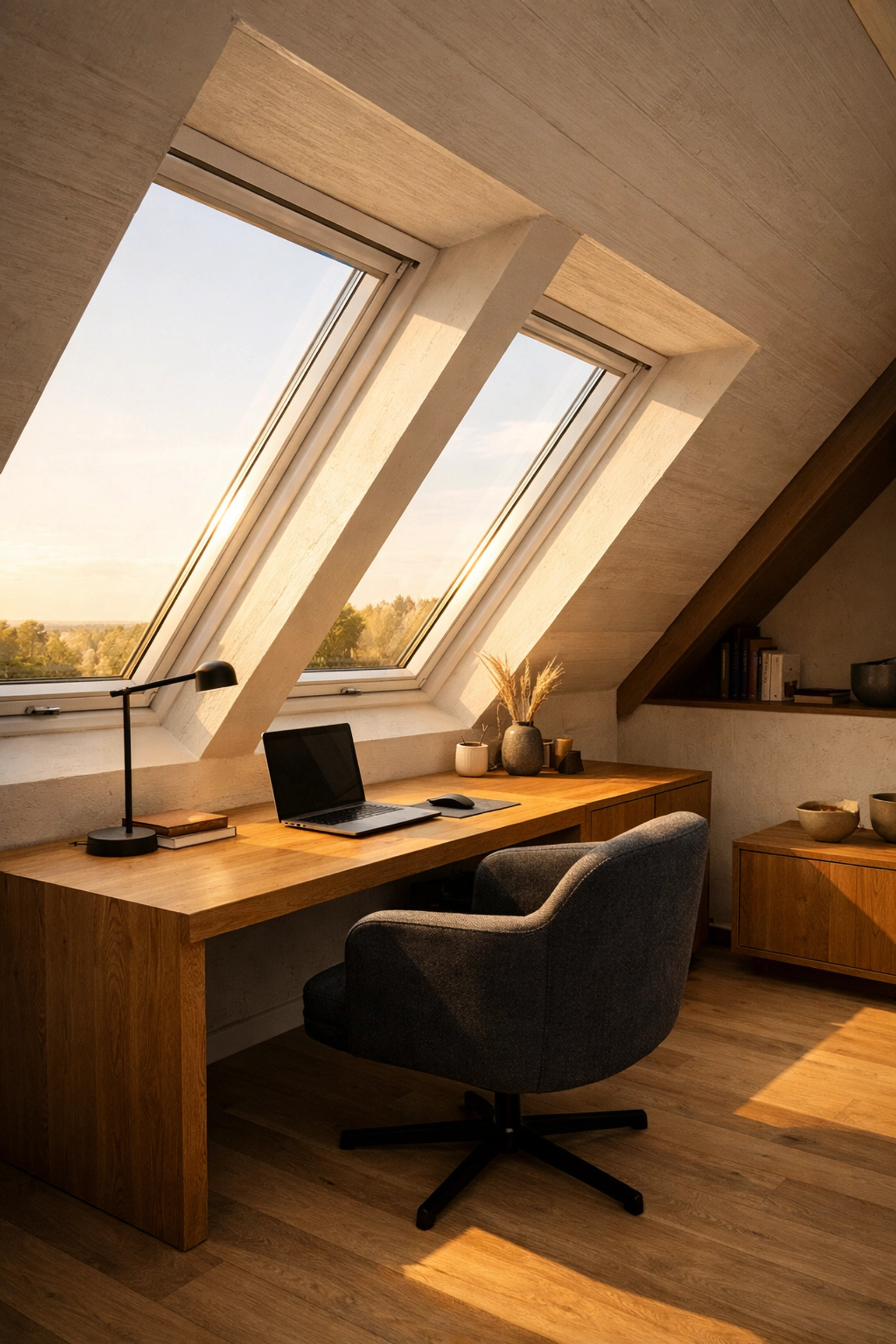
A roof light conversion: often referred to as a "Velux conversion" after the leading window brand: is the simplest and least intrusive way to transform your attic.
How it works: We don't change the shape or structure of the roof at all. Instead, we reinforce the floor, add insulation, and install high-quality windows that follow the existing pitch of the roof.
Best for:
- Homes with plenty of existing headroom.
- Properties in conservation areas (like parts of historic Arundel or Chichester) where external structural changes are strictly controlled.
- Homeowners on a tighter budget who want a quick turnaround.
The Pros:
- Cost-effective: Generally the most affordable option as it requires minimal structural work.
- Speed: These can often be completed in a matter of weeks.
- Planning: Usually falls under Permitted Development, meaning you rarely need full planning permission.
The Cons:
- Limited Space: You don't gain any "new" floor area; you are simply making the existing space habitable.
- Sloping Walls: You will have to deal with slanted ceilings, which might limit where you can place tall furniture like wardrobes.
2. The Dormer Conversion: The Versatile All-Rounder
If you walk down any street in Bognor Regis or Westergate, you’ll see Dormer conversions everywhere. They are the "bread and butter" of the industry for a reason.
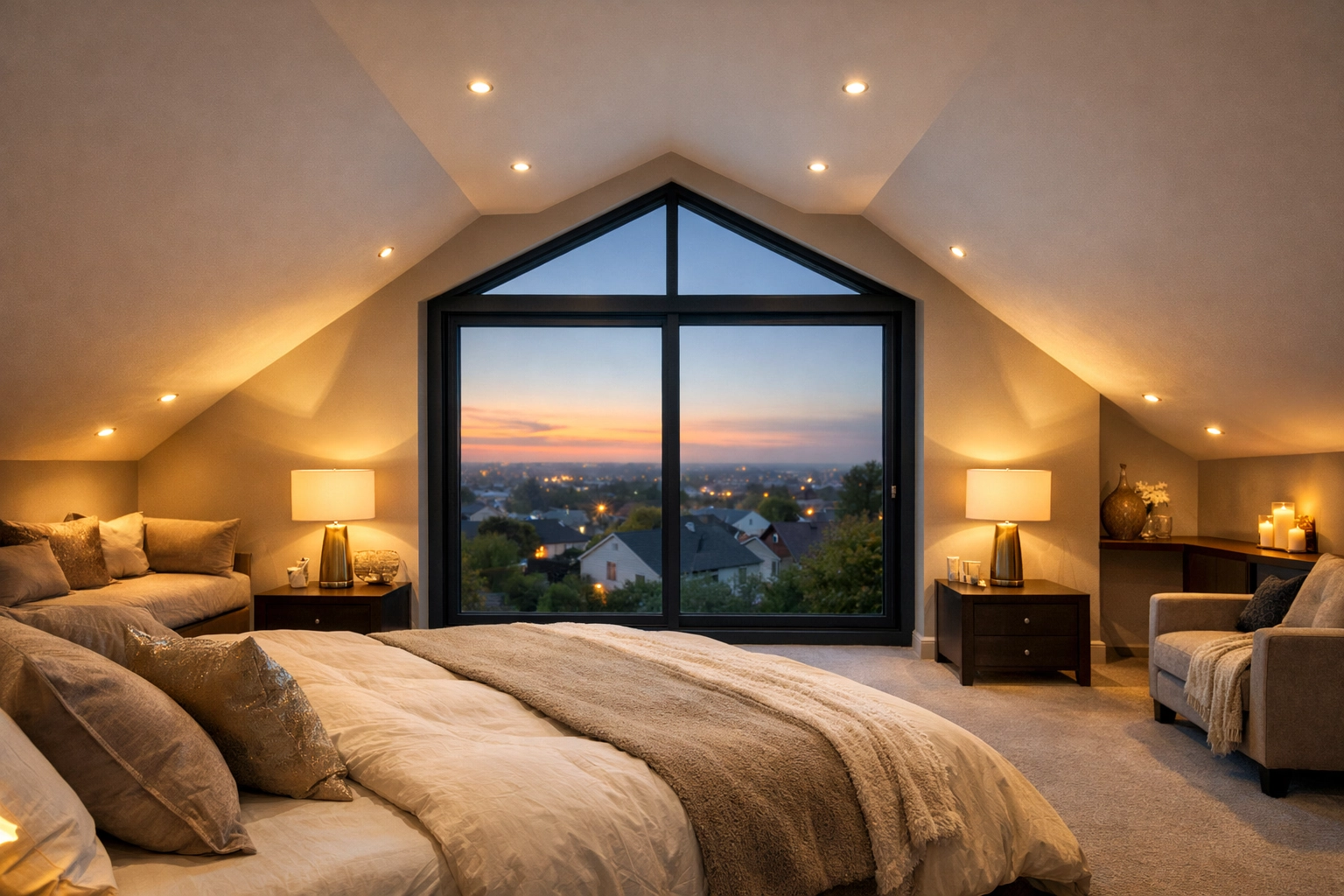
How it works: A Dormer is an extension that protrudes vertically from the slope of your roof. It looks like a small box has been added to the back or side of the house. This creates a flat ceiling and vertical walls, drastically increasing the usable floor space.
Best for:
- Terraced and semi-detached houses.
- Homeowners who want a full master suite with an ensuite bathroom.
- Properties where the existing headroom is a bit tight.
The Pros:
- Massive Space Gain: By turning sloped areas into vertical walls, you gain enough space for a large double bedroom and often a bathroom.
- Better Ventilation: Vertical windows allow for standard opening mechanisms and better airflow.
- Natural Light: You can install larger windows or even "Juliet balconies" to flood the room with light.
The Cons:
- Aesthetics: From the outside, some people find Dormers look a bit "boxy," though modern cladding materials can make them look very sleek and contemporary.
If you’re considering this in the local area, check out our loft conversions in Bognor Regis page for examples of how a Dormer can completely change a standard semi.
3. The Hip-to-Gable Conversion: The Semi-Detached Specialist
Many houses in West Sussex, particularly those built in the mid-20th century, have "hipped" roofs. This means the roof slopes down on three or four sides. While this looks nice, it is a nightmare for loft space because it "clips" the corners of the room.
How it works: We replace the sloping side of your roof (the hip) with a vertical wall (the gable). This essentially extends the ridge line of your house, creating a massive amount of new internal volume.
Best for:
- Semi-detached or end-of-terrace houses.
- Bungalows (where a hip-to-gable can often double the living space).
The Pros:
- Symmetry: It makes the extension look like a natural part of the original building.
- Storage: It creates a huge amount of space for the new staircase, which is often the trickiest part of a loft design.
- Value: Because the space gain is so significant, the ROI is typically very high.
The Cons:
- Planning: While often permitted, they can sometimes require planning permission depending on the volume of the addition.
- Cost: More structural work is involved compared to a simple Dormer, as we are essentially rebuilding a portion of the roof.
4. The Mansard Conversion: The Premium "Full Storey" Solution
If you want the absolute maximum amount of space possible, a Mansard is the answer. Named after the 17th-century French architect François Mansart, this style is common in London but is becoming increasingly popular in high-end West Sussex renovations.
How it works: A Mansard conversion involves replacing one or both slopes of the roof with very steep sides (almost vertical) and a flat top. It effectively creates a whole new floor for your home.
Best for:
- Period properties and urban terraced houses.
- Homeowners who want multiple rooms (e.g., two bedrooms and a bathroom).
- Maximum property value increase.
The Pros:
- Total Transformation: It provides the most aesthetic and spacious result.
- Multiple Rooms: You aren't just getting a "loft room"; you’re getting a whole new level of the house.
- Light: Offers the most flexibility for window placement and design features.
The Cons:
- Planning Permission: You will almost certainly need planning permission for a Mansard.
- Construction Time: These are complex builds that take longer than other types.
- Price Tag: This is the most expensive type of loft conversion due to the extensive structural changes.
For those looking at high-end finishes, our loft conversions in Chichester often feature these more substantial builds to match the architectural heritage of the city.
Comparison at a Glance: Which Fits Your Budget and Needs?
| Feature | Velux | Dormer | Hip-to-Gable | Mansard |
|---|---|---|---|---|
| Typical Cost | £ (Lowest) | ££ | £££ | ££££ (Highest) |
| Space Gain | Low | High | Very High | Maximum |
| Planning Req. | Rarely | Usually PD* | Sometimes | Almost Always |
| Best For | Height-rich lofts | Most UK homes | Semi-detached | Max value/space |
*PD = Permitted Development
Navigating Local Regulations in West Sussex
One of the most common questions we get at Swanbourne Construction is: "Do I need planning permission?"
In many cases, the answer is no. Under Permitted Development (PD) rights, you can often extend your roof space by up to 40 cubic metres (for terraced houses) or 50 cubic metres (for detached and semi-detached houses) without needing full planning permission.
However, there are "buts." If you live in a conservation area in Arundel or a listed building in Chichester, these rights are often restricted. Even if you don't need planning permission, you will need Building Regulations approval. This covers everything from fire safety and insulation to the structural integrity of the new floor joists.
We handle these technicalities for our clients, ensuring that every build is 100% compliant. You can read more about the process on our FAQ page.
Why Choosing the Right Type Matters for Your ROI
A loft conversion isn't just about extra room; it's a financial investment. In West Sussex, a well-executed loft conversion can add between 15% and 25% to the value of your property.
- For the growing family: A Dormer or Hip-to-Gable that adds a bedroom and ensuite is the "sweet spot" for resale value.
- For the professional: A Velux conversion for a quiet, light-filled office is a high-reward, low-cost upgrade.
The key is to ensure the conversion is sympathetic to the rest of the house. A poorly designed "box" on a beautiful period cottage will detract from the value, whereas a carefully planned Mansard or high-spec Velux conversion will enhance it.
Final Thoughts: Taking the Next Step
Choosing the right loft conversion is a balance between what your house allows and what your life requires.
Are you looking for a quick, sun-drenched office? A Velux might be the answer. Do you need a "sanctuary" master suite to escape the chaos of a busy household? A Dormer or Hip-to-Gable is likely your best bet.
At Swanbourne Construction Ltd, we don't believe in one-size-fits-all solutions. We live and work in West Sussex, and we understand the unique architectural challenges of our local towns. From the initial consultation to the final coat of paint, we partner with you to ensure your new space feels like it was always meant to be there.
If you are ready to stop dreaming about more space and start building it, we’d love to help. You can explore some of our previous projects to see how we’ve transformed homes just like yours, or simply head over to our contact page to book a site visit.
Let's look up: there is a whole new world of potential right above your head.