If you have lived in West Sussex for any length of time, you know the unique charm of our local architecture: from the flint-walled cottages of Arundel to the sprawling Victorian terraces in Chichester and the 1930s semi-detached homes in Bognor Regis. But as families grow and the "work-from-home" culture becomes a permanent fixture, that charm can sometimes feel a little cramped.
You love your location, your neighbours are great, and your garden is finally looking exactly how you want it. The thought of moving: with the associated stamp duty, estate agent fees, and the sheer disruption of relocating: is enough to make anyone hesitate. This is where a loft conversion in West Sussex becomes more than just a home improvement project; it becomes a strategic investment in your lifestyle and your property's value.
However, the question isn't just if you should convert your loft, but how. Not every roof is created equal, and the design that works for a detached home in Westergate might be entirely unsuitable for a mid-terrace in the heart of the city.
In this guide, we will break down the four primary types of loft conversions, helping you determine which design is the perfect match for your specific property type and your personal goals.
1. The Velux (Roof Light) Conversion: The Elegant, Minimalist Choice
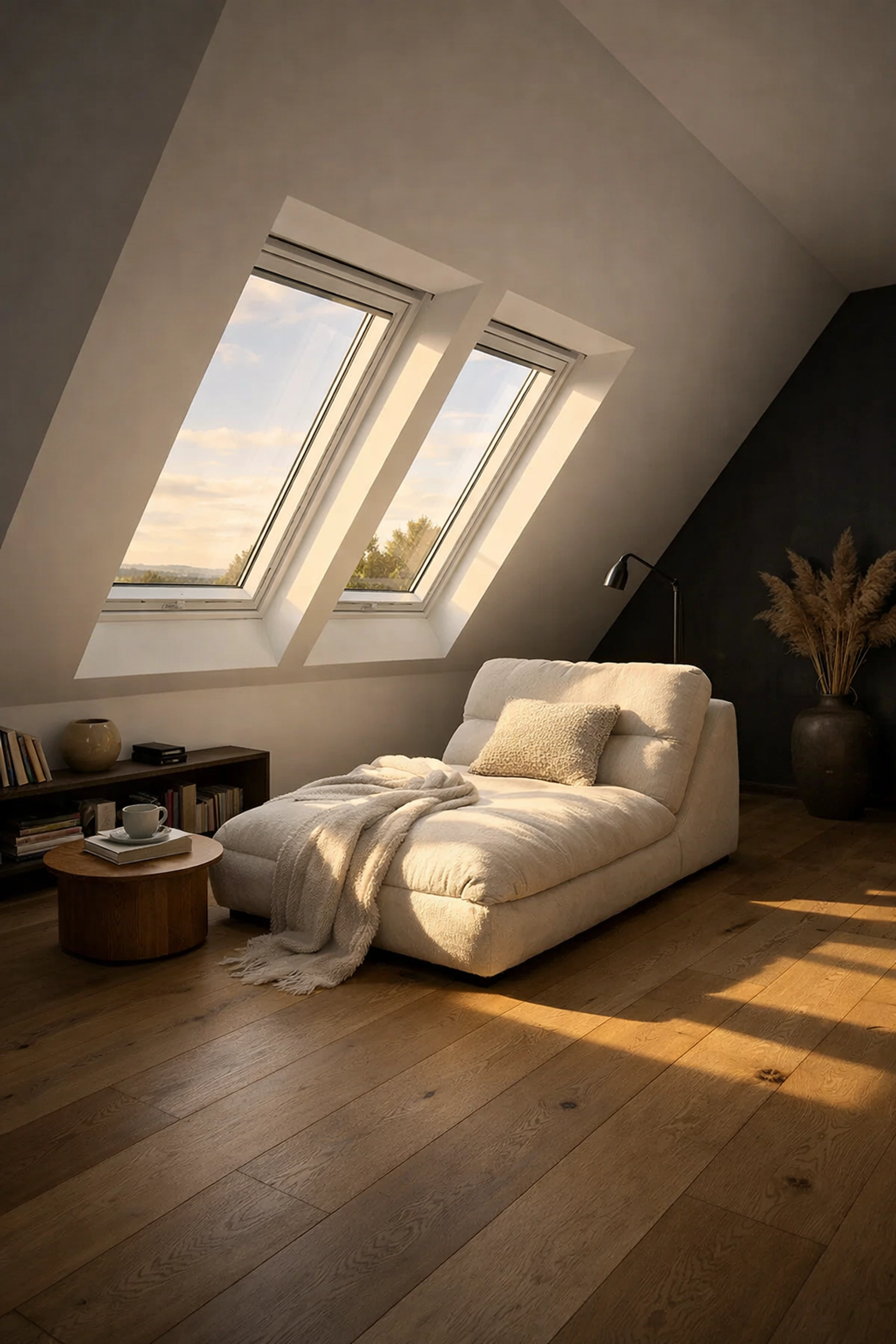
The Velux or "Roof Light" conversion is often considered the "purest" form of loft conversion. It involves installing high-quality windows (typically Velux brand) into the existing slope of your roof without altering the roofline itself.
Is it right for your house?
This design is ideal if your existing loft already has generous headroom. In the UK, you generally need a minimum height of 2.2 metres from the floor joists to the highest point of the ridge.
- Best for: Detached or semi-detached homes with steep roof pitches.
- Property Type: It is particularly popular for conservation areas or listed buildings across West Sussex where external structural changes are strictly regulated.
- Pros: It is the most cost-effective option and usually falls under Permitted Development, meaning you often won't need full planning permission. The disruption is minimal because most of the work happens from the inside.
- Cons: It doesn’t add any actual floor space; it only makes the existing space habitable. If you have a shallow roof, you’ll likely find the "usable" floor area (where you can stand up straight) quite limited.
2. The Dormer Conversion: The Versatile Crowd-Pleaser
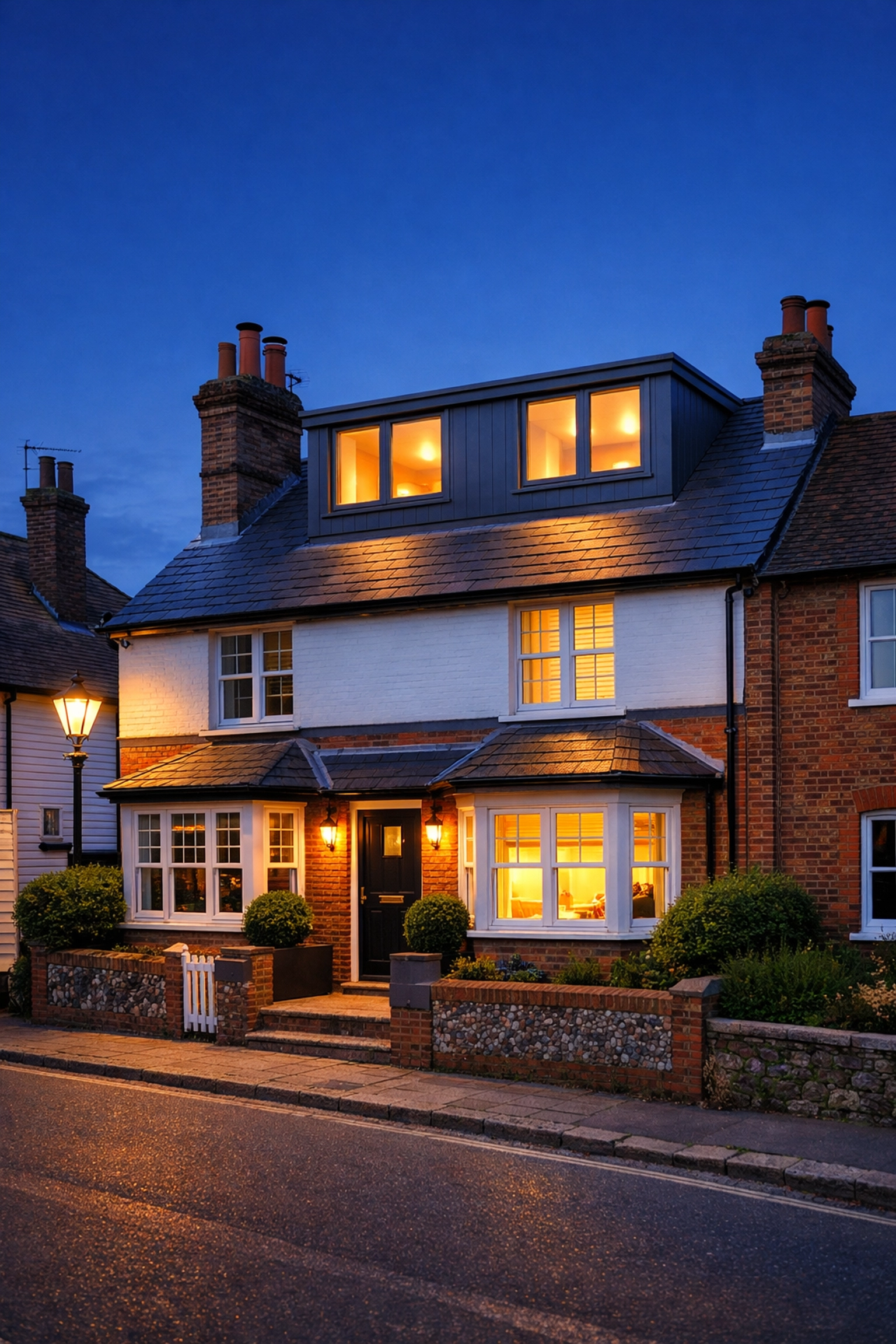
Walk down almost any street in Bognor Regis or Chichester, and you will see Dormer conversions. A Dormer is essentially an extension that protrudes vertically from the slope of your roof, creating a box-like structure. This "box" provides extra floor space and, crucially, much-needed headroom.
Is it right for your house?
The Dormer is the "workhorse" of the construction world because it works on almost any property with a sloping roof.
- Best for: Terraced and semi-detached houses.
- The "L-Shaped" Dormer: If you own a Victorian or Edwardian terraced property with a rear extension (an "outrigger"), you can opt for an L-shaped Dormer. This wraps around the back and side, often providing enough space for two bedrooms and a bathroom.
- Pros: It significantly increases the internal volume of your home. It allows for conventional windows and even French doors with a Juliet balcony, flooding the new room with natural light.
- Cons: While generally considered aesthetically pleasing when done correctly, some find the "box" look a bit modern compared to traditional rooflines.
For many homeowners looking for loft conversions in Bognor Regis, the Dormer is the go-to choice for balancing cost with maximum space gain.
3. The Hip-to-Gable Conversion: The Game-Changer for Semi-Detached Homes
Many 1930s and mid-century homes in West Sussex feature "hipped" roofs: these are roofs where all sides slope downwards towards the walls. While they look attractive, they severely limit the internal volume of the loft.
A Hip-to-Gable conversion solves this by extending the sloping "hip" side of the roof outwards to create a vertical "gable" wall. This essentially turns a three-sided roof into a two-sided roof.
Is it right for your house?
This is specifically designed for semi-detached or end-of-terrace properties.
- The Impact: It creates a massive amount of new space. By straightening that side wall, you gain enough room for a proper staircase to enter the loft without sacrificing a bedroom on the floor below.
- Pros: It transforms the silhouette of the house and provides a much more "standard" room shape inside. You can often combine this with a rear Dormer to create a truly expansive master suite.
- Cons: You cannot perform this on a mid-terrace house (as you have no "hip" to extend). It is also more structurally involved than a simple Velux or Dormer, which reflects in the cost.
4. The Mansard Conversion: The Ultimate Transformation
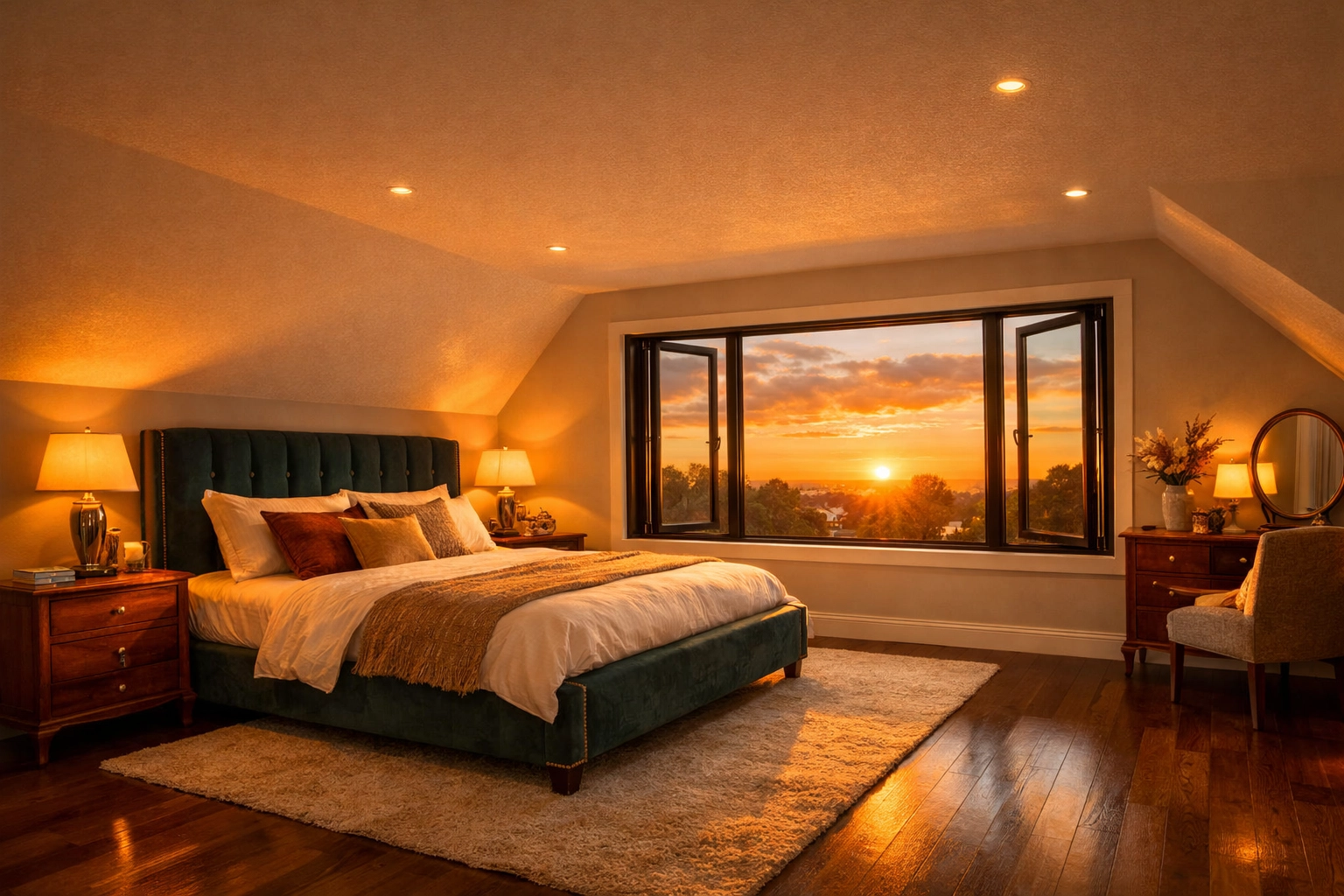
Named after the 17th-century French architect François Mansart, this type of conversion involves replacing one or both slopes of your roof with very steep (almost vertical) sides and a flat top.
Is it right for your house?
A Mansard conversion is often seen as the "gold standard" of loft design. It essentially adds an entirely new storey to your home.
- Best for: Period properties and high-end renovations in urban areas.
- Property Type: While suitable for all property types, it is most common in terraced houses where homeowners want to maximize every square inch of potential value.
- Pros: It offers the maximum possible internal space. Because the walls are almost vertical, you have total freedom over furniture placement and layout. It is often the most aesthetically integrated option for older, prestigious homes.
- Cons: This is the most expensive and time-consuming type of conversion. It almost always requires planning permission because it fundamentally changes the structure and height of the roof.
If you are considering a high-end project, exploring our previous projects can give you a feel for how these transformations look in a real-world West Sussex context.
Property Matchmaking: Which suits your home?
Choosing a design isn't just about what you want; it’s about what your house allows. At Swanbourne Construction Ltd, we always start by looking at the "bones" of the building.
The Terraced House
Space is usually the biggest challenge here. If you are in a mid-terrace, a Rear Dormer is your best friend. It’s cost-effective and usually falls under Permitted Development. If you have the budget and want to create a luxury feel, a Mansard is the way to go.
The Semi-Detached House
You have the most flexibility. Most of our clients in this category opt for a Hip-to-Gable combined with a Rear Dormer. This setup often provides enough space for a large master bedroom with an en-suite and even a small home office or walk-in wardrobe.
The Detached House
The world is your oyster. While you can choose any of the above, detached homeowners often have the unique option of a "Piggyback" conversion, where the entire roof is raised to create a new level. However, a large Wrap-around Dormer or multiple Velux windows can also maintain the character of a large detached home while adding significant utility.
Navigating the West Sussex Planning Landscape
One of the most common questions we get asked at Swanbourne Construction Ltd is: "Do I need planning permission?"
In many parts of West Sussex: including Westergate, Chichester, and Bognor: many loft conversions fall under Permitted Development (PD). This means you can build without a full planning application, provided you stay within certain limits (e.g., volume increases of 40-50 cubic metres).
However, there are "traps" for the unwary:
- The South Downs National Park: If your home falls within the boundaries of the National Park, PD rights are often restricted.
- Conservation Areas: Chichester has several conservation areas where any external change is scrutinized.
- Listed Buildings: If your home is Grade II listed, you will need Listed Building Consent for almost any change.
Navigating these local nuances is why working with a local expert is vital. We understand the specific expectations of local planning authorities in Chichester and Arundel.
Is the Investment Worth It? (Moving vs. Converting)
Let’s talk numbers: not just construction costs, but the cost of not converting.
If you need an extra bedroom and decide to move from a 3-bed to a 4-bed house in West Sussex, you aren't just paying the difference in house price. You are paying:
- Stamp Duty: Which can easily reach five figures.
- Estate Agent Fees: Usually 1-2% of your sale price.
- Legal Fees: For both sale and purchase.
- Removal Costs: And the inevitable "new house" hidden repairs.
A loft conversion typically adds between 10% and 20% to the value of your home. In a market like ours, that is a substantial return on investment. You aren't just "spending" money; you are moving it from your bank account into the equity of your home.
Why Choose Swanbourne Construction Ltd?
Building a loft conversion is about more than just timber and tiles; it’s about trust. Your home is likely your most valuable asset, and the construction process involves opening up your roof to the elements.
At Swanbourne Construction Ltd, we pride ourselves on being more than just builders. We are your partners in design. From the initial consultation to the final coat of paint, we focus on:
- Structural Integrity: Ensuring your home remains safe and sound.
- Aesthetic Integration: Making sure the new loft looks like it was always part of the house, not an afterthought.
- Local Expertise: As builders in Westergate, we know the local soil, the local weather, and the local planning officers.
Whether you are looking for a simple Velux retreat or a grand Mansard transformation, we have the technical expertise to bring your vision to life.
Ready to discover what's possible?
The first step is always a conversation. You might think your roof is too low or your house is too small, but you’d be surprised at what clever engineering can achieve.
Check out our FAQ page for more technical details, or better yet, let's take a look at your loft together.
Contact Swanbourne Construction Ltd today for a no-pressure consultation. Let’s stop imagining that extra space and start building it.