
If you’re dreaming of a house extension in West Sussex, you’ve likely spent hours scrolling through Pinterest for kitchen island inspiration or imagining how much light those new bi-fold doors will let in. Whether you’re based in the heart of Bognor Regis or the leafy outskirts of Chichester, the excitement of expanding your living space is undeniable. However, before the first brick is laid or the first trench is dug, there is a crucial hurdle every homeowner must clear: Building Regulations approval.
At Swanbourne Construction Ltd, I’ve seen many homeowners get caught in the "Planning vs. Regs" confusion. They assume that once they have planning permission, they are "good to go." In reality, planning permission is only half the battle. While planning looks at how your project affects the environment and your neighbours, Building Regulations ensure that the structure itself is safe, dry, warm, and built to last.
The Vital Difference: Planning Permission vs. Building Regulations
It is a common misconception that these two processes are the same. In reality, they are governed by entirely different sets of laws. Think of it this way: Planning Permission is concerned with the external appearance and the impact on the local area (the "what" and "where"), while Building Regulations are concerned with the internal technical standards (the "how").
The "External" Check (Planning)
Local authorities in West Sussex look at whether your extension fits the character of the street, whether it overlooks a neighbour’s garden, or if it takes up too much of your plot. You can find more detail on this in our ultimate guide to planning permission in West Sussex.
The "Technical" Check (Building Regs)
Building Regulations are a set of statutory standards that apply to almost all construction work. These rules ensure that your home doesn't fall down, doesn't catch fire easily, and doesn't leak heat like a sieve. Even if your project falls under "Permitted Development" (meaning you don't need planning permission), you almost always still need Building Regulations approval.
1. Structural Integrity: The Skeleton of Your Extension
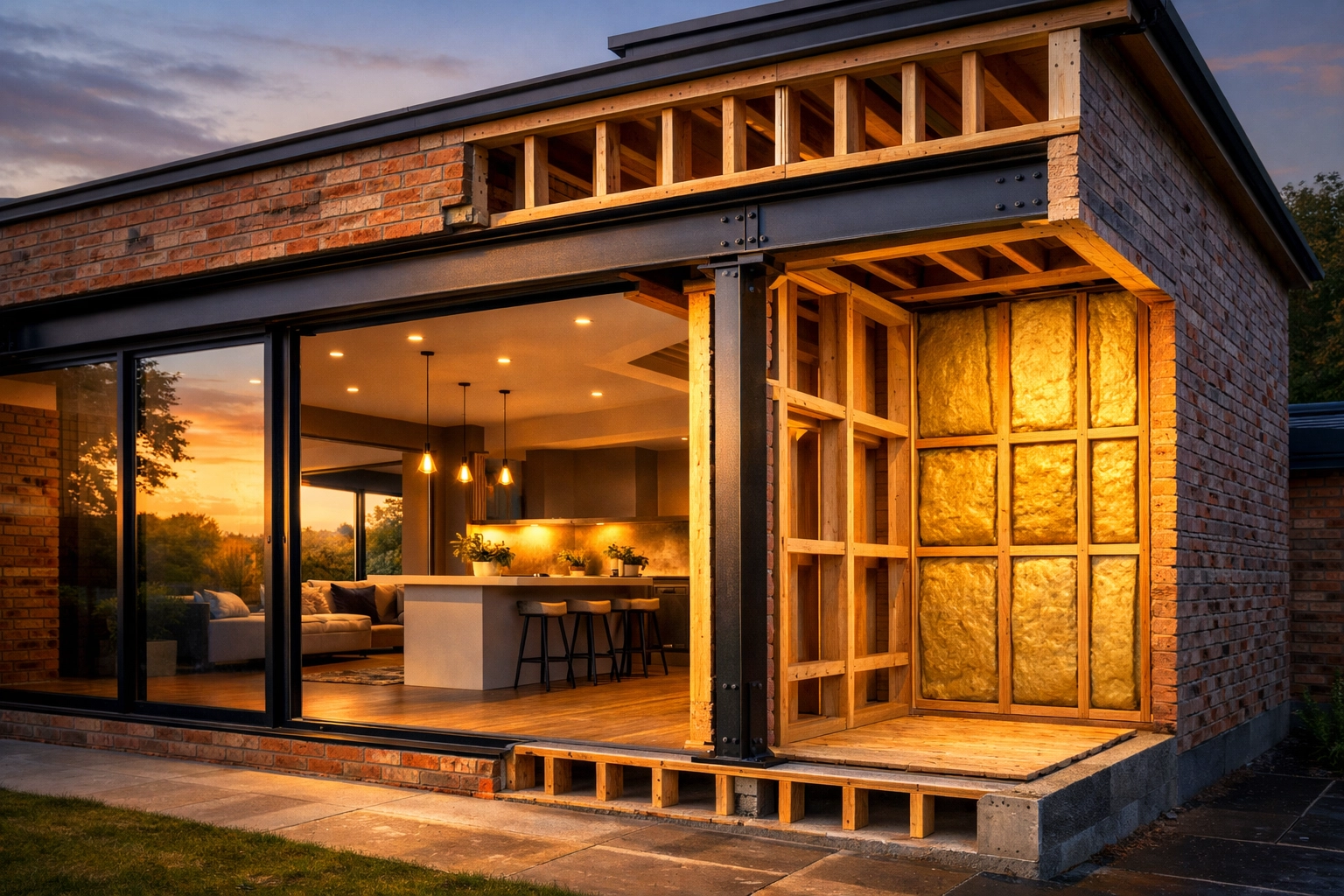
The most obvious reason for these regulations is to ensure the structural safety of your home. When we design a house extension in West Sussex, we have to prove to the local building control officer that the new structure can support its own weight, the weight of the furniture and people inside, and the "load" of wind and snow.
- Foundations: We must ensure the ground is stable and the footings are deep enough to prevent the extension from sinking or cracking.
- Steel Beams: If we are knocking through an existing wall to create an open-plan living space, we must use calculated steel RSJs (Rolled Steel Joists) to hold up the floors above.
- Roof Strength: The timber or steel structure of your roof must be robust enough to handle the specific tiles you’ve chosen.
Without Building Regs approval, you have no documented proof that your extension is structurally sound. This isn't just about safety; it’s about the longevity of your investment.
2. Fire Safety: Protecting What Matters Most
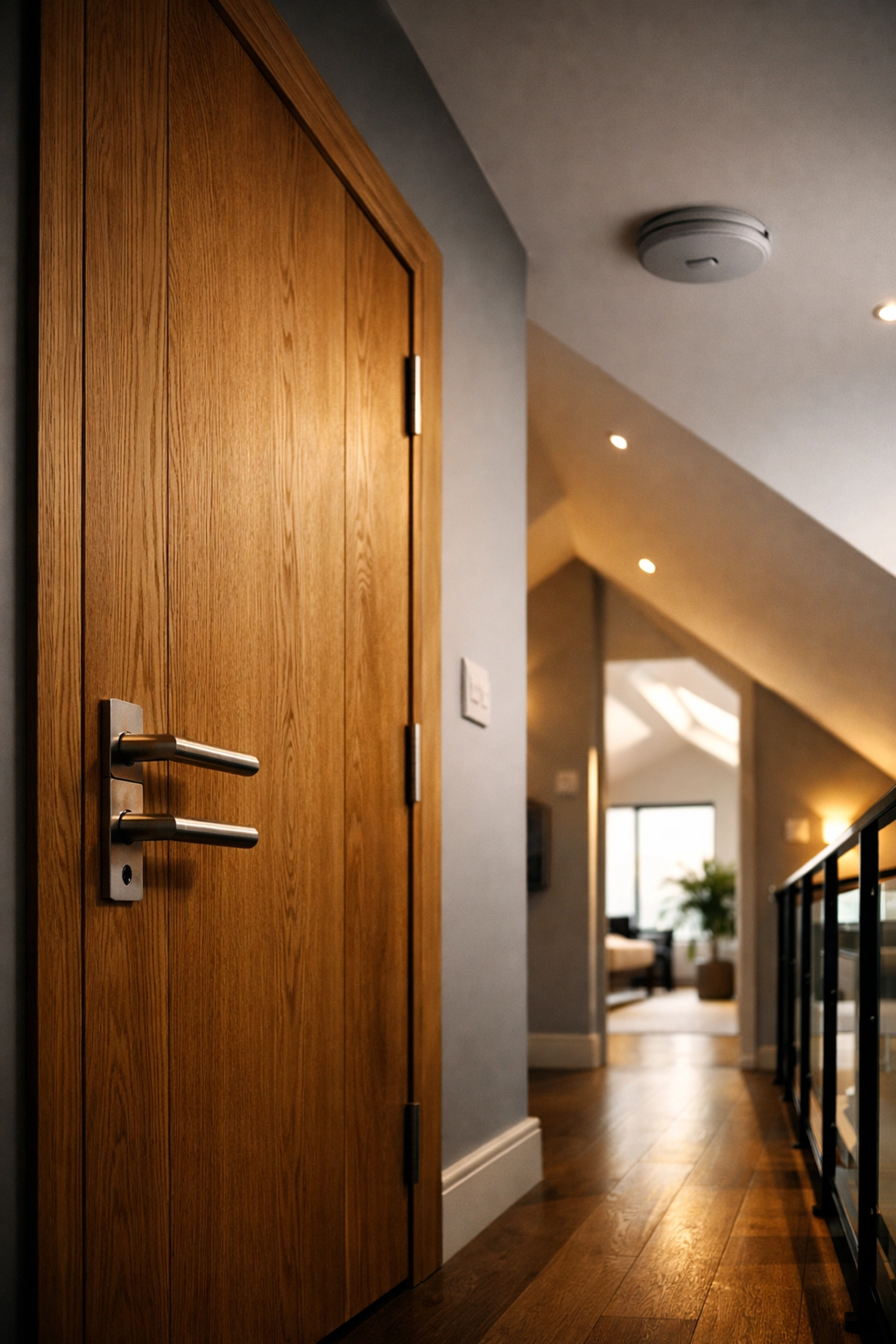
Fire safety is non-negotiable. Building Regulations (specifically "Part B") dictate how a building should behave in the event of a fire. This is especially critical if you are considering loft conversions, where you are adding a new floor that requires a safe "means of escape."
- Escape Routes: Every habitable room must have a way out. In some cases, this means specific window sizes (egress windows) or protected stairways.
- Fire Detection: Regulations require mains-powered, interlinked smoke alarms on every floor.
- Materials: We use fire-rated plasterboard and fire doors in specific areas to slow the spread of flames, giving you and your family those vital extra minutes to exit the building.
When we build for our clients in Bognor Regis and across West Sussex, we take these safety measures personally. We aren't just following a checklist; we are ensuring your home is a safe haven.
3. Thermal Performance: Beyond Just "Keeping Warm"
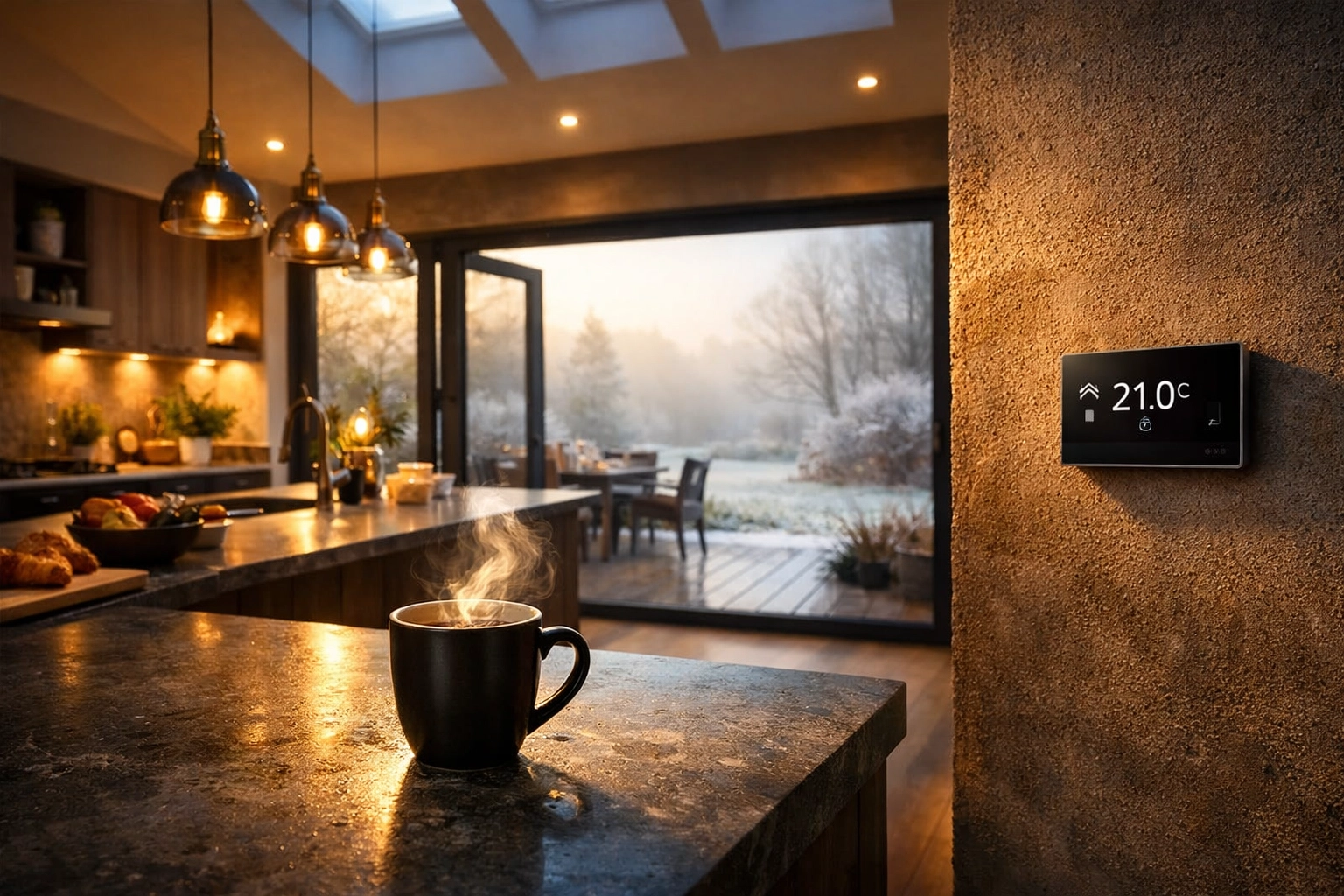
In 2026, energy efficiency is more than just a buzzword: it’s a legal requirement. Part L of the Building Regulations focuses on the "conservation of fuel and power." This is where "thermal safety" comes in.
A modern house extension in West Sussex must meet strict "U-values" (a measure of heat loss). If your extension isn't properly insulated, it will be freezing in the winter and sweltering in the summer.
- Insulation: We install high-performance insulation in the floors, walls, and roof.
- Glazing: Your windows and doors must be double or triple-glazed to meet specific efficiency ratings.
- Boiler and Heating: If we are extending your existing heating system, the new radiators and pipework must be efficient and properly controlled.
By adhering to these regulations, you aren't just ticking a box for the council; you are significantly lowering your monthly energy bills and making your home more comfortable year-round. You can see the benefits of this in action when you maximise your home with a rear extension.
4. Ventilation and Moisture Control
A house needs to breathe. When we make homes more airtight to save energy, we run the risk of creating damp and mould if the ventilation isn't managed correctly. Building Regulations ensure that your new space has:
- Background Ventilation: Such as trickle vents in windows.
- Rapid Ventilation: Opening windows of a certain size.
- Extraction: Mechanical fans in "wet rooms" like kitchens and bathrooms.
Proper drainage is also a key part of the regs. We have to ensure that rainwater from your new roof and waste from your new plumbing connect correctly to the local West Sussex sewage system without causing blockages or flooding.
Why Is Approval Mandatory? (The Legal and Financial Reality)
You might wonder, "What happens if I just don't tell the council?" In the construction world, skipping Building Regulations is a recipe for disaster.
Legal Prosecution
Building control departments have the power to issue "enforcement notices." If the work doesn't comply with the regulations, they can legally require you to pull it down or alter it at your own expense.
The "Selling" Nightmare
One day, you might want to sell your property. The buyer’s solicitor will ask for the Building Regulations Completion Certificate. If you don't have it, the sale could fall through, or you may be forced to pay for expensive "indemnity insurance" that doesn't actually fix the physical issues with the build.
Home Insurance Issues
If a fire or structural failure occurs and you don't have the necessary Building Regs approval, your insurance provider may refuse to pay out. They view uncertified work as an unquantifiable risk.
How the Process Works with Swanbourne Construction Ltd
When you work with a trusted local builder in Bognor Regis, we take the stress out of the paperwork. There are two main ways to get approval:
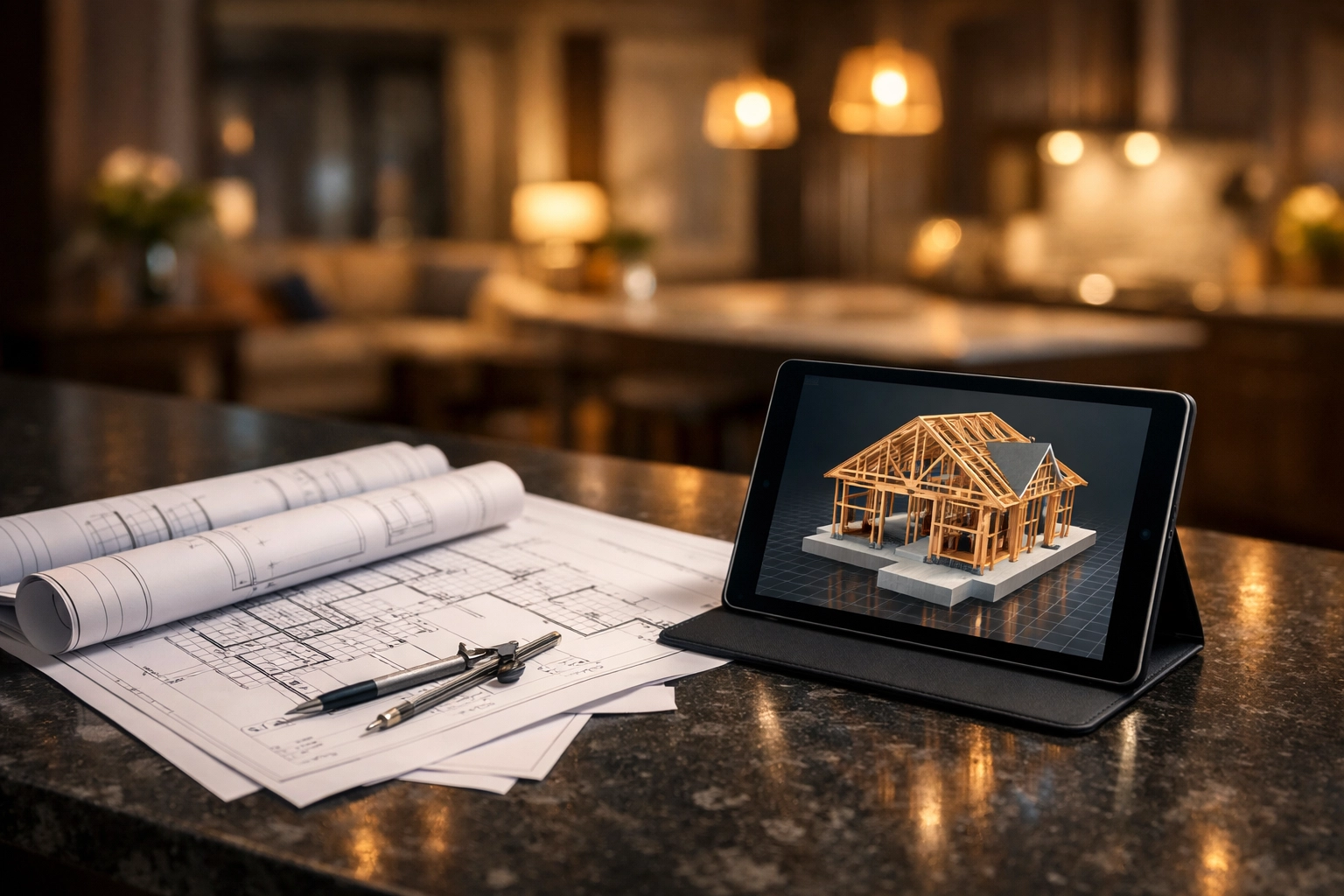
- Full Plans Application: We (or your architect) submit detailed drawings before work begins. The building control officer checks these and gives an "approval of plans." This is the safest route as it minimizes the risk of having to change things mid-build.
- Building Notice: This is often used for smaller projects. You notify the council 48 hours before work starts. There are no pre-approved plans, so the inspector checks everything on-site. This is faster to start but carries more risk if the inspector disagrees with the method being used.
Your Peace of Mind in West Sussex
Building an extension is a journey, and Building Regulations are your roadmap to a successful destination. They aren't there to stifle your creativity or add unnecessary costs; they are there to guarantee that your new space is safe for your children, warm for your guests, and a solid asset for your future.
Whether you are looking for a loft conversion or a sprawling ground-floor kitchen extension, understanding these rules is the first step toward a stress-free build.
At Swanbourne Construction Ltd, we pride ourselves on being more than just builders. We are your partners in navigating the complexities of West Sussex building requirements. We handle the technicalities so you can focus on the exciting part: choosing the paint colours and planning that first housewarming party.
Are you ready to discuss your project? From the initial idea to the final completion certificate, we’re here to guide you every step of the way. Let’s build something incredible together.