
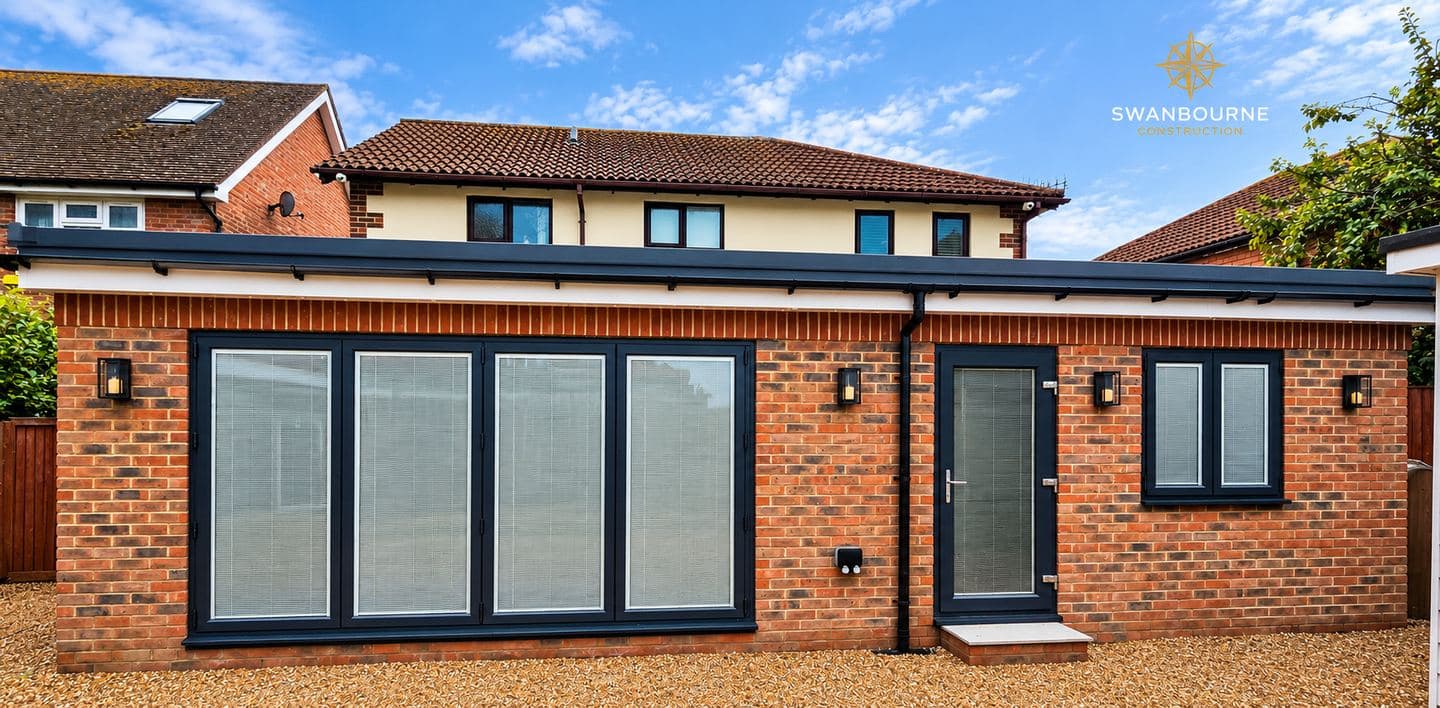
Aldwick renovations fall into two eras
The Aldwick Parish Design Statement of 2015 dates every part of the parish, and almost all of it was built in one of two bursts. The first was the 1920s and 1930s: the Aldwick Bay Estate from 1928, Aldwick Road, Barrack Lane, Gossamer Lane, Fernhurst Gardens, St Richards and the interwar houses at Rose Green, which the Design Statement notes were often put up by local builders. The second was the 1960s and 1970s: West Meads, Willowhale, Aldwick Park, Craigweil Lane, and the first Craigweil House houses on a layout drawn back in 1937.

A renovation in either era is a different job. The interwar houses are about ninety years old: solid in their bones, but with roofs, windows and services that have been patched for decades. The 1960s and 70s houses are fifty to sixty years old, which is exactly when a house's first wiring, first heating system and first windows all reach the end of their lives at once.
Interwar houses: survey first, because no two are the same
Because much of interwar Rose Green was built plot by plot by local builders, no two houses on a road are necessarily built the same way. One has a cavity wall, the next a solid one; one has a timber ground floor, its neighbour a slab. We survey before we price. A renovation scope written before anyone has lifted a floorboard is a scope that will change, and changes are what cost you money.
On the Aldwick Bay Estate, a conservation area since 1985, the half-timbering, intricate brickwork and occasional thatch are part of what makes the area, and the Design Statement asks for materials that match the existing building. A renovation that keeps the exterior and rebuilds the inside is usually the right brief there.
1960s and 70s houses: everything at once
In West Meads, Willowhale and Aldwick Park the typical renovation is a house that has been well looked after but never modernised. The consumer unit is original, the wiring is PVC from the seventies, the heating runs off a boiler that has been replaced once, and the windows are the first generation of double glazing. Doing it all together is cheaper than doing it in instalments, because the walls only get chased and replastered once. We sequence it so: strip out, first fix electrics and plumbing, plaster, then the kitchen, bathroom and second fix in one run.
The Craigweil frontage rules
Craigweil House is a conservation area, designated in 2009, and it carries the only conservation-area Article 4 Directions Arun publishes anywhere in the district. They bring two things under planning control across the whole area: hard-surfacing front gardens and verges, and enclosing verges. If your renovation includes a new drive, a parking space in the front garden, or a wall or fence along the verge, that is a planning application at Craigweil when it would not be two streets away. In every Aldwick conservation area, taking down a wall, fence or gate over a metre high beside the road (two metres elsewhere) needs permission, and work to trees needs six weeks' notice to the council.
Drains that back up and a lane that floods
Fish Lane and Aldwick Avenue flooded in May and again in November 2024 after an outfall on the beach blocked. The Parish Design Statement notes more generally that Aldwick's wastewater system backs up in heavy rain. A renovation is the moment to fix that at your end: a CCTV survey of the drain, a non-return valve where the house connects, gullies that are not lower than the floor they serve, and on the most exposed roads ground-floor finishes that survive a soaking.
Renovating to stay
About 40 per cent of Aldwick residents were 65 or over at the 2021 census, and 59 per cent of homes were owned outright. A lot of Aldwick renovations are people preparing the house they intend to stay in: a level-access shower, wider doorways, a bedroom moved downstairs, a bungalow loft that is no longer needed sealed off and insulated. We plan those as part of the renovation rather than as adaptations bolted on later.
Costs, and how we run it
Our price guide puts a whole-house refurbishment at £42,000 to £90,000 and upwards, including VAT. The upper end is real: once a renovation includes structural openings, new floors throughout and an extension, it becomes a programme of work. You get a written quotation itemised past two hundred lines, a programme, payment by fortnightly valuation and one person to deal with throughout. Aldwick is quoted on the same rates as Bognor Regis.
The wider service is building works and renovations; the town page is renovations in Bognor Regis. More space is under house extensions in Aldwick and loft conversions in Aldwick, and the village is on builders in Aldwick.
Give us the road and the year the house was built, roughly, and James will tell you at the first visit what is likely to be behind the walls. Ring 07470 078236. £2m public liability, employers' liability and two years' guarantee on the workmanship.