
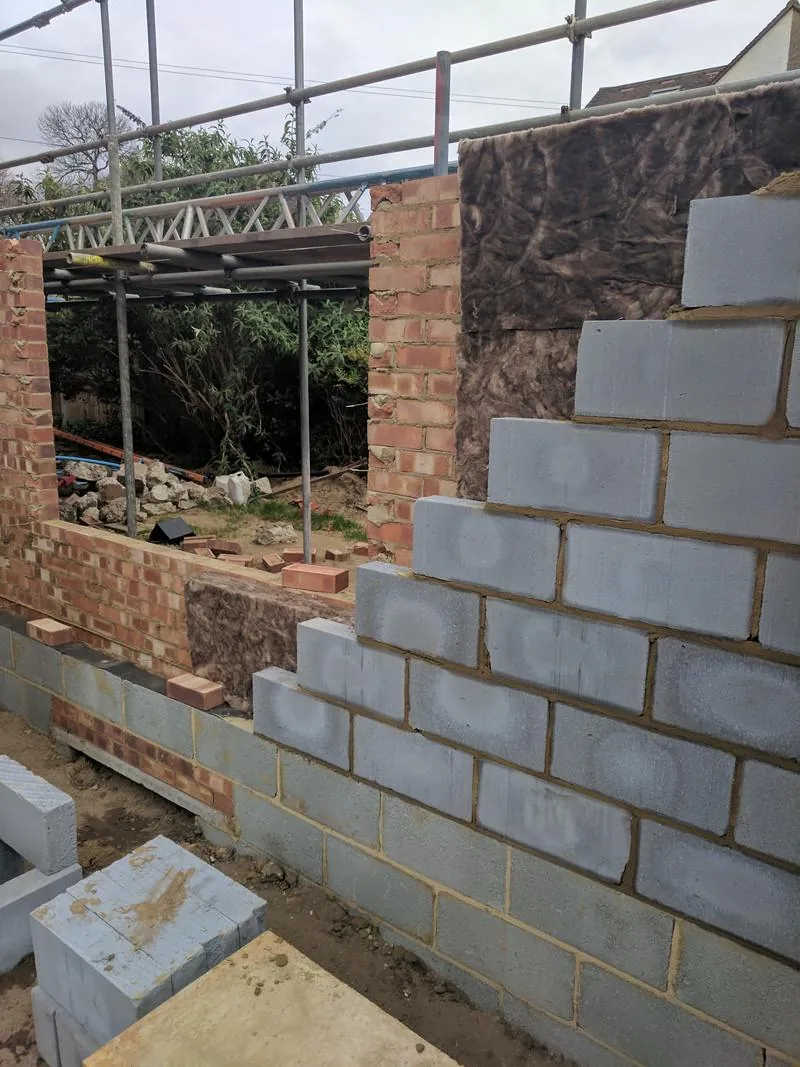
The Party Wall etc. Act 1996 applies when you build a new wall on or up to the boundary, work on a wall you share with next door, or dig foundations within 3m of a neighbour's building and deeper than theirs (or within 6m in some cases). You serve written notice — at least two months before work on a shared wall, at least one month before boundary walls and excavation. If your neighbour agrees in writing within 14 days, there is no "agreement" to pay for. If they do not, surveyors are appointed and produce a party wall award, which the person doing the work normally pays for — typically £1,200 to £1,500 for one agreed surveyor on an extension, and roughly double for two. The Act does not let a neighbour stop your work; it controls how it is done.
What people call a "party wall agreement" is usually one of two things: the neighbour's written consent to a notice, or a party wall award drawn up by surveyors. This guide covers both, with the examples that come up on extensions and loft conversions around Bognor Regis, Littlehampton and Chichester.
When the Act applies: three kinds of work
| Type of work | Examples | Minimum notice |
|---|---|---|
| A new wall on or up to the boundary (section 1) | The side wall of a rear extension built right up to the boundary line | 1 month |
| Work to an existing party wall or structure (section 2) | Cutting in to seat a steel beam for a loft or knock-through; raising the wall for a hip-to-gable; removing a chimney breast; inserting a damp-proof course; underpinning | 2 months |
| Excavating near a neighbour's building (section 6) | Extension foundations within 3m of next door's house or extension, going deeper than theirs; or within 6m and cutting a 45° line down from their foundations | 1 month |
Source: Party Wall etc. Act 1996, sections 1, 2, 3 and 6, unchanged in 2024–2026.
The 3 metre and 6 metre rules
The excavation rules are the ones most extensions trigger. You need to serve notice if you dig:
- within 3m of a neighbour's building or structure, and deeper than the bottom of its foundations; or
- within 6m, where the excavation would cut a line drawn down at 45° from the bottom of their foundations. That mainly catches deep foundations and piling.
A single-storey extension on a semi, with foundations a metre or more deep running alongside next door's house, will almost always be within 3m and deeper than an old house's shallow footings. On the soft clays around Bognor Regis and Pagham, and near trees, foundations often go deeper still — see building near the coast.
Worked examples
- Loft conversion on a semi or terrace. The new steels usually bear into the party wall, so a party structure notice — two months — is needed. A hip-to-gable that builds up the party wall needs one too. This is exactly the example the government's own guidance uses. See telling your neighbours about a loft conversion.
- Single-storey rear extension next to the neighbour's house. Foundations within 3m and deeper than theirs: one month's excavation notice. A wall built on the boundary line: a line of junction notice, also one month. Cutting a flashing into their wall: party structure work.
- Knocking through on a terrace. If the beam bears into the party wall, two months' notice. See removing a load-bearing wall.
- Detached house, extension well away from anyone. Usually no notice at all. A shared brick garden wall can still count; a timber fence does not.
Serving the notice
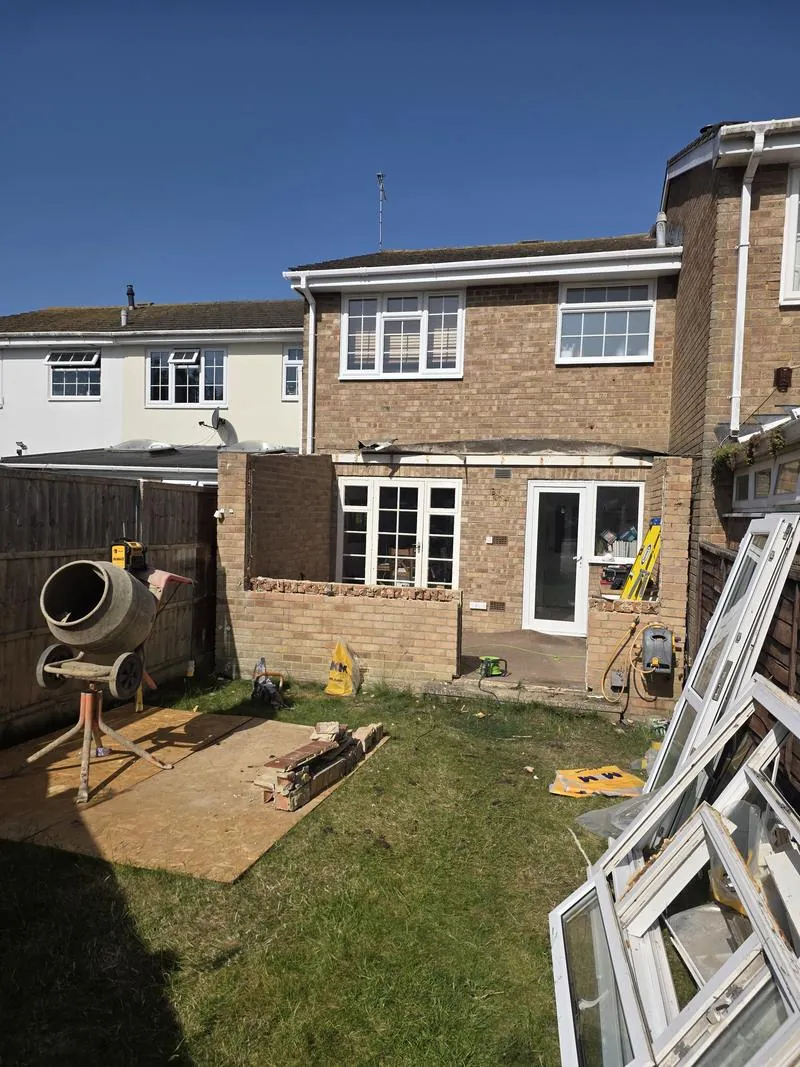
The notice is served by you, as the "building owner", not by your builder — although a good builder will help you get it right. It must be in writing and give your name and address, a description of the work, and the date it will start. An excavation notice must also come with plans and sections showing where and how deep you will dig, and say whether you propose to underpin or strengthen the neighbour's foundations.
Some practical points:
- Talk first. A conversation over the fence before the letter arrives makes consent far more likely.
- Serve every owner. If next door is let, the owner (and sometimes a leaseholder) needs notice, not just the tenant.
- Serve early. On many lofts and knock-throughs, the two-month notice is what sets the start date. It can go out as soon as the drawings show where the steels bear.
- It lasts a year. A notice lapses if the work has not started within 12 months.
- Your neighbour can waive the period in writing if they are happy for you to start sooner.
What your neighbour can do
They have 14 days to respond. They can:
- Consent in writing. That is the end of it, legally. There are no surveyors' fees. We still recommend photographing the condition of their wall and rooms nearest the work, with their agreement, so nobody argues later about a crack that was already there.
- Dissent. A dispute is then treated as having arisen, and surveyors are appointed.
- Say nothing. After 14 days, silence counts as dissent, not consent. This is the point most people get wrong.
What they cannot do is stop the work. The Act regulates how the work is done, when, and what happens if it causes damage. Whether you may build at all is a matter for planning, not for the Party Wall Act.
Surveyors and the party wall award
Where there is a dispute, there are two ways to resolve it:
- One agreed surveyor, acting impartially for both of you. Cheaper and quicker.
- Two surveyors, one appointed by each side, who choose a third surveyor in case they cannot agree.
If the neighbour will not appoint anybody, the Act lets you appoint a surveyor on their behalf after a further ten days. The surveyors produce a party wall award: a document that sets out what work may be done, how and when, usually with a schedule of the condition of the neighbour's property beforehand, and who pays the costs. Either side can appeal to the county court within 14 days of it being served; otherwise it is final.
The Act also gives your builder the right to go onto next door's land to carry out the notified work, with 14 days' notice, and requires you to compensate the neighbour for any damage the work causes. The neighbour can ask for security for expenses before work starts.
What does a party wall agreement cost, and who pays?
| Job | One agreed surveyor | Two surveyors |
|---|---|---|
| Rear extension | £1,200 – £1,500 | £2,400 – £3,000 |
| Loft conversion | £900 – £1,200 | £1,800 – £2,400 |
Source: Checkatrade, party wall surveyor cost (June 2026). Costs can rise sharply if a third surveyor is needed.
The person doing the work normally pays the reasonable costs of both surveyors, because the work is for their benefit; the award decides. Fees are per neighbour, so a terraced house with neighbours on both sides can mean two awards. If your neighbours consent in writing, there are no surveyors' fees at all — which is the best reason there is for talking to them first.
On our quotations the party wall surveyor is listed as an exclusion, because the appointment is yours to make and the fee goes from you to the surveyor. We will walk you through the process, tell you when the notice has to go out and what happens if your neighbour does not reply.
What happens if you do not serve notice?
It is not a criminal offence. But your neighbour can go to court for an injunction to stop the work, and claim damages and legal costs. And without an award you lose the framework the Act gives both of you for sorting out disputes about damage. A verbal agreement over the fence is not recognised; consent has to be in writing. Every reason points the same way: serve the notice.
Party walls are separate from planning and Building Control
Planning permission, permitted development and Building Regulations approval do not cover the Party Wall Act, and the Act does not cover them. A job can need all three. See planning permission for rear extensions and questions to ask a builder.
Questions people ask about party walls
Do I need a party wall agreement for a single-storey extension?
If you are digging foundations within 3m of a neighbour's building and deeper than theirs, building a wall on the boundary, or cutting into a shared wall, yes — you must serve notice. On most semis and terraces at least one of those applies.
How much notice do I need to give my neighbour?
At least two months for work to a party wall or structure, and at least one month for a new wall on the boundary or for excavation near their building. Notices lapse after 12 months if work has not started.
What happens if my neighbour does not respond to a party wall notice?
After 14 days without written consent, a dispute is treated as having arisen and surveyors are appointed. Silence counts as dissent, not consent.
Who pays for a party wall agreement?
Normally the person carrying out the work pays the reasonable costs of both surveyors, as decided in the award. If the neighbour consents in writing, there are no surveyors' fees.
How much does a party wall surveyor cost in 2026?
For an extension, typically £1,200 to £1,500 for one agreed surveyor, or £2,400 to £3,000 where each side appoints their own. For a loft conversion, around £900 to £1,200, or £1,800 to £2,400 for two.
Can my neighbour stop my extension under the Party Wall Act?
No. The Act controls how and when the work is done and protects the neighbour against damage. Whether the extension may be built is a planning question.
Do I need a party wall agreement for a loft conversion?
Usually, on a semi or terrace, because the new steels bear into the party wall. That needs a party structure notice at least two months before work starts.
Does the Party Wall Act apply to garden walls and fences?
A masonry garden wall standing on the boundary can be a party fence wall under the Act. A timber fence is not covered.
Where these facts come from
- Party Wall etc. Act 1996.
- GOV.UK: party walls and building work.
- GOV.UK: the Party Wall etc. Act 1996 explanatory booklet.
- Checkatrade: party wall surveyor cost (June 2026).
This is a builder writing, not a surveyor or a solicitor. For a dispute with a neighbour, get a party wall surveyor's advice.
Price match guarantee

We will never compromise on quality but we will match any like-for-like price.
The words doing the work there are like-for-like. A quotation that comes in cheaper is usually describing a different job underneath. A shallower footing. A thinner unit of glass behind the same three words. Making good dropped, so the decorating lands back on you at the worst possible moment. A scaffold nobody priced, arriving in week three as an extra.
None of that makes the other builder a crook. It makes the two pieces of paper impossible to compare until somebody opens them both up, which is the whole reason ours arrives as over two hundred itemised lines rather than a figure at the bottom of a page.
So bring the other quotation to the site visit and we will go through it against ours, line for line. Either your price gets matched, or you find out what the cheaper number quietly leaves out — and either of those is worth an hour.
Read the price match guarantee terms — what counts as like-for-like, how long a match holds good, and why one builder's total can sit a fifth below another's before anybody has lifted a tool.
Related guides
Do you need planning permission for a rear extension?
Permitted development depths and heights, the larger home extension route, two-storey and side extensions, conservation areas, fees and what the neighbours can say.
Read the guideRemoving a load-bearing wall: what it involves and what it costs
How to tell if a wall is load-bearing, the engineer and the steel, Building Control, party walls, fire safety in open-plan houses, and what a knock-through really costs.
Read the guideHow long does a loft conversion take? A week-by-week guide
From first drawings to the completion certificate: the approvals, the notices, and a week-by-week build for a rooflight, dormer or hip-to-gable.
Read the guideNext step
If the drawings exist, send them and a priced quotation comes back. If they do not, the site visit is the way to find out whether the job can be done at all.
Or the landline on 01243 256796, or WhatsApp if it is easier to send a photograph. Reply within one working day, every time.