
Most building disputes are not about workmanship. They are about somebody assuming something that was never written down.
So this page sets out every stage, in order, with the paperwork that goes with each one. It is longer than a page about a builder's process has any right to be. That is rather the point — you can read the whole thing before you let anybody near your house.
1. The first call
Five to ten minutes. What you want to do, where the property is, whether you have drawings, and roughly when you want it done.
You will get told on that call if it is not for us — wrong trade, outside the area, or a programme we cannot honestly hit. Nobody benefits from a site visit that was never going anywhere.
Call 07470 078236 or send photographs by WhatsApp. Reply within one working day.
2. The free site visit
Free, no obligation, and it is a survey rather than a sales call.
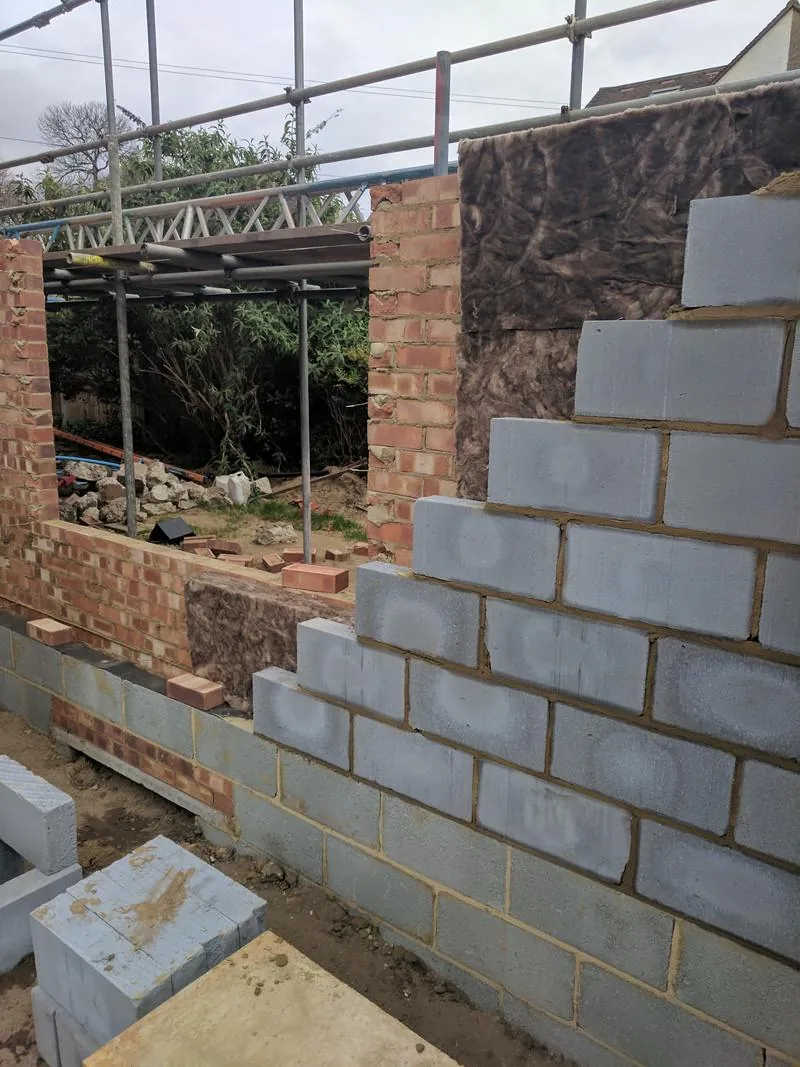
James measures up and looks at the things that decide the price before anybody has drawn anything: what the roof structure actually is, where the soil stack and the drainage runs are, what the ground looks like where the foundations would go, where the consumer unit is and what state it is in, how a wagon gets to the front of the house, and where a skip could stand without blocking a highway.
Bring your list. Ask about the awkward parts. If the answer is that your idea does not work, you get that answer at the visit and the reason behind it.
Book a free site visit — no charge, whether or not you go ahead. Building around Bognor Regis since 2008.
3. The itemised quotation
This is the part nobody else round here does properly.
What arrives is a document running to over 200 individually priced lines, sectioned by stage and by trade — enabling works, groundworks, structure, roof, external envelope, first fix, second fix, finishes, external works. Not "extension — £X".
It tells you:
- What is included, line by line, with quantities where quantities matter.
- What is excluded, in writing. Floor coverings, kitchen units and sanitaryware where you are choosing them yourself. Asbestos removal. A consumer unit upgrade. Decorating, unless it has been written into the quotation. Anything we cannot see until a floor comes up.
- What has been assumed. Assumptions are where budgets die. If we have priced on the basis that the existing foundations are adequate and the drains are where the plan says they are, that assumption is written down, so if it turns out otherwise you can see exactly what changes and why.
- Provisional sums, clearly labelled as provisional, for the things that genuinely cannot be priced yet.
You can take that document to another builder and compare it line for line. Most quotes cannot be compared with anything, which is convenient for the builder and useless for you.
Scaffolding and access equipment are inside our figure. They are priced with everything else at the start, so no scaffold invoice arrives separately in week three.
What is not ours to charge you for. The Building Control application and its inspections, the structural engineer's fee, the planning application fee where the job needs one, and the party wall surveyor if one has to be appointed. Those are paid by you, direct to the body concerned, and they never pass through us. We do not print the amounts anywhere on this site, because councils revise them and a stale figure is worse than no figure — ring your council for the current fee, or ask at the site visit and we will tell you which of them your job is likely to attract.
Bands and cost drivers are set out in our price guide, August 2026. Prices there include VAT at 20%, so check whether anybody else's number does before you compare the two.
4. The contract and the payment schedule
Nothing starts until the numbers and the terms are agreed in writing.
Every job gets its own written contract. Not a standard form with your name typed into the top of it. A bathroom in a bungalow and a back-to-brick renovation are not the same undertaking and they should not be governed by the same page of words, so the contract is written for the job in front of us. It is legally binding on us exactly as it is on you, which is the entire point of having one.
Then the money:
- A 5% deposit. Five per cent of the contract as standard. It varies a little from job to job, and whatever applies to yours is written into your contract before you sign it. It buys the first materials order and books the trades into the programme. It is not a float and it is not a fee for turning up.
- Fortnightly valuations. Every two weeks we value the work actually completed and invoice for that. You are paying for work you can see and touch, not for a stage that somebody has declared finished.
- 5% retention, released at practical completion. Five per cent of the contract sits with you until the job is genuinely done. It is your leverage and it is meant to be.
The schedule is agreed before the first delivery arrives, so you can plan around it and, if you are drawing down finance, your lender can too.
Comparing quotes at the moment? Ask the others for their payment schedule in writing. Request a quote from us and you get it with the price. Company No. 16870716.
5. CDM documentation and method statements
The Construction (Design and Management) Regulations 2015 apply to domestic building work. Most homeowners have never heard of them, and most builders working on houses would rather keep it that way.
For a domestic client, the client duties do not simply vanish — they transfer to the contractor, or to the principal contractor where there is more than one. On our jobs, James is the principal contractor. The duty stops with him rather than being spread across whoever happens to be on site, and the paperwork that goes with it gets done:
- A construction phase plan for the job, written before work starts, not backfilled afterwards.
- Method statements for the work that carries real risk: forming structural openings and needling walls, working at height on the roof and the scaffold, demolition and strip-out, and anything involving existing services.
- Risk assessments that name the actual hazards on your property rather than a generic list — the neighbour's conservatory under the scaffold, the school run past your gate at half past eight.
- Notification to the HSE on form F10 where the job is notifiable: construction work lasting more than 30 working days with more than 20 people working at once, or exceeding 500 person days.
None of it makes the building better on its own. What it does is make it much harder for the job to go wrong in the ways that hurt people, and it means that if anybody ever asks — an insurer, a solicitor, a purchaser's surveyor — the answer exists on paper.

6. Site set-up and the neighbour letter
Before the first tool comes out of the van:
- Scaffold designed and erected — inside our price, not a bill that turns up on its own — with the pavement licence in hand if it stands on the highway.
- Dust screens up and floor protection down on the route in. Every review that mentions a clean house is describing this step.
- Welfare and materials storage sorted, and the skip positioned with a permit where the road is adopted.
- A designated parking arrangement for the trades, agreed with you rather than assumed.
And a letter to the neighbours. Posted by hand before we start, from us and not from you. It says who we are, what is being built, roughly how long it will take, which weeks are the noisy ones, when we work and when we do not, and it gives them James's mobile number so that if the radio is too loud they ring him instead of banging on your door.
Party wall notices are a separate legal matter, and they are yours to serve. The Act puts that duty on the building owner, which is you, and where a surveyor has to be appointed the fee is yours as well. We would rather you read that here than hear it for the first time when the bill arrives. What we do is tell you early whether the Act is in play on your job, which notice it is, and when the clock has to be started — work to a party structure carries a two-month minimum, so that notice goes out as soon as the design is fixed. We will go through the notice with you, help you get it out to the right neighbours at the right time, and build the job to whatever award comes back.
7. The build
You get one point of contact for the whole job, and it is James. The plumber, the sparks, the plasterer and the roofer are all managed through him. You never chase a subcontractor.
What that looks like week to week:
- Work starts when we said it would and the trades follow in the order the programme says.
- The house is kept weathertight. On an extension the knock-through is held back until the new structure is watertight; on a loft the roof is opened under scaffold and closed the same day.
- The site is swept and made safe at the end of every day. Not at the end of the week.
- Variations are talked through with you first, then issued in writing with a price against them. Extra work is paid for up front, before it is carried out. That is written into the contract rather than sprung on you halfway through, and it is said here so that nobody has the argument on site. It keeps the extras out of the final reckoning, and it means you never discover a change on the closing invoice.
- Building Control inspections are booked at the right stages — foundations before they are covered, damp-proof course, drains before backfill, steelwork, insulation, and the pre-plaster inspection.

8. Building control sign-off
Which authority you are in changes the timetable, so we plan around it rather than hoping.
Arun District Council covers Bognor Regis, Felpham, Middleton-on-Sea, Yapton, Barnham, Walberton, Climping, Littlehampton and Arundel — and Arun keeps building control across the district, including inside the South Downs National Park. Arun publishes its service standards: applications acknowledged within three working days, 90% of full plans appraised within three weeks, and all within the statutory five.
Chichester District Council covers the city and its district, with the service split north and south. On a Full Plans Application or a Building Notice, work can begin two days after submission.
We normally go Full Plans rather than Building Notice on structural work. It costs a little more time up front and it means the details are agreed on paper before a wall is opened, instead of being argued about with a hole in your house.
At the end you get the completion certificate. That is the document your buyer's solicitor will ask for in fifteen years' time, and it is the reason not to let anybody talk you out of building control on structural work. See structural work and steelwork for what needs it.
9. Snagging
Practical completion is not the same as finished, and we do not pretend otherwise.
We walk the job with you, room by room, with a list and a pen. You add everything — the door that catches, the socket that sits proud, the paint line above the skirting. It goes on the schedule whether we think it matters or not, because it is your house and you are the one who will be looking at it.
You get a couple of days to finish that list off before the final payment is made. It is deliberately short. A snagging list left open for six weeks is a job that never closes, for you or for us, and the last fortnight of a build is when everybody has the most to gain from getting it done. Take the two days properly: walk it in daylight and again with the lights on, open and shut everything, run the taps.
And if something major was missed in that window, we come back anyway. That is worth saying plainly, because it is the bit people worry about when they are asked to sign the list. A window that leaks in the first proper storm is not a snag you forfeited by not spotting it on the Tuesday. The 24-month workmanship guarantee runs from completion and it covers what the walk-round did not catch.
Then the list gets cleared. The 5% retention is released at practical completion, and the final payment follows once the snagging list is agreed and worked through.
10. Handover
You are handed a file, not a set of keys and a wave.
- The health and safety file — the as-built information, the certificates, and anything a future contractor needs to know about what is buried in your walls.
- The Building Control completion certificate.
- Structural engineer's calculations and drawings, where the job had them.
- Electrical certification and the gas safety documentation where applicable.
- Manufacturer warranties for every product installed, registered where registration is needed, passed to you in full — windows, doors, boiler, roof system, worktops, appliances.
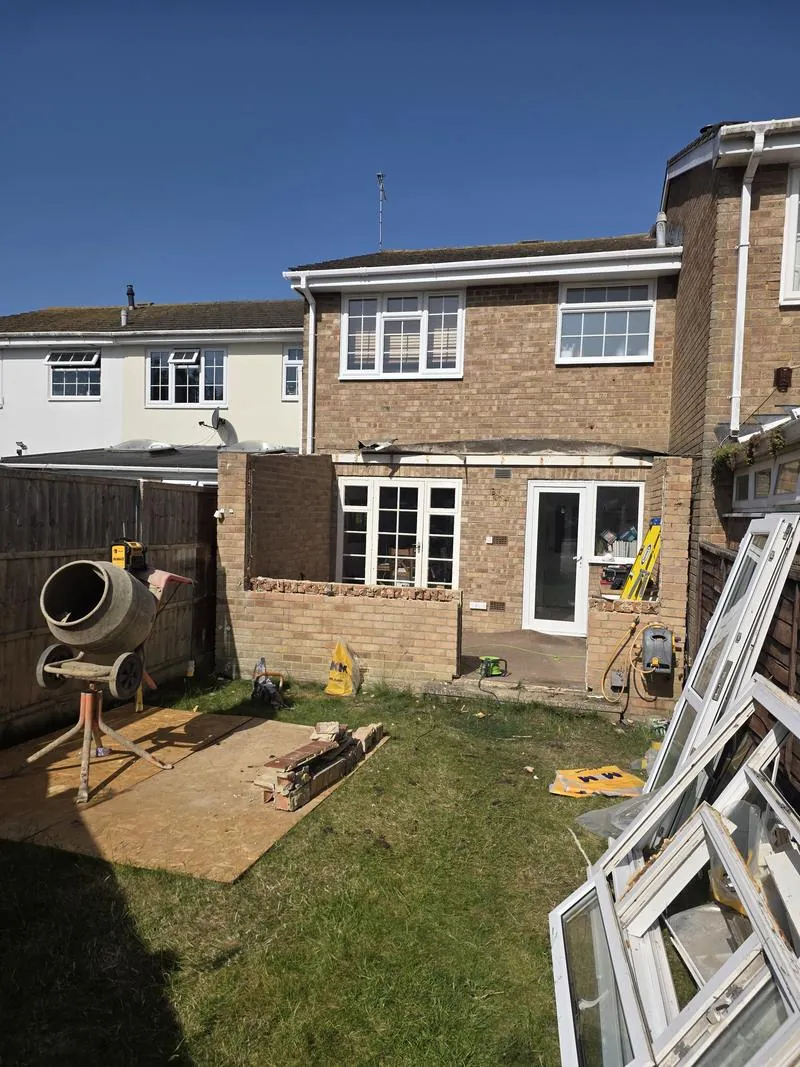
- Operating and maintenance information — how the underfloor heating controls work, what the ventilation needs, which sealant to use in the shower.
11. The guarantee
All workmanship guaranteed for 24 months from completion. Manufacturer warranties on all materials and installed products passed to you in full — many run to 10 years or more. Structural work is signed off by Building Control and covered by our £2m public liability insurance. We're working towards an insurance-backed guarantee scheme and will offer it as soon as we're eligible.
If something goes wrong inside those 24 months, you ring the same mobile number you rang on day one.
The cover behind the work is £2m of public liability insurance and employers' liability insurance, and the certificates can be seen before you commit to anything.
See it in practice
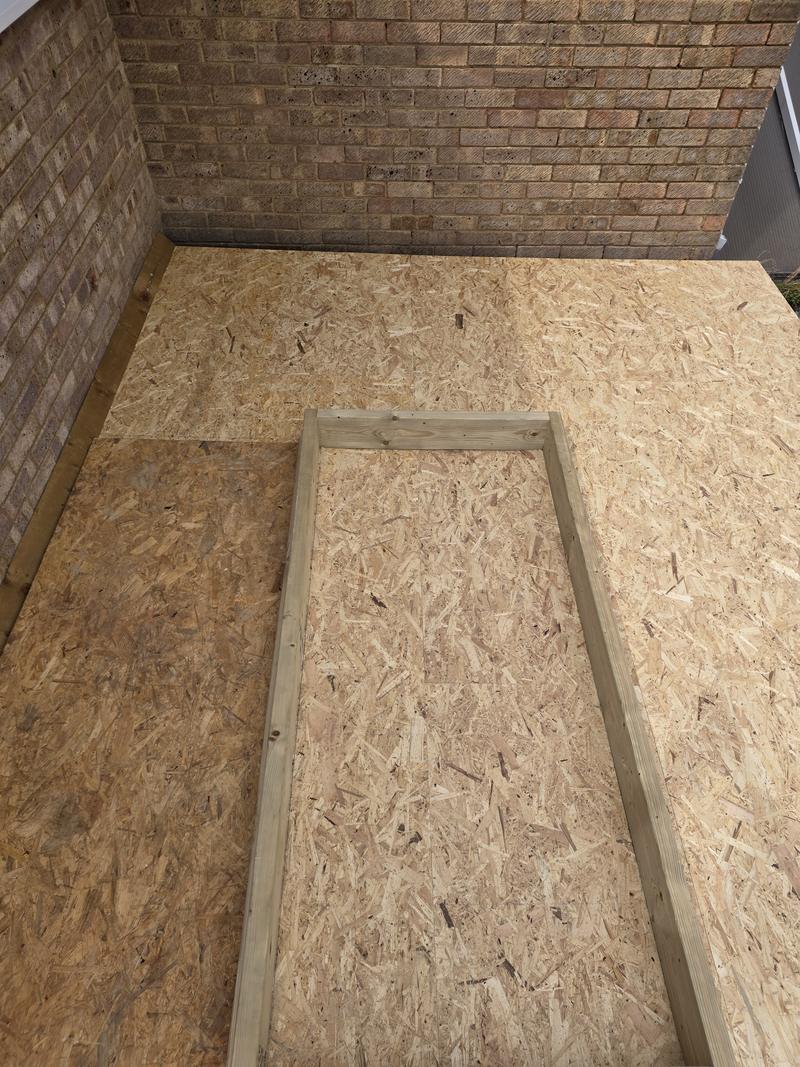
The Whyke Close loft conversion in Chichester shows this process running across seven phases for one client over roughly 20 weeks. What we are currently on site with shows it running now. More in previous projects, and the common questions in questions we get asked most.
Start it
Or the landline on 01243 256796, or WhatsApp if a photograph would say it quicker.
Rated 5 stars on Yell. Over 100 projects completed. £2m public liability and employers' liability insurance. Reply within one working day. Works from loft conversions to house extensions, and the man doing it is about Swanbourne Construction.
Swanbourne Construction Ltd was formed in 2025 to bring James's building work in West Sussex, which goes back to 2008, under one accountable, fully insured limited company.